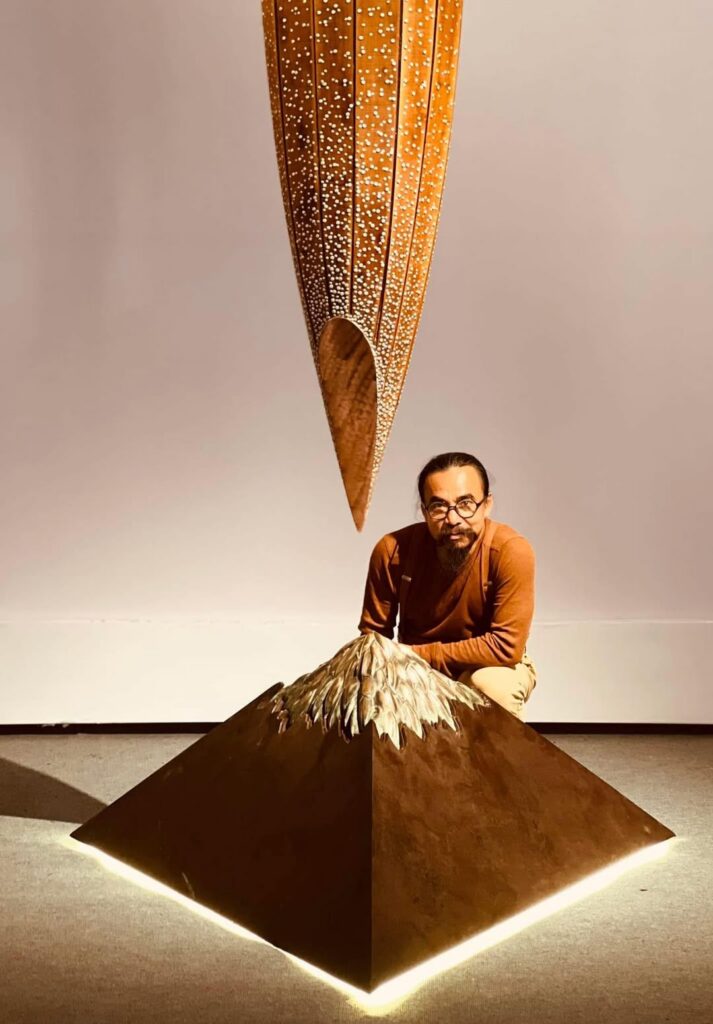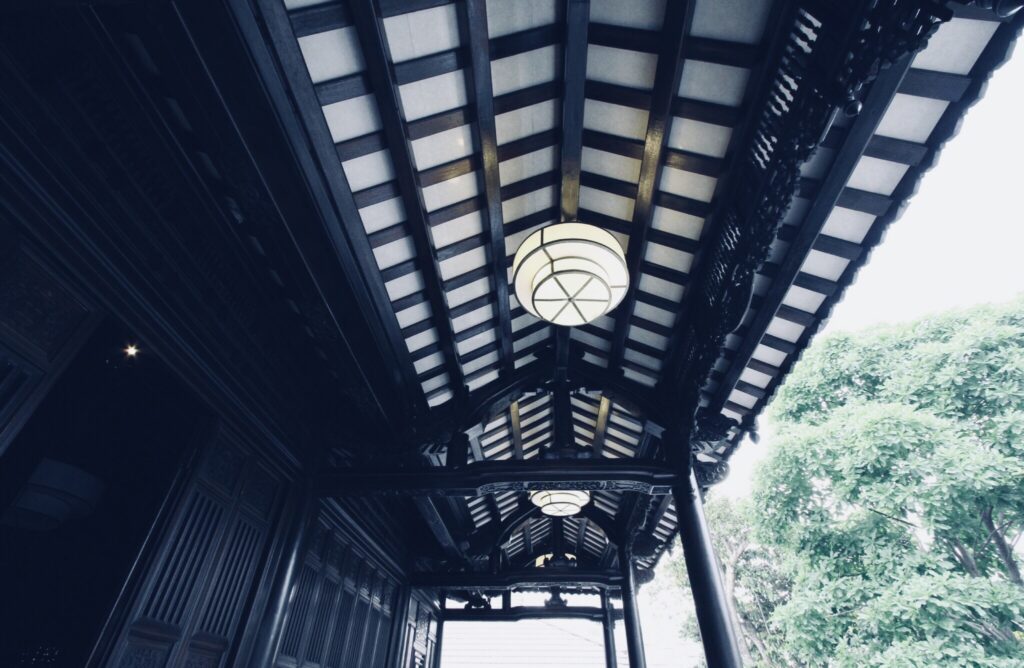
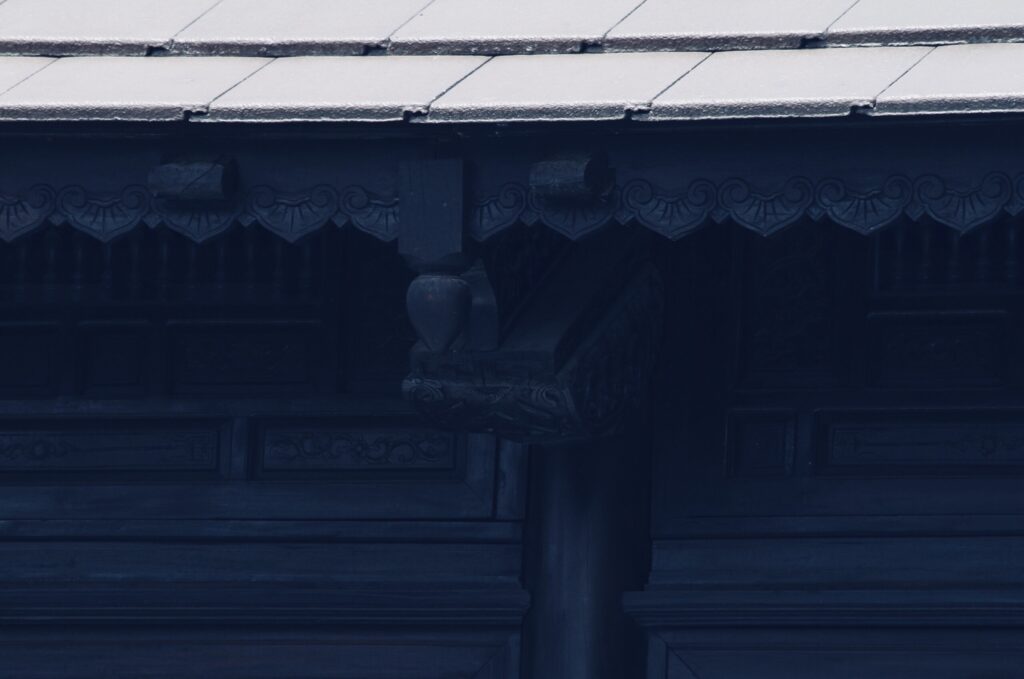
For generations, the wood carving craftsmanship of Hue carpenters has been etched into history. Intricate embossed patterns on armrests, beams, arches, and panels reveal the profound artistry embedded within each wood grain.
The touch of the craftsman is incredibly refined. As the chisel glides along the wood grain to remove the excess, the shapes of phoenixes, flowers, and leaves emerge, filling the void with intricate beauty. The wooden panels are not merely decorative; the dual framing system creates overlapping layers, adding spatial depth and transforming physical boundaries into the perception of infinity.
These exquisite carvings have elevated Hue’s palaces, temples, pavilions, mausoleums, and traditional homes beyond mere material structures to the realm of emotional art. This mastery has earned them recognition as a UNESCO World Heritage.
The pride lies in the soul delicately carved by talented artisans from across the nation, each seeking to present their finest beauty to the Buddhas, Kings, and Ancestors.
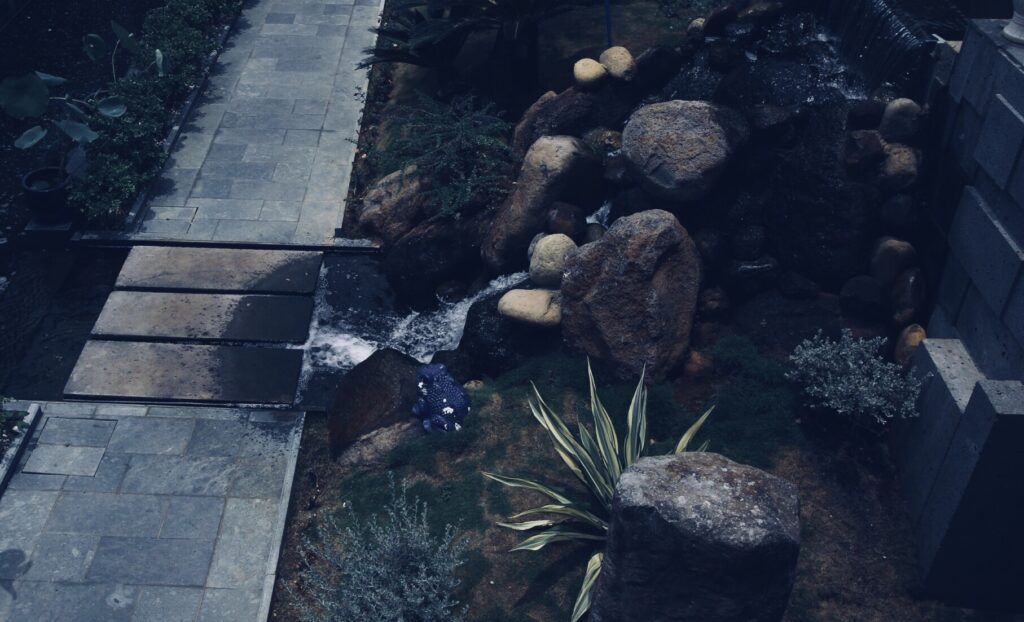
Type
Garden house
Year
2012
Location
Thu Duc city
Team
Ho Viet Vinh
Duong Dinh Vinh
Next project | Triumph
Triumph
The interplay of deep reds and blues evokes a cosmic dance, where the intangible whispers its presence across the surface of being. This visual symphony captures the essence of triumph, a celebration of the invisible forces shaping reality. The textures and hues blend seamlessly, creating a sense of depth that invites contemplation. It is a portrayal of the silent dialogue between the visible and the invisible, a testament to the power of abstract art to reveal the profound mysteries of the universe.
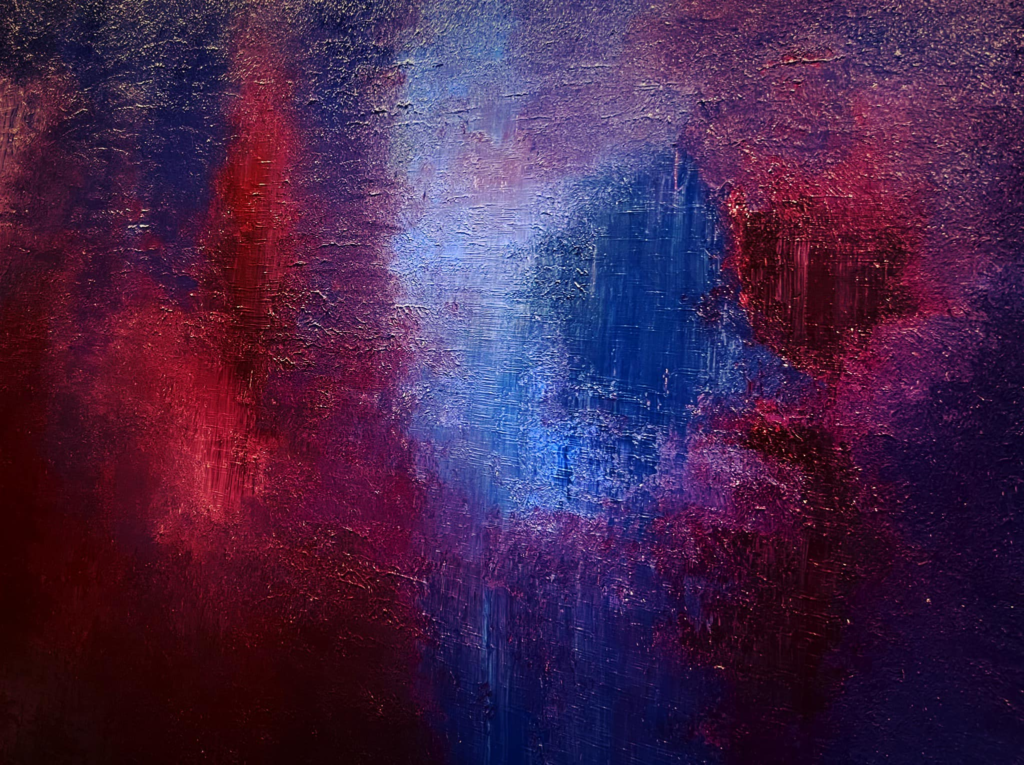
Acrylic on canvas, 1.8×1.8m, Maison d’Art, 2024
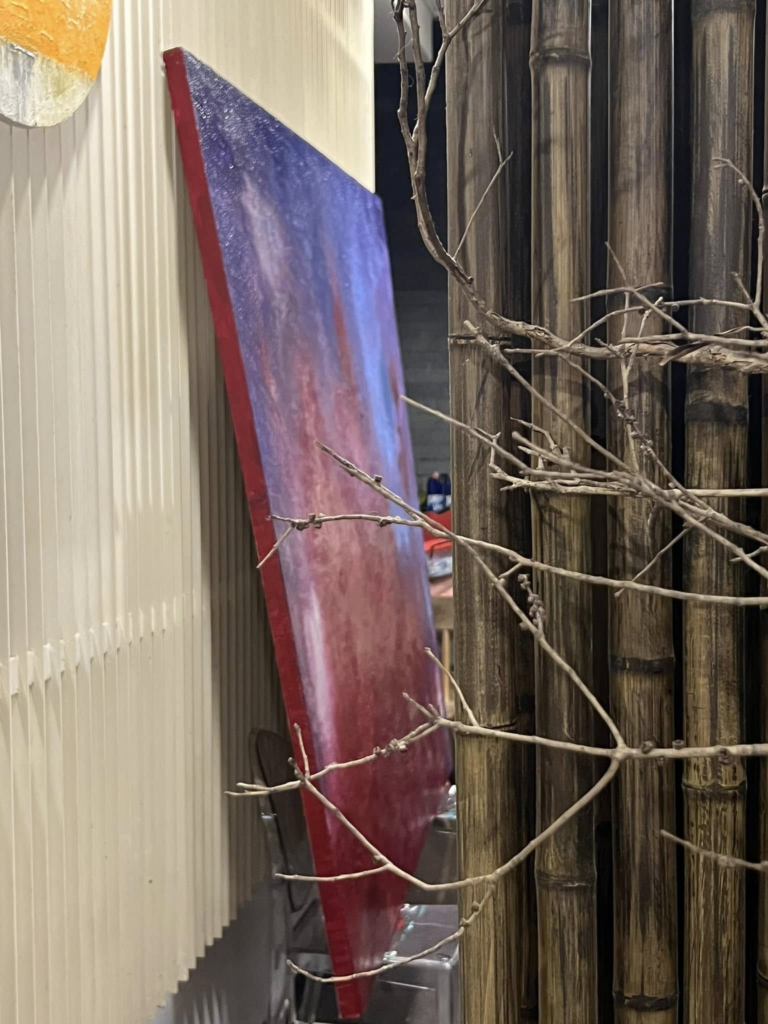
Next project | Angel
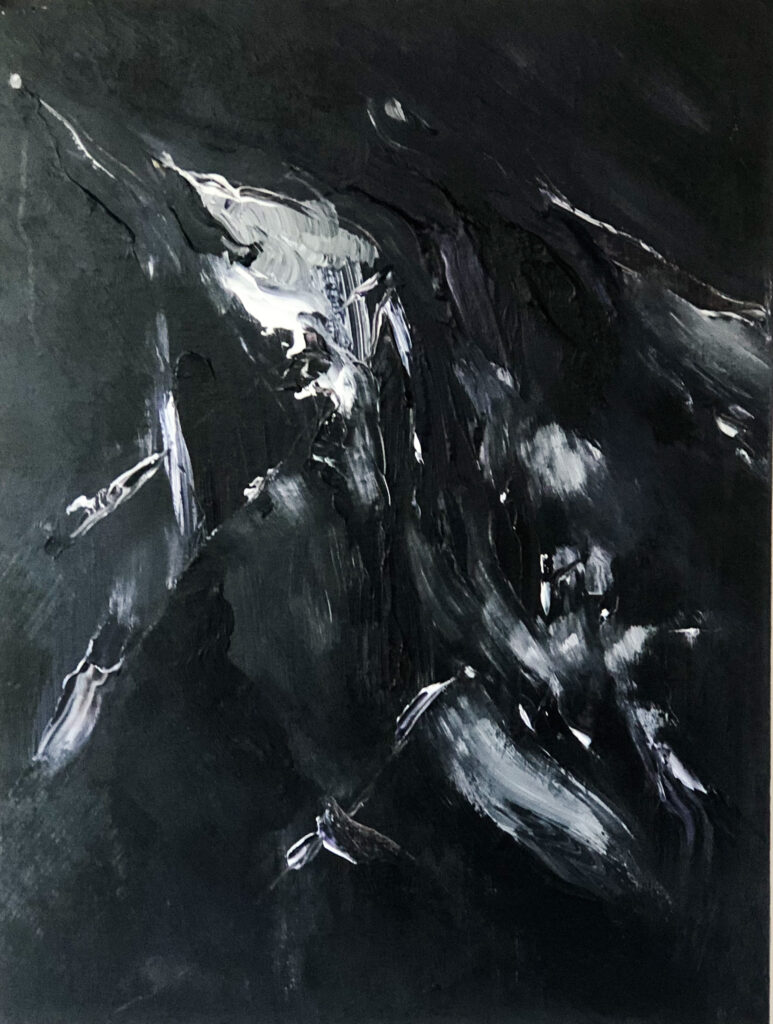
Angel.
Ho Viet Vinh
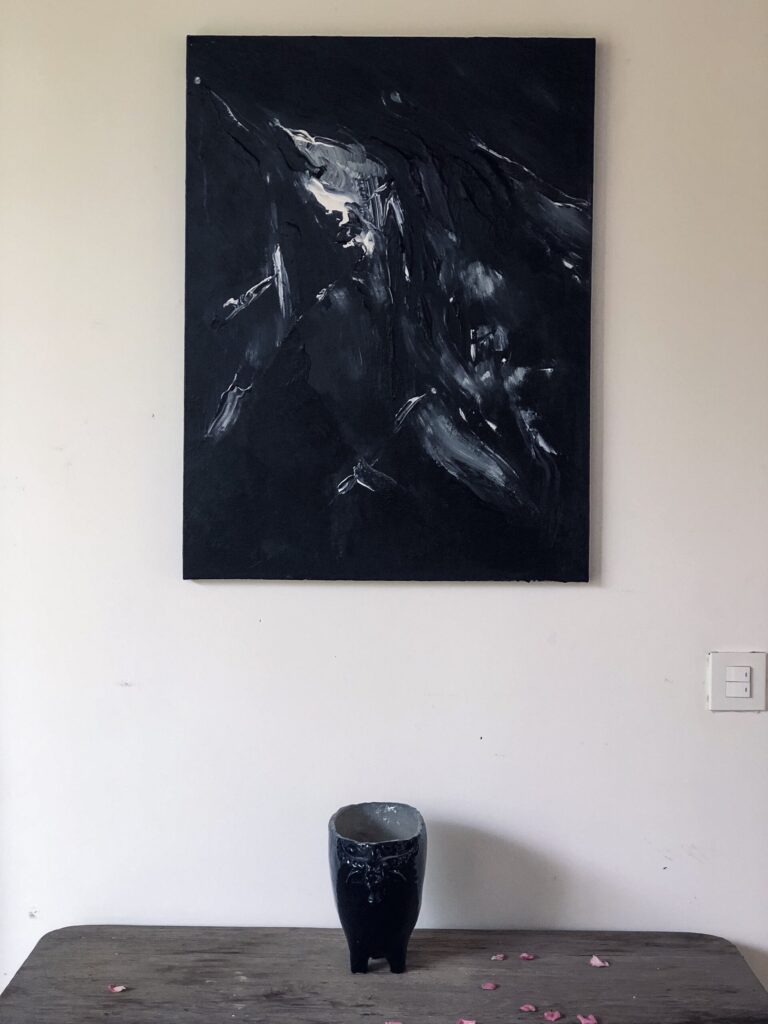
The powerful little angels are flying freely in the world of perfection. Each angel represents each characteristic of the ego, breaking free from bondage, being free and enjoying the triumphant moments of the long journey to eliminate the ego.
Description
Exucuted in April 2020.
Style
Lyrical Abstract
Technique
Acrylic on Canvas
Dimension
60W x 80H x 2D cm
The authenticity of this work has been confirmed by HVV Architect &Partners. A certificate of authenticity maybe delivered by the Company upon request to the buyer.
Vinhho Biography
Ho Viet Vinh is a Vietnamese architect who graduated with a Bachelor of Architecture degree in 1995 from the University of Architecture Ho Chi Minh City, Vietnam, where he received an award for creative design in his final year. He is a Registered Architect in Vietnam, a Registered Urban Planner in Ho Chi Minh City, and a member of the Association of Architects and Urban Planners of Vietnam.
Vinh’s career began in 1995 with participation in several design competitions in Ho Chi Minh City. That same year, he became a lecturer in the Urban Planning Department at the University of Architecture.
In 1998, he won second prize in the international competition organized by the Summer Workshop of Cergy-Pontoise, France, with the theme “Ho Chi Minh City and the Saigon River.”
In 2005, he was awarded a special prize in another international competition by the Summer Workshop of Cergy-Pontoise, France, for his project “Can Gio Emotional City.”
In 2010, he participated in the U.S. International Visitor Leadership Program (IVLP) focusing on Sustainable Urban Planning.
In 2015, Vinh was selected by the Lebadang Creative Foundation to design the Lebadang Memory Space Museum in Hue. During this time, he also became the Director of the Fund.
Next project | C an G io emotional city

Photo by Vinhho
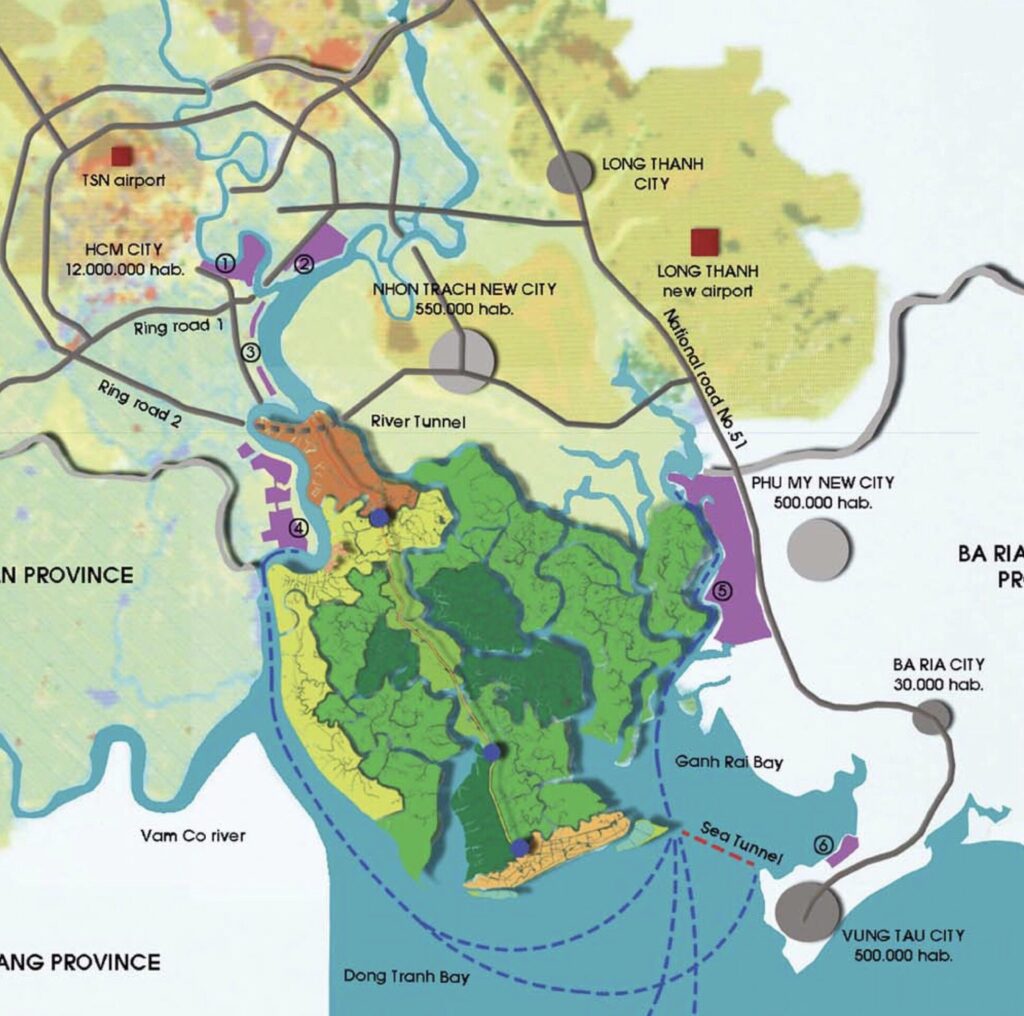
The goal is to enhance connectivity between Can Gio and neighboring provinces, particularly Vung Tau. As Ho Chi Minh City continues to expand, the demand for infrastructure grows, posing potential risks to Can Gio’s ecological integrity. Special attention is given to strengthening links with the nearby beach resort of Vung Tau, initially through a speedboat network and eventually with the proposed construction of an undersea tunnel.
While the jury found the tunnel proposal highly debatable, they acknowledged that the previously approved masterplan lacked adequate provisions for improving these connections. Team 4 prioritized these links, making them a central focus of their proposal.
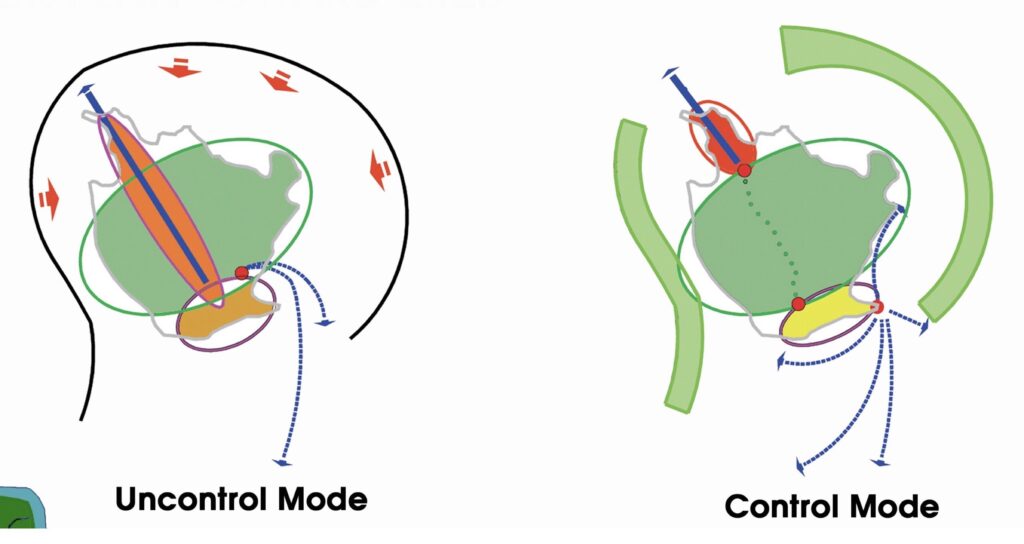
Another key aspect of the development proposed by the team is the diversification of tourism activities. These could range from walking or boating excursions through the mangroves to farm visits, beach activities, and trips to nearby provinces made more accessible through the improved transportation links.
The team also presented a project to reclaim land and create two artificial islands off the coast at the eastern and western ends. These islands are envisioned as hubs for diverse tourism activities, offering unique experiences to visitors.
Achieving these objectives will require significant improvements to infrastructure. A high-speed transportation system must be implemented in a way that respects the environment and minimizes pollution, bringing Can Gio closer to nearby development areas.
Freshwater supply is critical for both residents and tourists. A sustainable water collection and recycling system should be established to optimize this valuable resource while preventing water pollution.
The construction of eco-houses will help balance the infrastructural development, ensuring harmony with the natural surroundings. Additionally, all other modes of transportation within the area will be designed to be environmentally friendly.
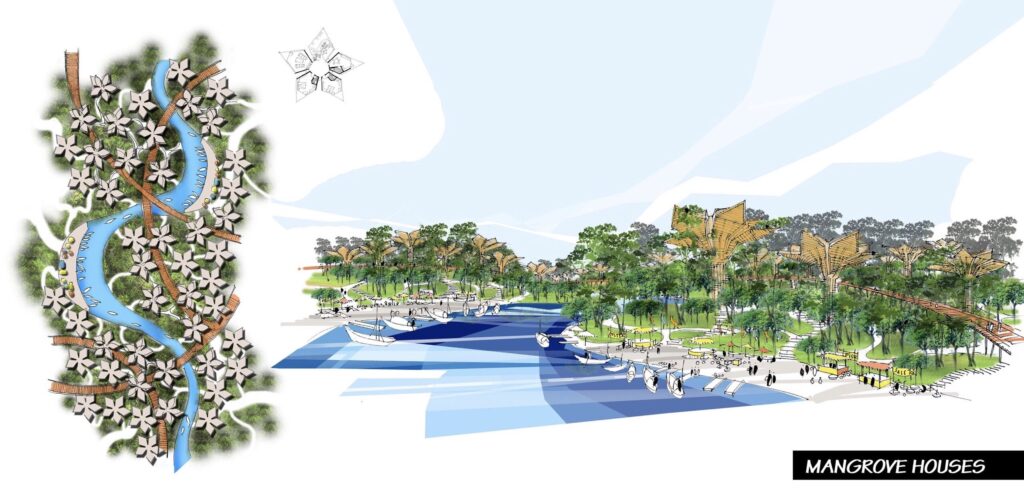
The project seeks to enhance the quality of life for the residents of Can Gio. This will be accomplished by preserving and upgrading traditional activities such as farming and those along the beach.
Locals will be encouraged to participate in service, trade, and production activities to meet the demands of tourism while maintaining their cultural heritage. Traditional practices will be promoted, enabling those living in the forest, on the beach, or along the river to share their unique ways of life.
Additionally, numerous public spaces and recreational activities will be developed, fostering leisure and entertainment opportunities for both residents and visitors.
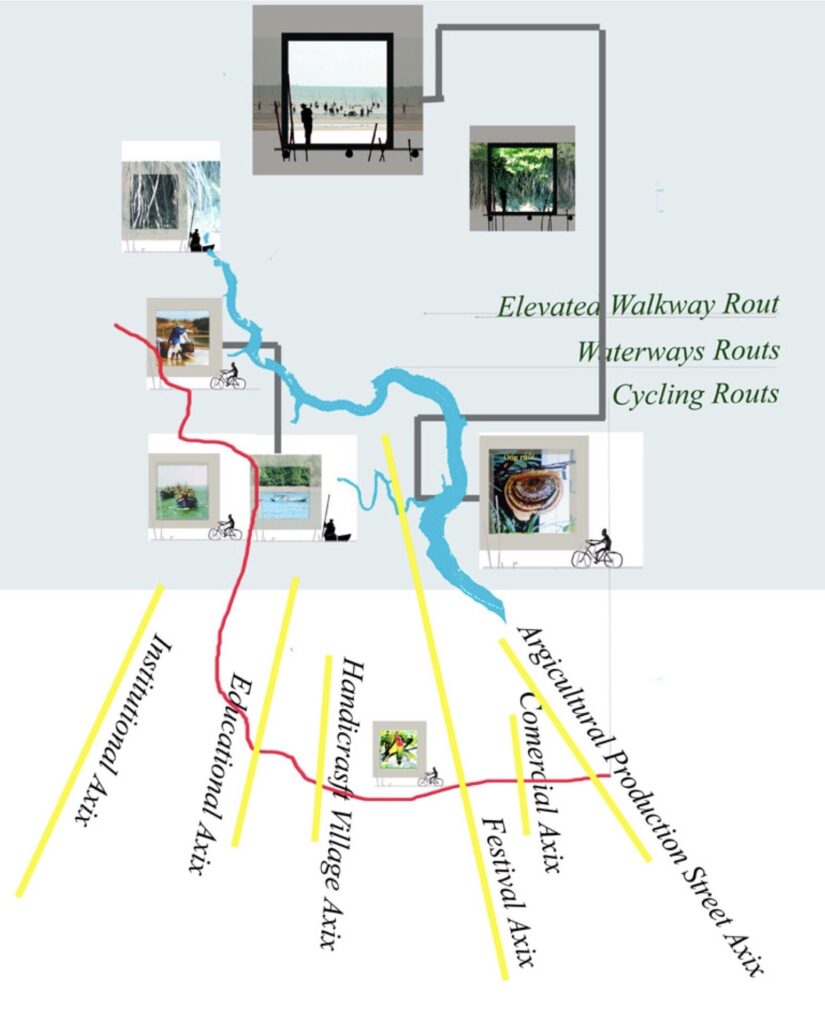
The southern area of Can Gio along the beach will be developed with a focus on preserving the connections between the forest and the sea. Six key axes will serve as the foundation for these links: an agricultural production axis, a commercial axis, a festival axis, a handicraft village axis, a traditional market axis, and a public space axis.
This approach ensures that development respects the natural and cultural heritage of the region while creating vibrant and functional spaces for both residents and visitors.
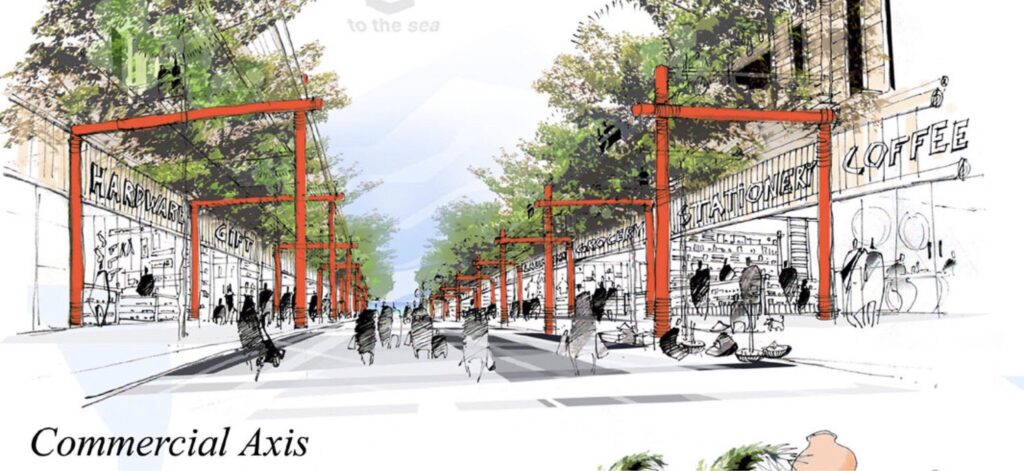
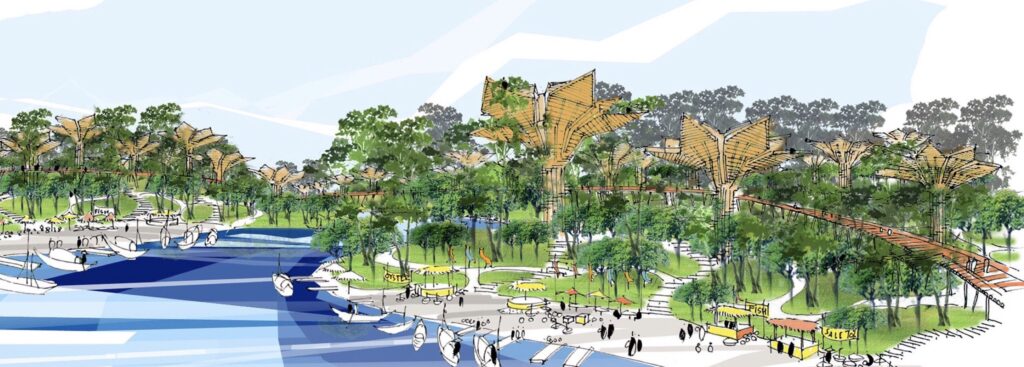
The ultimate aim of this proposal is to evoke and enrich people’s senses and emotions, creating an “emotional city”. Both visitors and locals will be immersed in a symphony of sensory experiences:
They will listen to the soothing sounds of the forest and the rhythmic waves of the beach. They will marvel at breathtaking views of the sea and lush forests, swim in the waves, and feel the textures of the forest’s natural wonders.
The air will carry the refreshing scent of the sea, mingling with the intricate fragrances of the mangrove. They will savor the local flavors, from seafood harvested from the river and sea to traditional delicacies.
Beyond these sensory delights, their emotions will be further deepened by the rich history, vibrant culture, and timeless traditions of Can Gio, making every moment a journey of discovery and connection.
Team 4
- Ho Viet Vinh – Leader Architect, Urban Planner
- Pham Phu Cuong – Architect
- Nguyen Hong Minh – Architect
- Hoang Anh Tu – Architect, Urban Planner
- Pham Anh Tuan – Architect, Urban Planner
- Nguyen Anh Tuan – Architect, Landscape Architect
Team 4, comprised entirely of Vietnamese professionals and led by Architect Ho Viet Vinh, brought a profound vision for the future of Can Gio. The team outlined a series of key objectives, including the preservation of the mangrove ecosystem—both its core and transitional areas—the optimization and development of local production activities, and the protection of water resources from pollution originating from the Saigon-Dong Nai River and the sea.
For their insightful and forward-thinking approach, Team 4 awarded a special mention from the Workshops of Cergy-Pontoise.
Next project | Vertical Green Highrise
Vertical Green Highrise
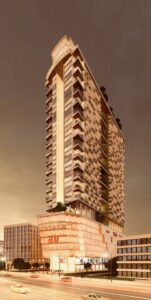
The high-class Condotel hotel complex seamlessly integrates with the scenic landscape of Cap Saint-Jacques beach, connecting the coast with surrounding urban public activities to create an alluring destination for tourists and residents alike.

This open space, offering a variety of services, will serve as a vibrant public hub where shopping, entertainment, relaxation, and leisure activities take place around. The complex, consisting of two towers—one 40 stories tall and the other 10 stories with service podiums—spans a total usable area of 130,000 square meters, adding energy and dynamism to Cap Saint-Jacques beach city.
The active spaces, featuring panoramic sea views, foster a harmonious connection between the buildings and the stunning surrounding landscape. All functional areas are designed to be open, filled with natural light, greenery, and a sense of unity with the blue sky and deep ocean. A system of plazas, flower gardens, cascading waterfalls, and vertical green walls enhances the project’s appeal, creating a unique and inviting environment.
Type
Highrise tower
Year
2016
Location
Cap Saint jaques
Team
Ho Viet Vinh
Pham Tu
Next project | Desire
“A silent ode to the beauty of existence, portraying the sublime interplay of light and shadow that dances within the human soul. It is an invitation to wander through the corridors of one’s own soul, amidst the rain of introspection and the elusive sunsets of desires.”
Ho Viet Vinh
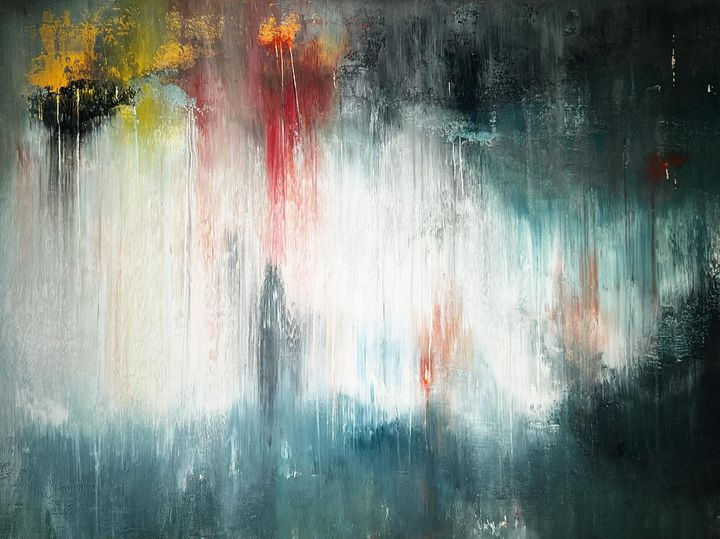
Acrylic on canvas, 97x130cm, Maison de Corail, 2024
Next project | The Unveiling of Trịnh Công Sơn’s Sculpture
At 4:30 p.m. on February 28, the Trịnh Công Sơn Park in Gia Hội Ward, Huế City, will host a significant event—the unveiling of a bronze statue of Trịnh Công Sơn, sculpted by the late artist Trương Đình Quế (1939–2016). This bronze statue, weighing 500 kg, stands 170 cm tall, with a width of 230 cm and a depth of 160 cm. Its design exudes a sense of intimacy and familiarity.
The project is the culmination of years of dedication by Mr. Lê Hùng Mạnh from Gia Hòa Company in Ho Chi Minh City. The journey to place a statue in a public space was far from simple, but his passion for commemorating artists didn’t stop there—he dreams of creating similar tributes for other cultural icons, such as the poet Bùi Giáng.
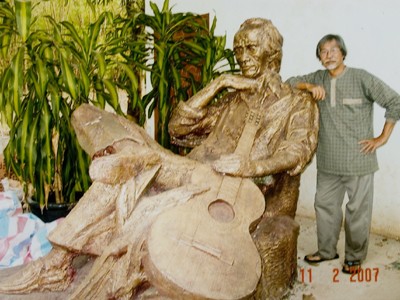
The choice of Trương Đình Quế as the sculptor was deliberate. He was one of Vietnam’s most renowned visual artists, celebrated with numerous national and international accolades. Born in 1939, the same year as Trịnh Công Sơn, Quế graduated from the Gia Định College of Fine Arts in 1960—the very year Trịnh penned his first song, Ướt Mi. This synchronicity in their lives laid the foundation for a deep friendship rooted in a shared passion for art and music, allowing Quế to capture the essence of his lifelong friend with ease.
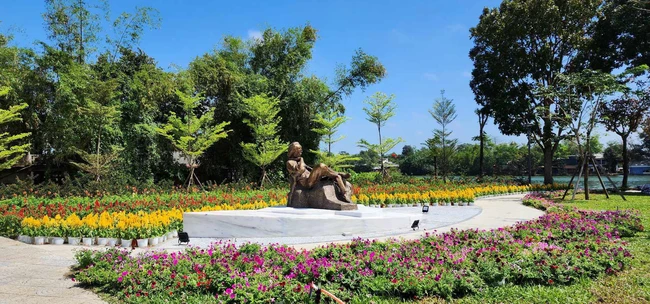
The statue took a year to complete at Giang Điền Waterfall in Đồng Nai. Reflecting on the creative process, Mr. Mạnh shared, “Trương Đình Quế and I agreed on how Trịnh should be depicted—as you now see him, leaning forward, as if gazing into a book, or perhaps into his own soul. Naturally, we couldn’t forget the ‘companion’ who stayed with him from ‘the day my mother bore me into this life of burden’ to ‘the noon field, where we met and vanished into the void’—his guitar.”
“The image of Trịnh bowing is intentional,” Mạnh explained, “and it aligns with his own lyrics: Cúi xuống. Cho tình dấy lên. Cho da thịt mềm. Cho cơn mặn nồng ngất lịm. Cúi xuống. Cho đời lãng quên. Cho mây trời chìm. Cho đêm mở hội âm thầm.
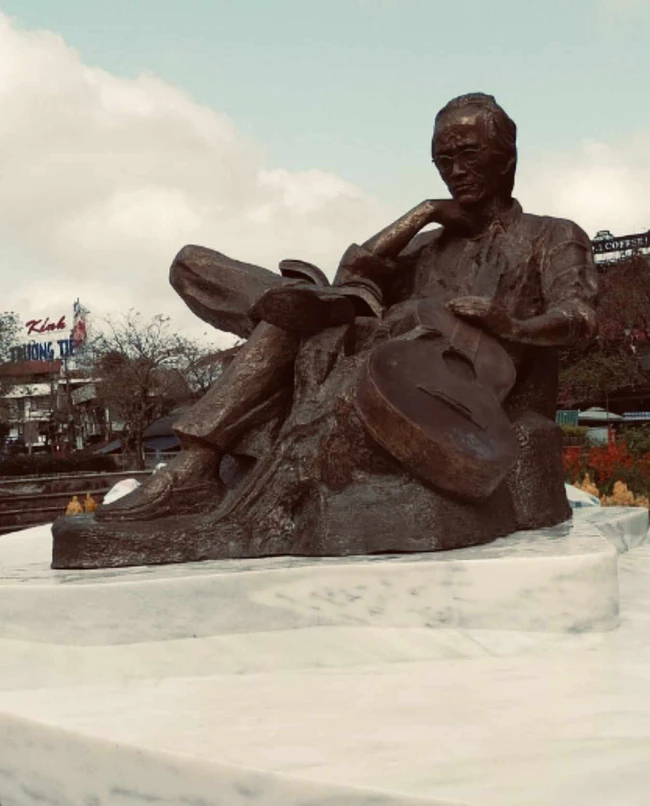
When designing the statue’s base, we collaborated with architect Hồ Viết Vinh, who envisioned it as an eye—650 cm long, 350 cm wide, and 55 cm high. This symbolic choice reflects Trịnh’s longing for human compassion: Những con mắt trần gian, Xin nguôi vết nhục nhằn. Những con mắt muộn phiền, Xin cấy lại niềm tin. Even when inspired by Bùi Giáng’s poetry, Trịnh expressed hope and tenderness: Con mắt còn lại nhẹ nhàng từ tâm. Nhìn em ra đi lòng em xa vắng. Con mắt còn lại là đêm tối tăm. Con mắt còn lại là đêm nồng nàn.
This collaboration between sculptor Trương Đình Quế and architect Hồ Viết Vinh embodies the essence of Trịnh Công Sơn’s music—where visual art and sound converge in a harmonious message of love and humanity.
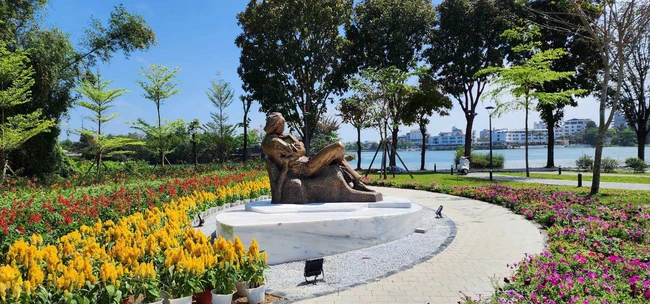
Today, as we gather to unveil this statue on Trịnh Công Sơn’s birthday, it is more than a celebration—it is the realization of a dream. With hearts full of love for his music, Mr. Mạnh and his team gift this statue to the city of Huế as a gesture of gratitude.
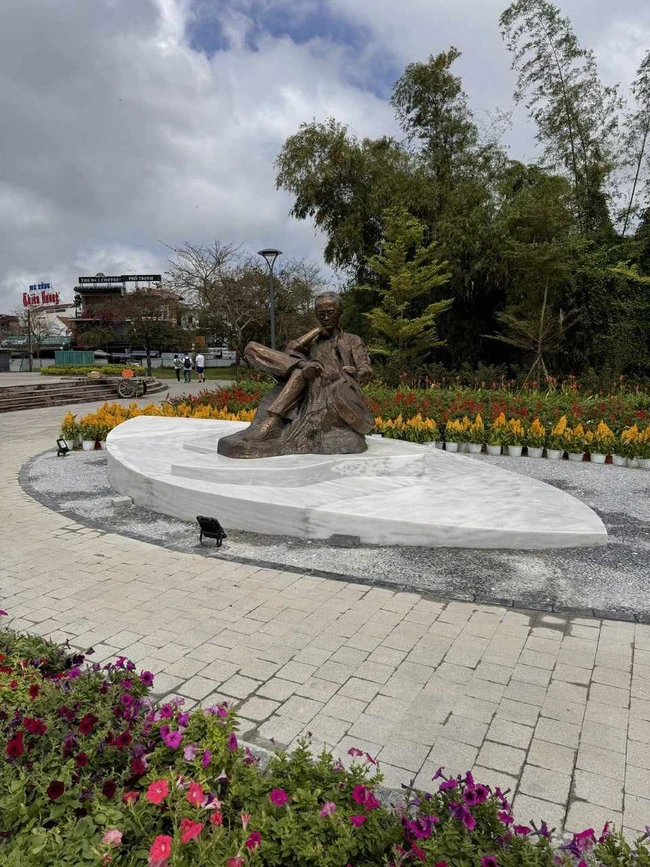
“With this sincere endeavor,” Mr Lê Hùng Mạnh remarked, “we are grateful for the support from the Huế City authorities and the province of Thừa Thiên-Huế, who have made this possible. Today, as the statue of Trịnh Công Sơn stands in the park bearing his name, we believe it brings joy to millions across the country who remember him. And surely, our gifted musician and his dear friend, sculptor Trương Đình Quế, would be pleased. For in life, they shared many moments of artistic communion, exchanging ideas and toasting to the beauty of creation.”
Next project | Wooden Carving House
For generations, the wood carving craftsmanship of Hue carpenters has been etched into history. Intricate embossed patterns on armrests, beams, arches, and panels reveal the profound artistry embedded within each wood grain.
The touch of the craftsman is incredibly refined. As the chisel glides along the wood grain to remove the excess, the shapes of phoenixes, flowers, and leaves emerge, filling the void with intricate beauty. The wooden panels are not merely decorative; the dual framing system creates overlapping layers, adding spatial depth and transforming physical boundaries into the perception of infinity.
These exquisite carvings have elevated Hue’s palaces, temples, pavilions, mausoleums, and traditional homes beyond mere material structures to the realm of emotional art. This mastery has earned them recognition as a UNESCO World Heritage.
The pride lies in the soul delicately carved by talented artisans from across the nation, each seeking to present their finest beauty to the Buddhas, Kings, and Ancestors.
Type
Garden house
Year
2012
Location
Thu Duc city
Team
Ho Viet Vinh
Duong Dinh Vinh
Next project | Maison de Corail
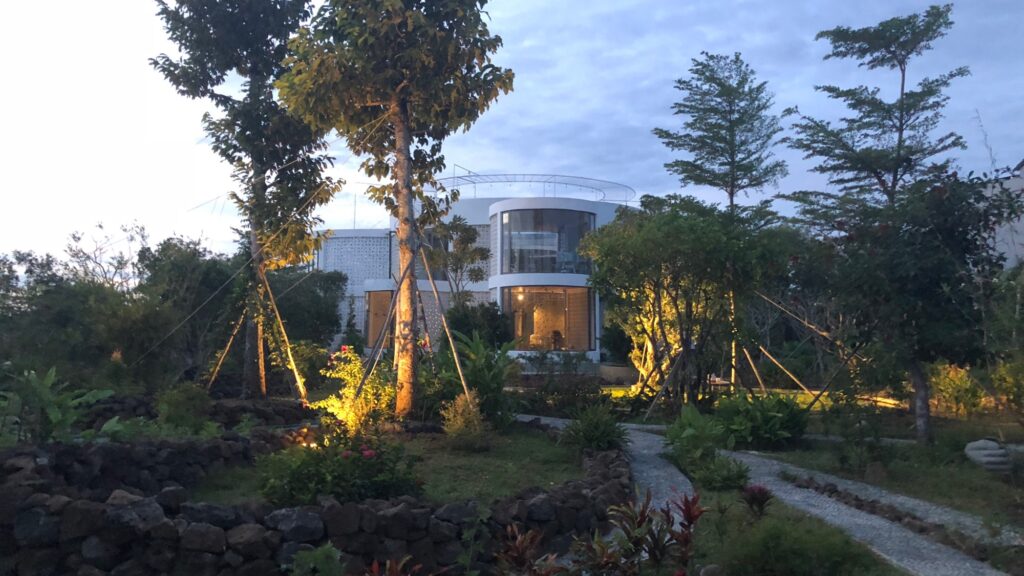
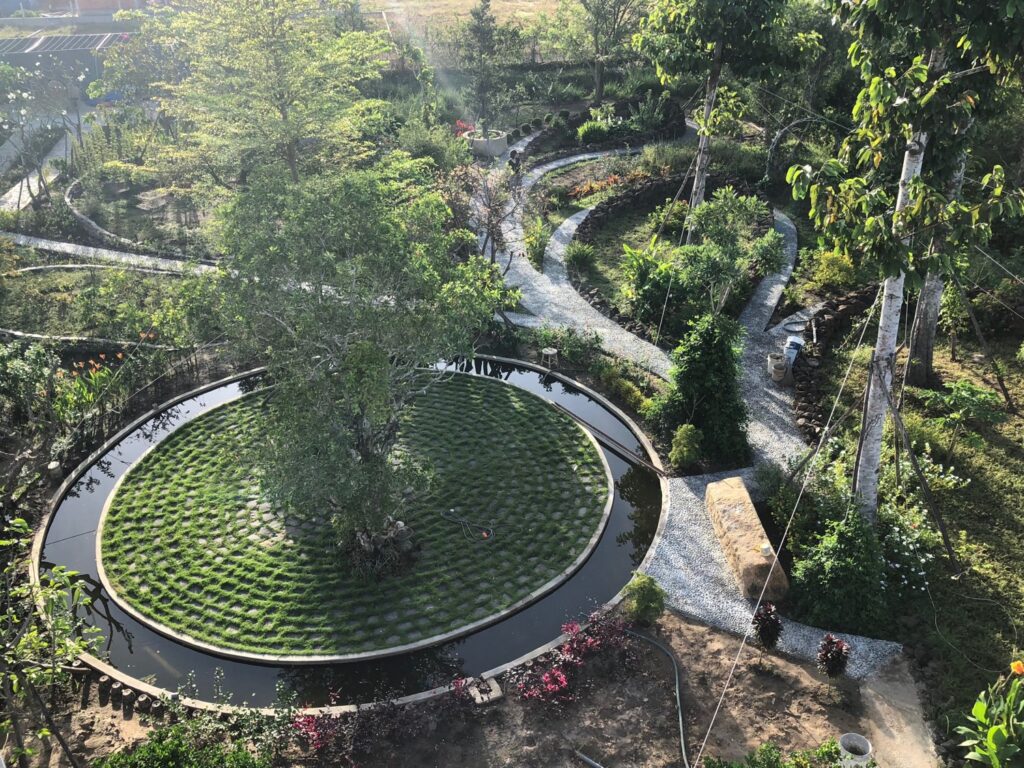
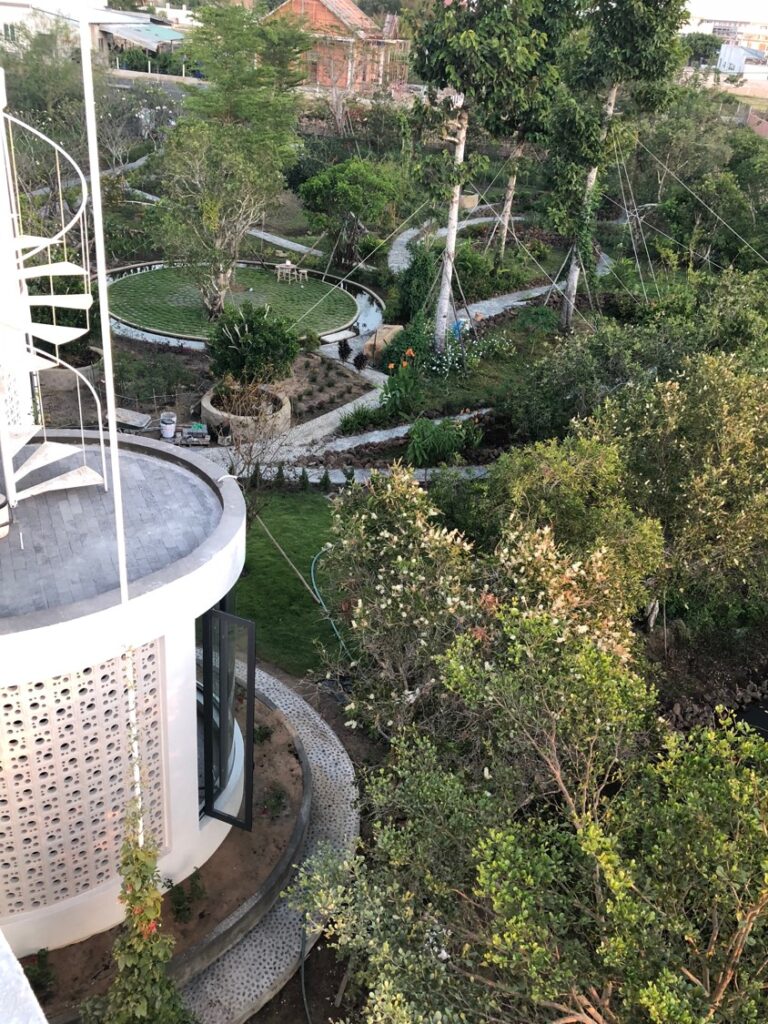
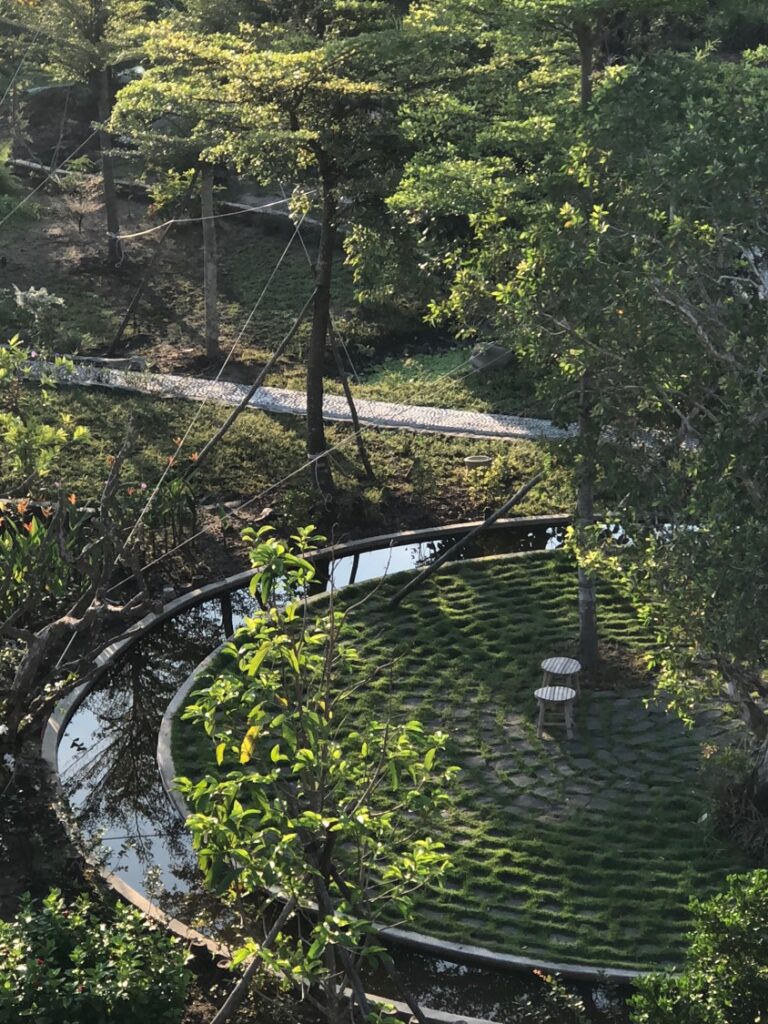
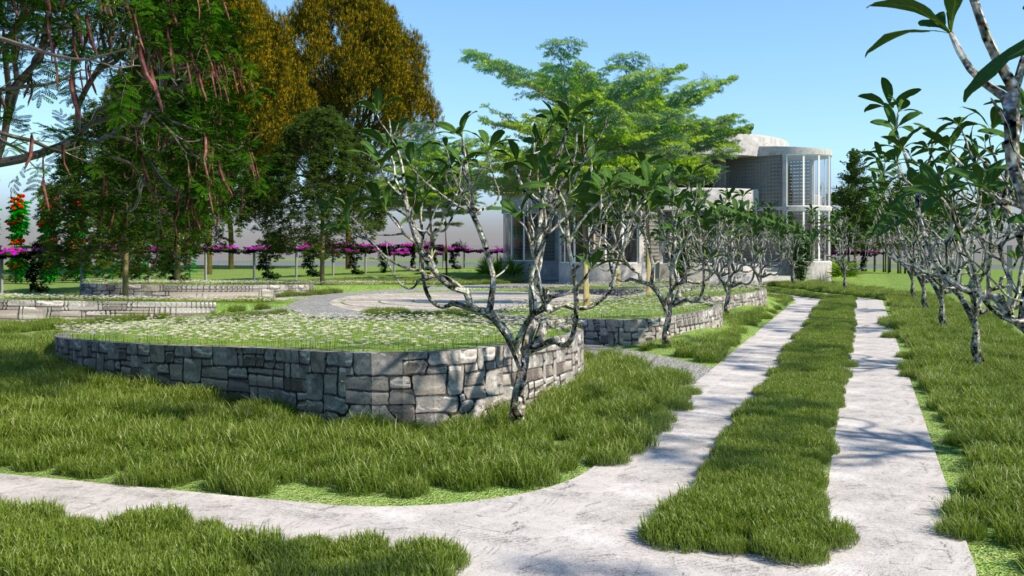
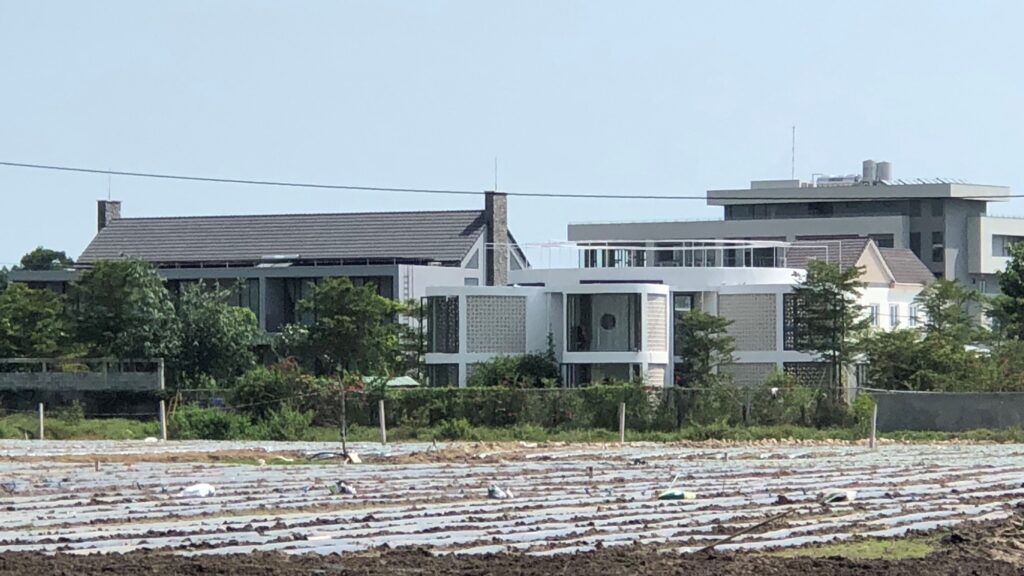
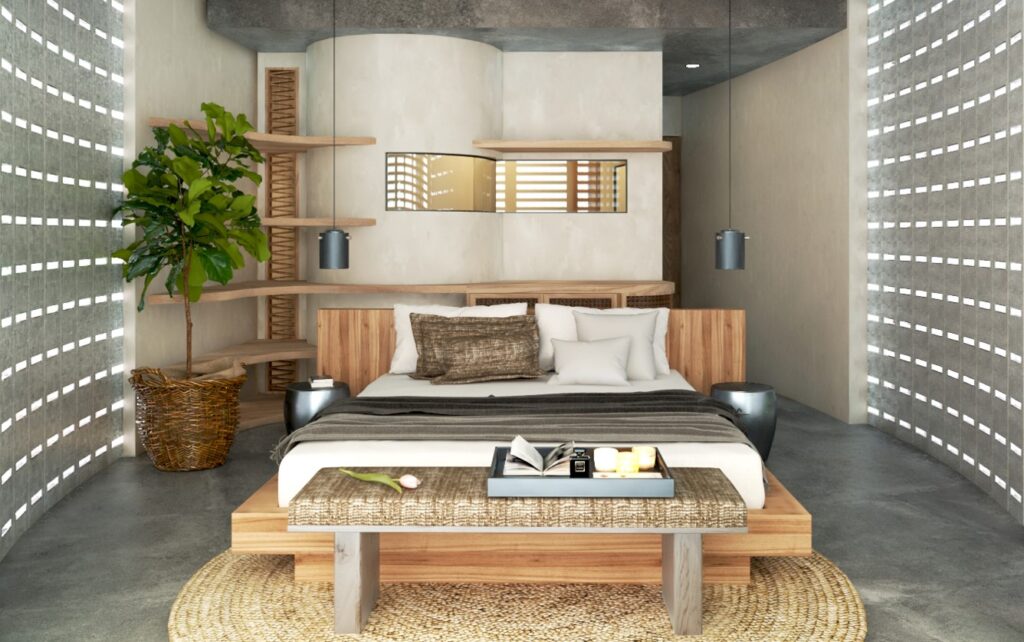
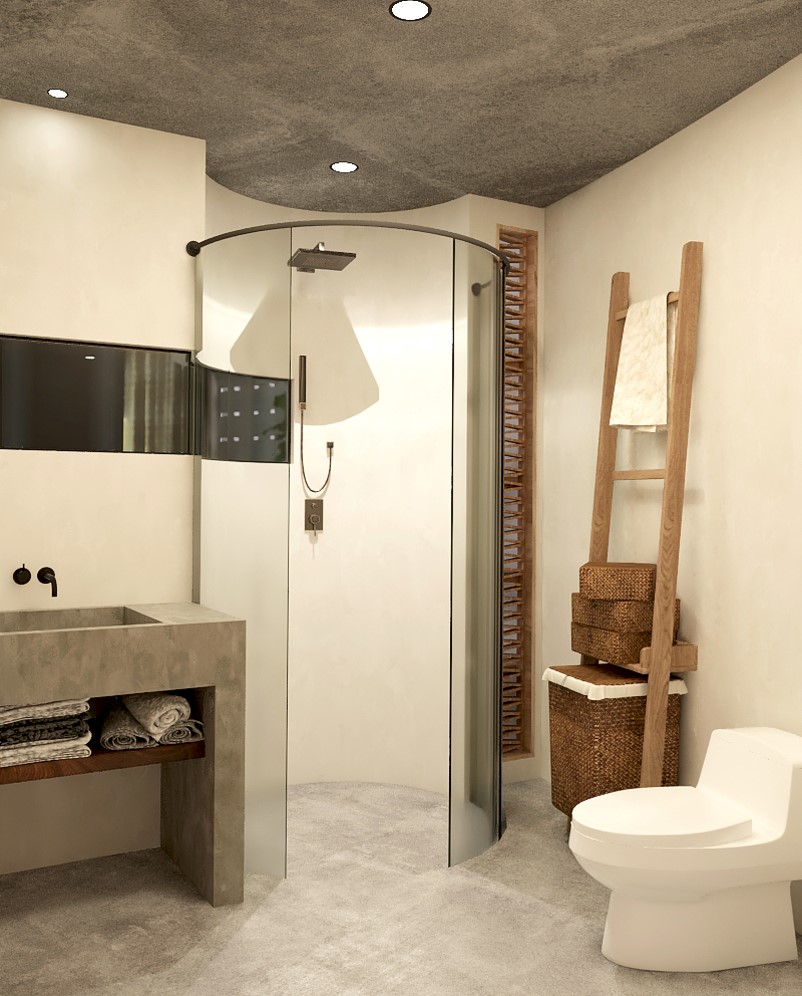
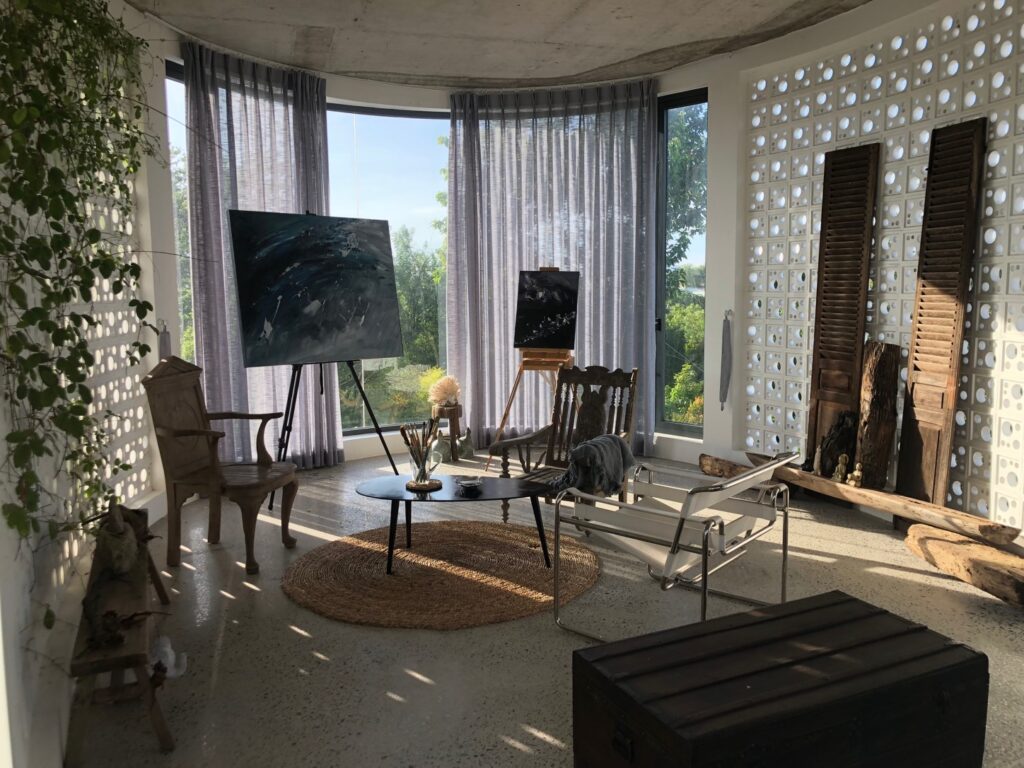
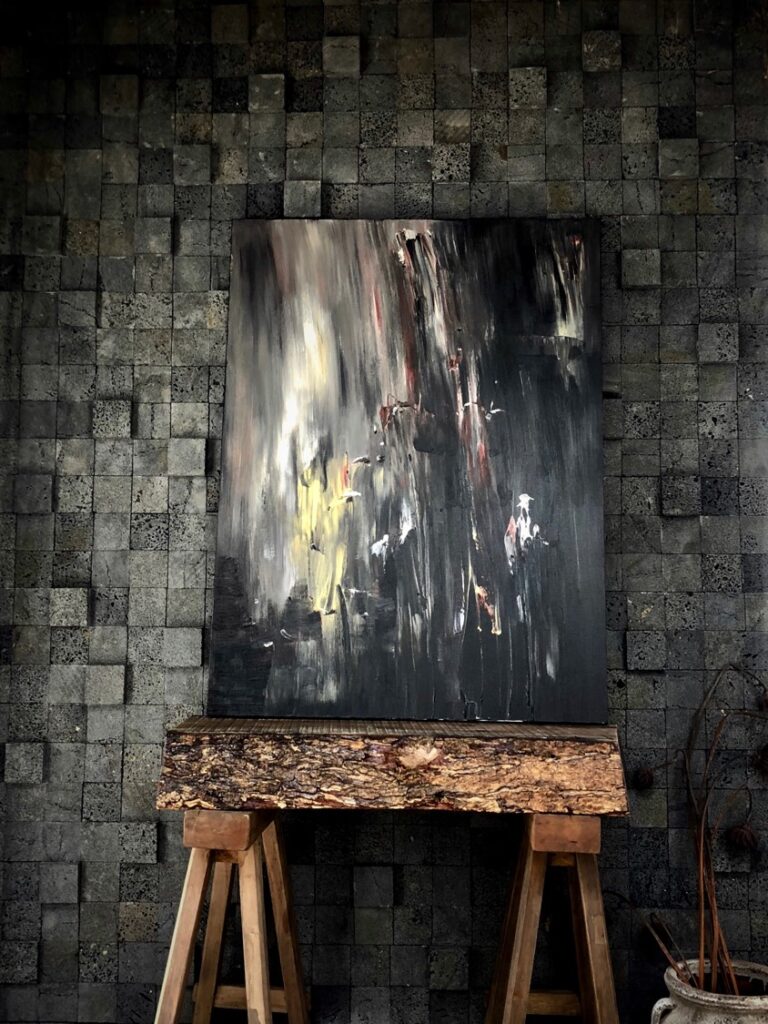
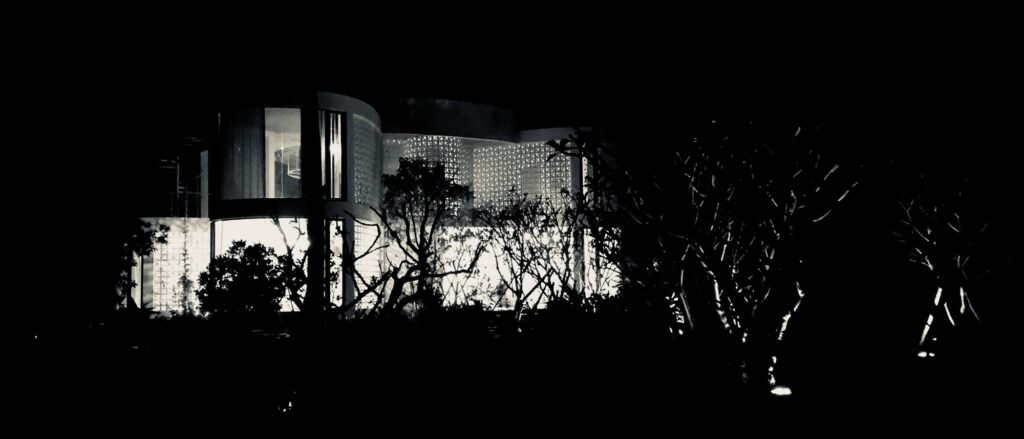
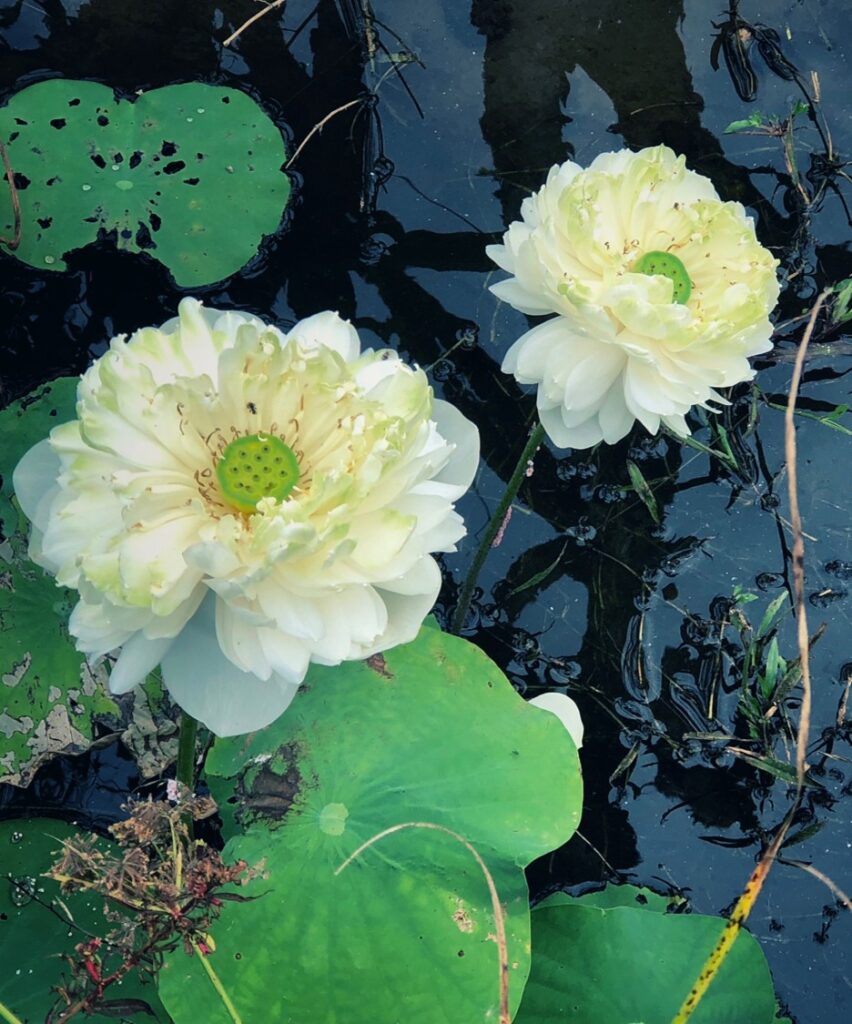
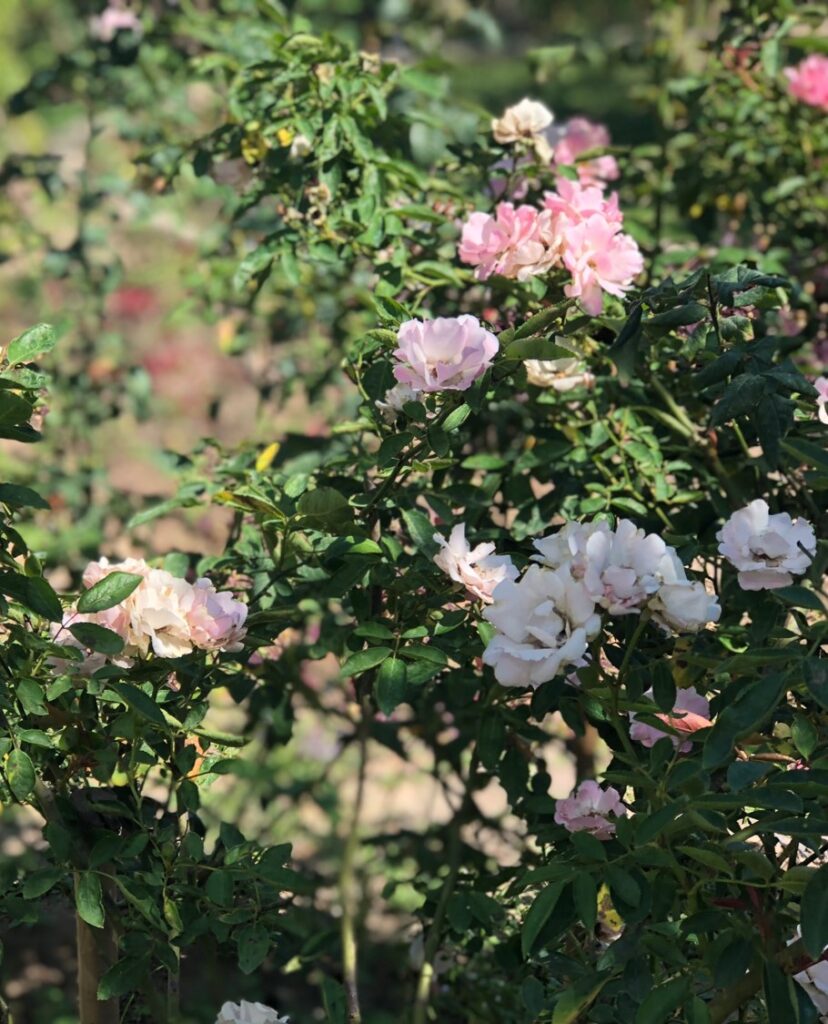
The concept of the project is a hybrid space without fixed determinations or boundaries. We envision a space that seamlessly integrates botany, meditation, and art—a sanctuary where individuals can care for themselves slowly and mindfully, embracing relaxation.
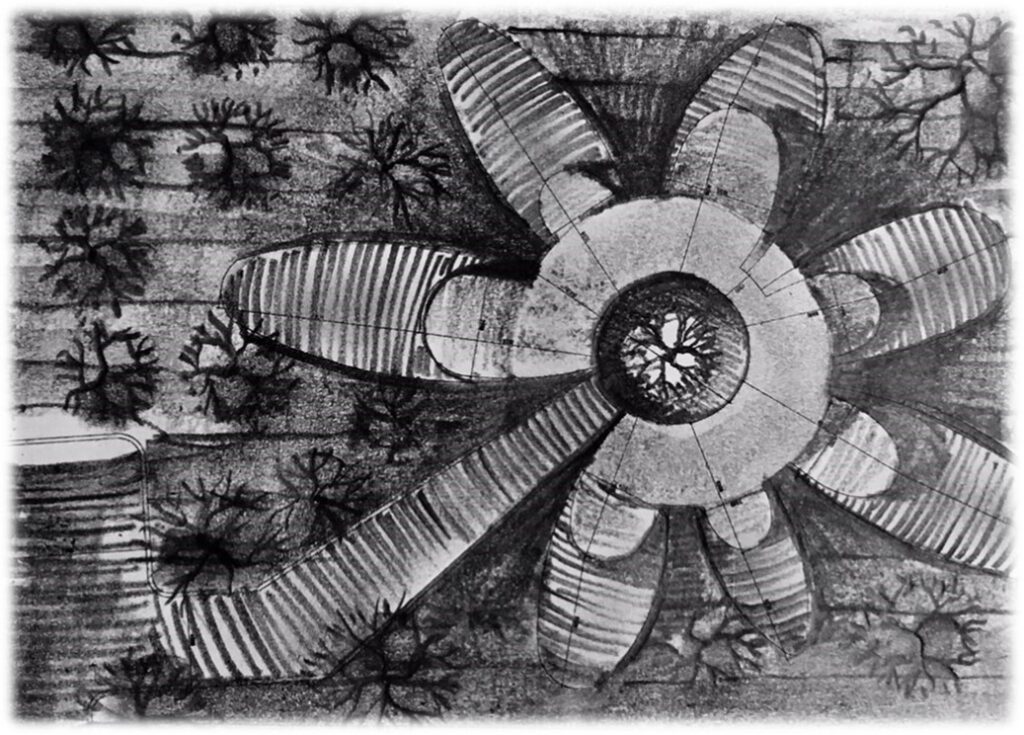
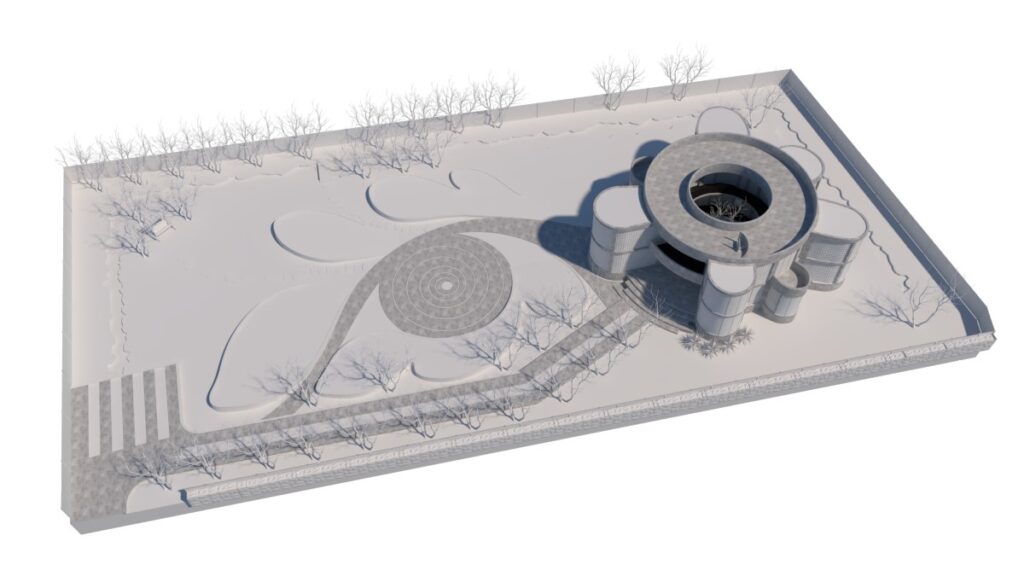
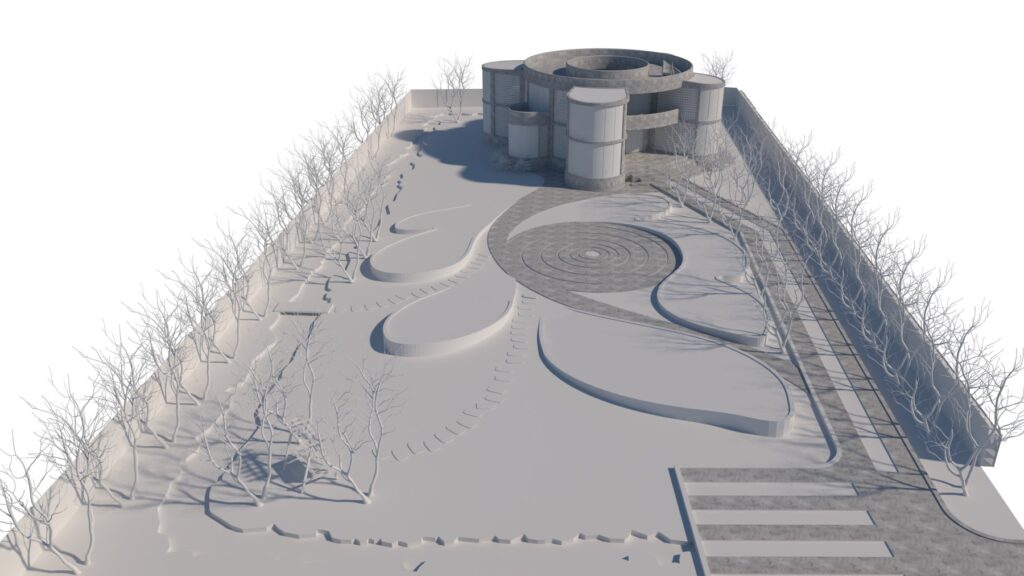
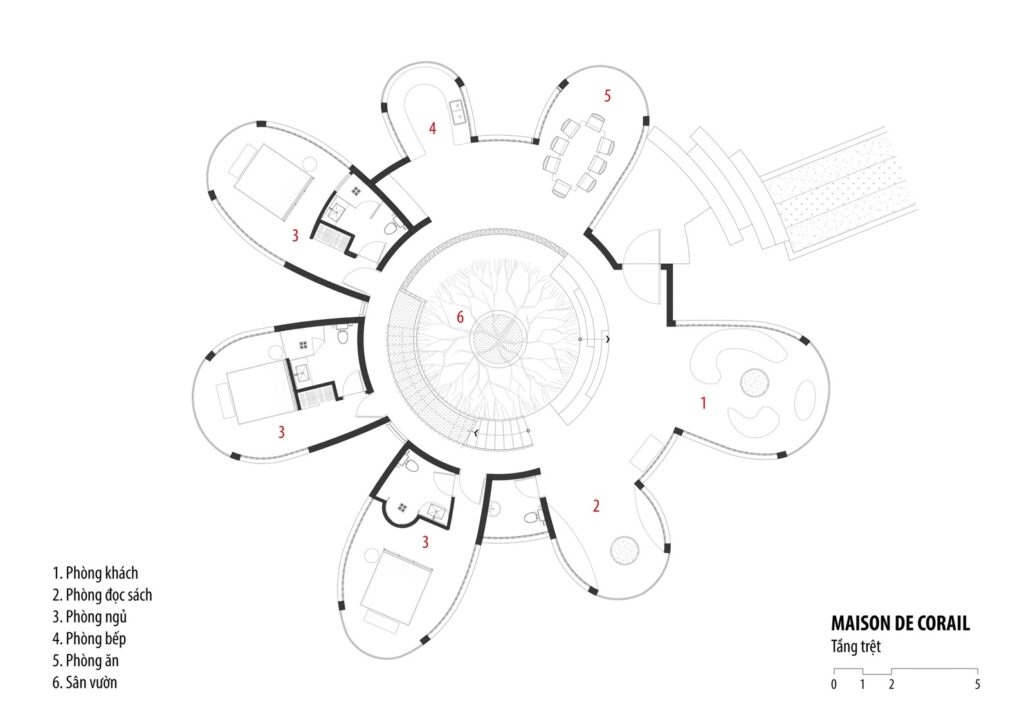
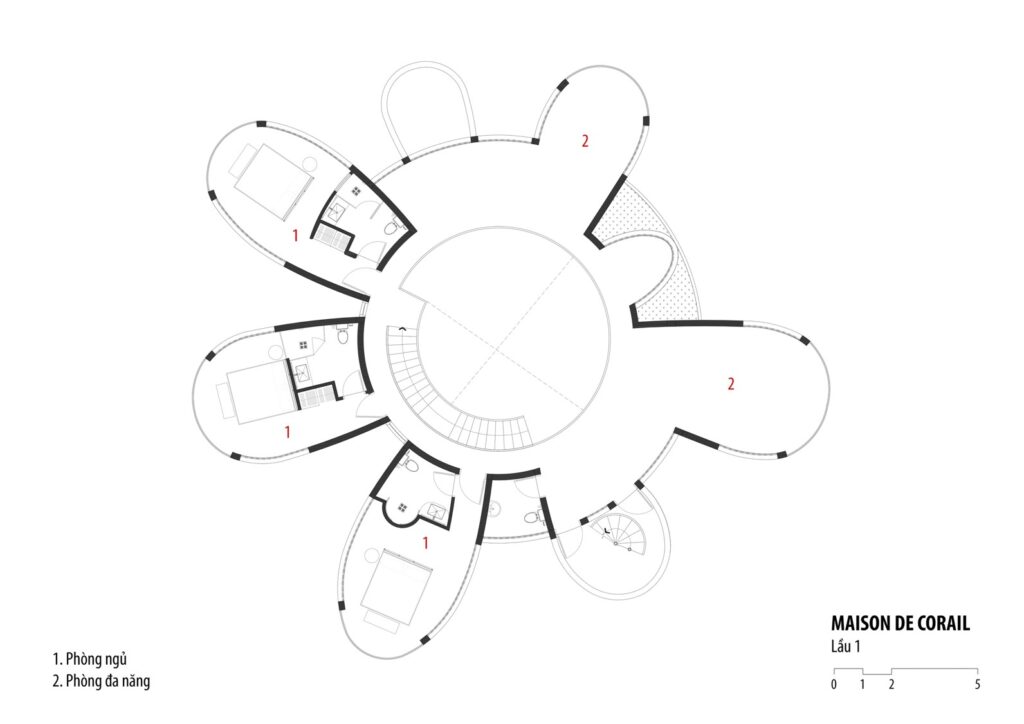
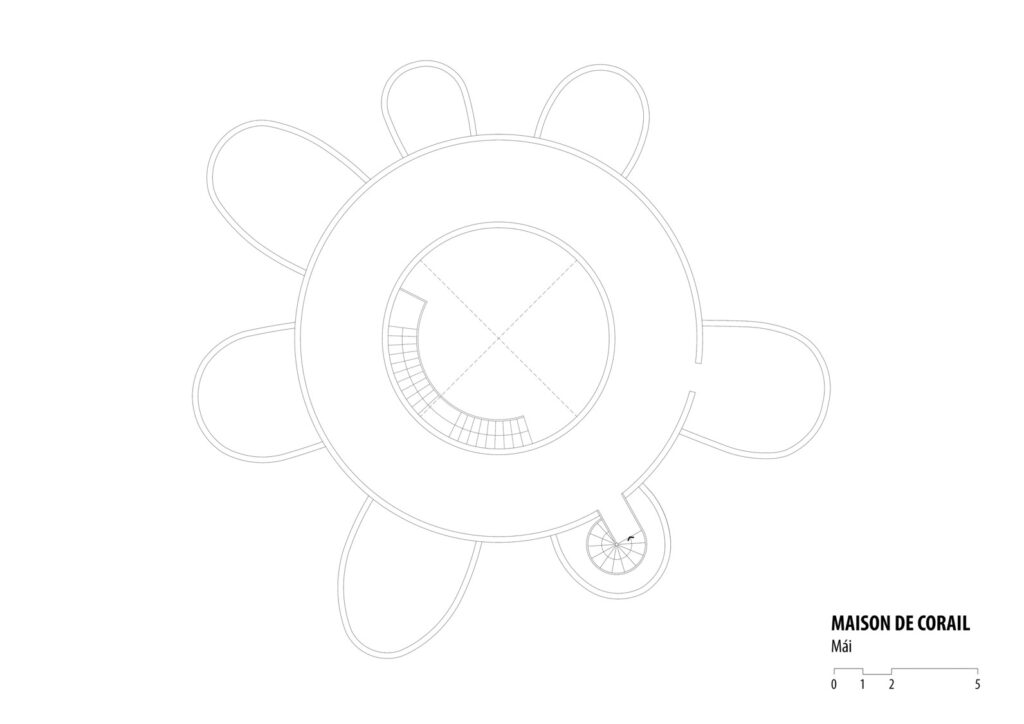
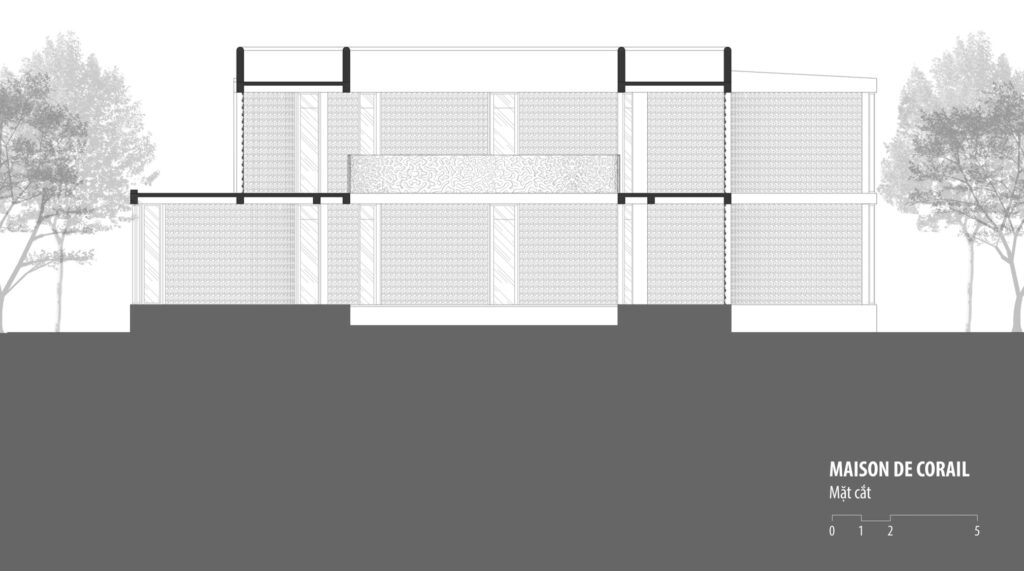
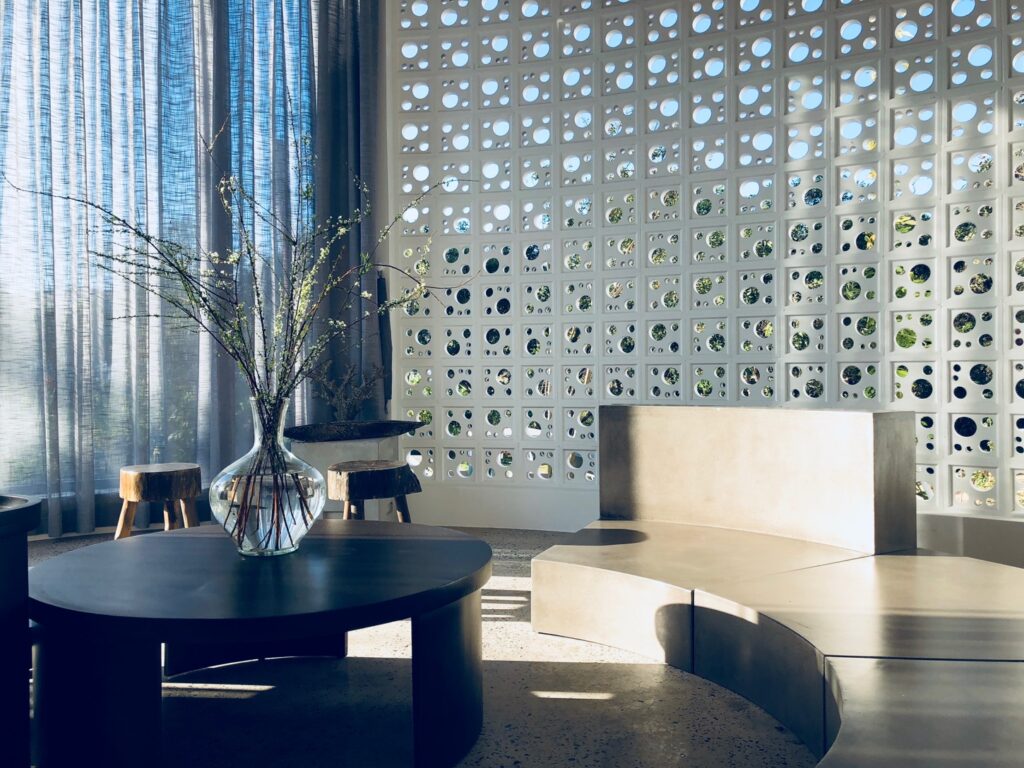
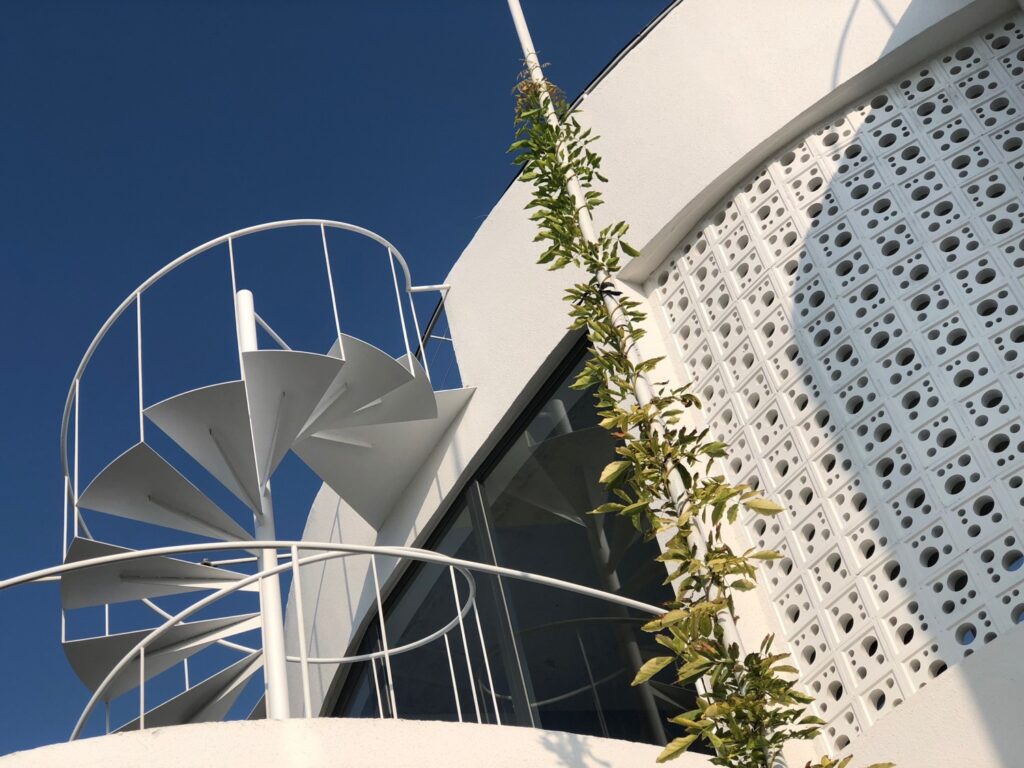
Drawing inspiration from nostalgia and natural materials, the space is crafted by artisans and adorned with artworks that celebrate beauty in imperfection, echoing real environments. The façade is constructed from breezeway blocks, allowing sunlight and natural ventilation to flow through, eliminating the need for artificial air conditioning systems.
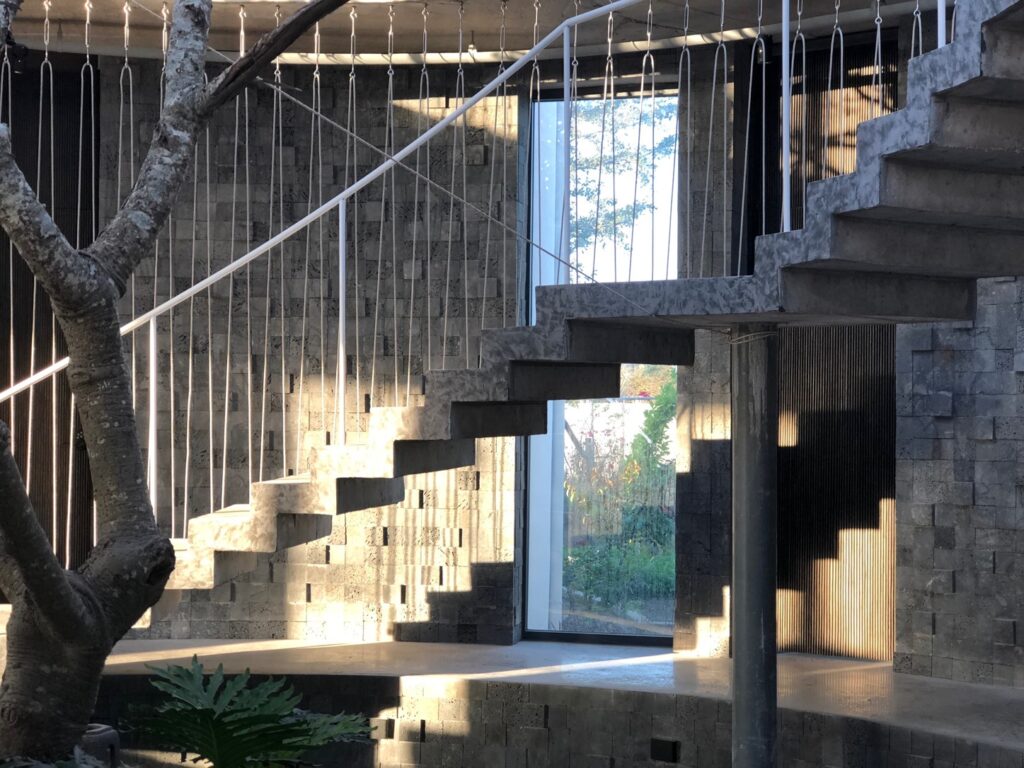
A spiral staircase wraps around the courtyard, featuring a rendered banister and concrete treads, leading to an open art workshop and meditation space designed to inspire tranquility and creativity.
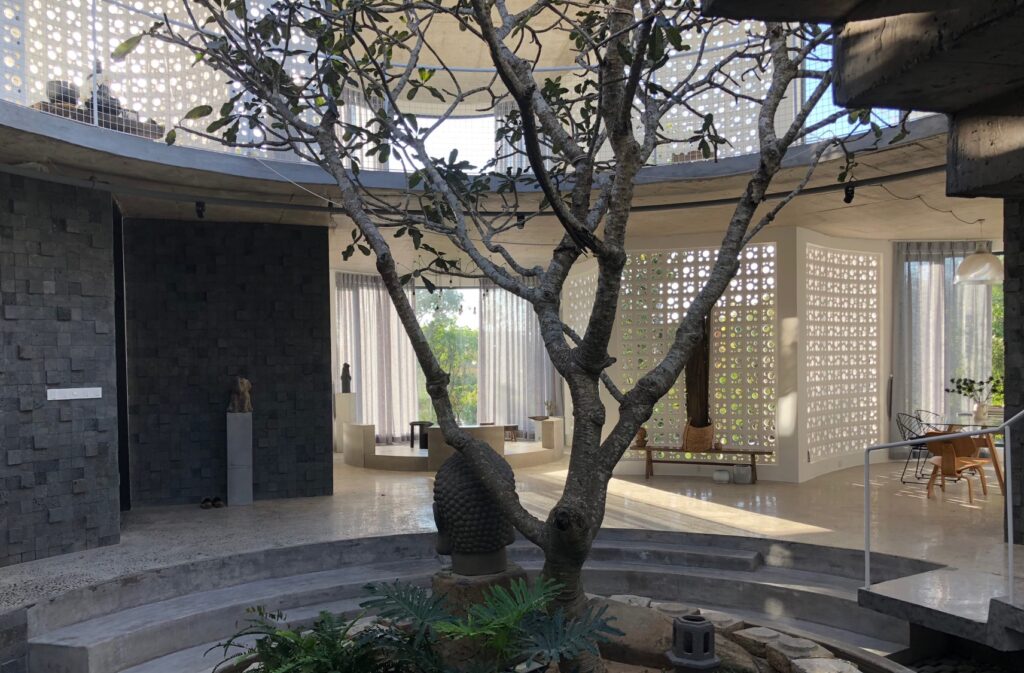
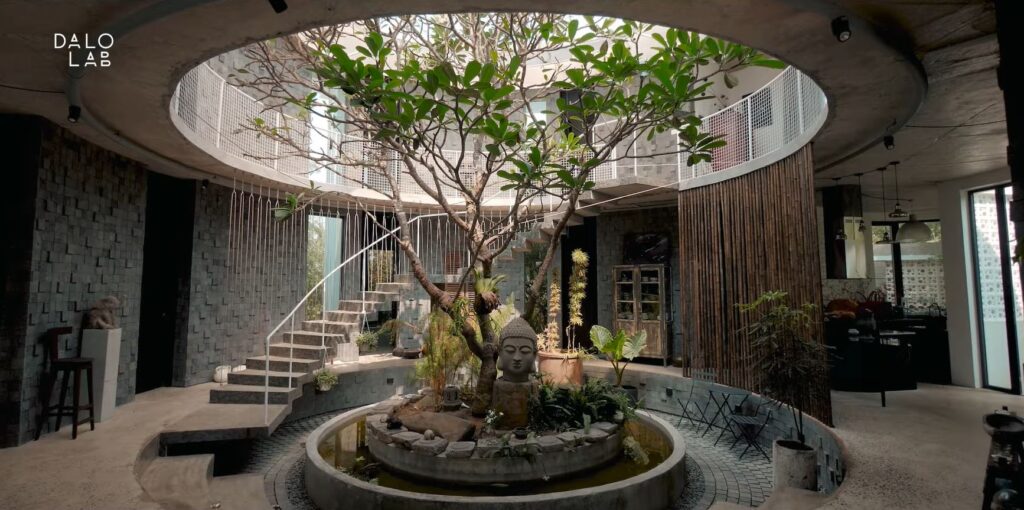
Coral house. Source: DALO LAB
“Ẩn tàng chốn lạ mà quen
Lá chen mây trắng hoa chèn sắc hương
Ngõ vương ánh nắng qua đường
Yêu thương đọng lại khu vườn ngày xưa.”
“Strange but familiar hidden place
Leaves insert flowers into white clouds
Light alley across the street
Love leaves the old garden. ”
Architect. Ho Viet Vinh
The overarching goal is to foster a minimalist lifestyle that honors the slow passage of time. Lava stones, with their textured surfaces, reflect dynamic shades as sunlight moves throughout the day, creating an ever-changing interplay of forms and light.
Type
Residential
Year
2020
Location
Ho Tram, Ba Ria Vung Tau
Team
Ho Viet Vinh, Tran Thanh Hai, Le Van Thoi, Ngo Dang Linh
Contractor
Cuong Quang Construction
Interior Designer
Ho Viet Vinh
Structural Engineer
Nam Vie
Photo
Ho Viet Vinh
Next project | Majestic Hotel Renovation
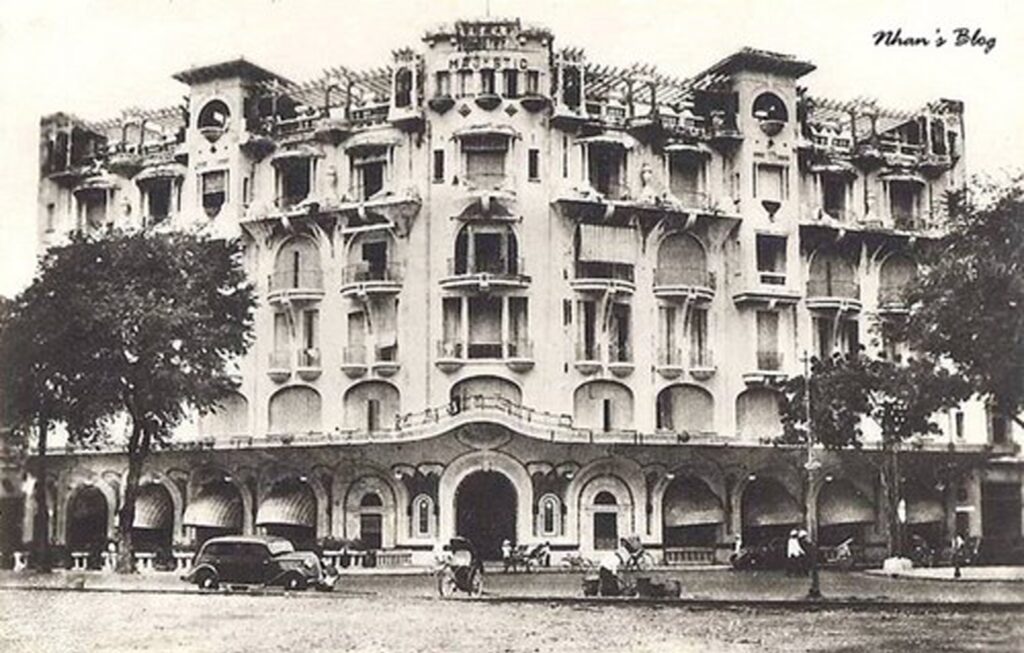
Established by the Hui-Bon-Hoa Company (owned by a Chinese-Vietnamese businessman known as Uncle Hoa), the hotel is located at the corner of Catinat Street (now Dong Khoi Street) and Quai de Belgique Street (now Ton Duc Thang Street). Designed in the popular baroque architectural style of the time, the hotel became one of Saigon’s most elegant and impressive buildings upon its completion in 1925.
The Majestic initially had three stories and 44 bedrooms, as per the original design by a French architect. In 1948, the Indochina Tourism and Exhibition Department, led by the Frenchman Franchini Mathieu, purchased the ground and first floors of the hotel and leased 44 rooms for 30 years.
The hotel was officially rated as a five-star establishment in 2007. In July 2011, construction began on two new towers along Nguyen Hue Street, adding 353 rooms to the hotel.
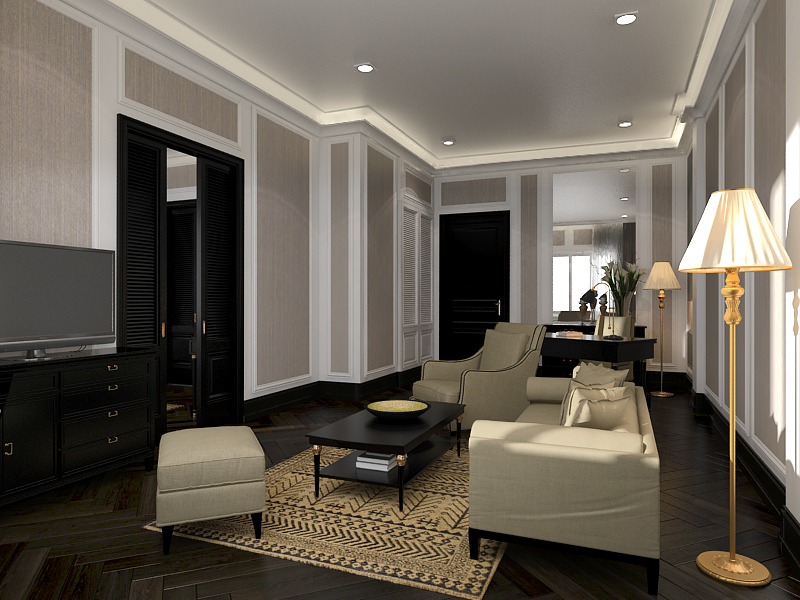
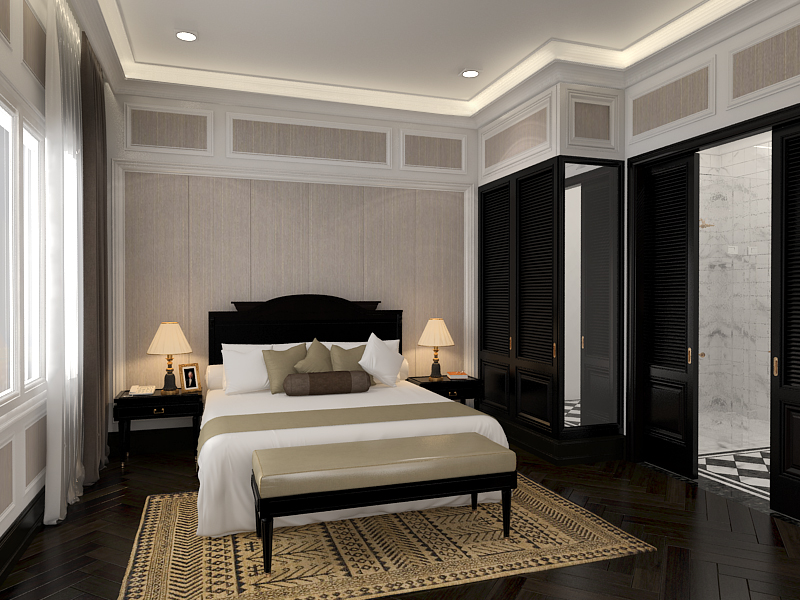
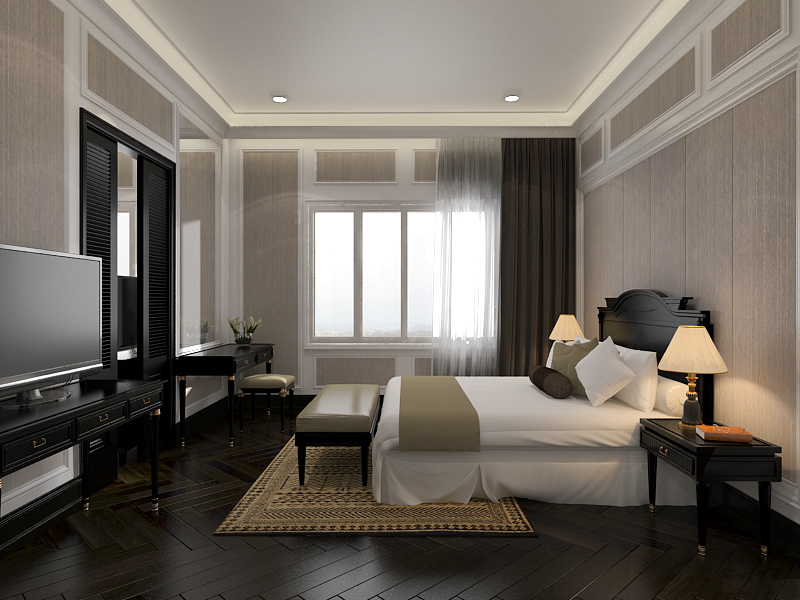
However, over time, the usage of the space and the integration of modern equipment have diminished the building’s original value. The goal of the redesign and renovation is to restore its luxury and evoke the essence of the famous Indochinese architectural style, reminiscent of old Saigon.

Next project | Ru
Ru
Ru đời mấy giấc chiêm bao,
Xôn xao như gió ngã nhào bờ mê,
Ru quê cho tỏ đường về,
Tỉ tê câu chuyện bờ đê mái đình,
Ru mình chỉ mấy lời kinh,
Tâm minh hồn triết thanh hình sắc tao.
Lullaby
Lull life’s dreams in fleeting flight,
Stirred like winds tumbling on enchanted dikes,
Lull the homeland, reveal the path home,
Whisper tales by riverbanks and village halls,
Lull the self with sacred dharmas,
Enlightened soul, wisdom’s grace in form and rhyme.
Ho Viet Vinh 250412