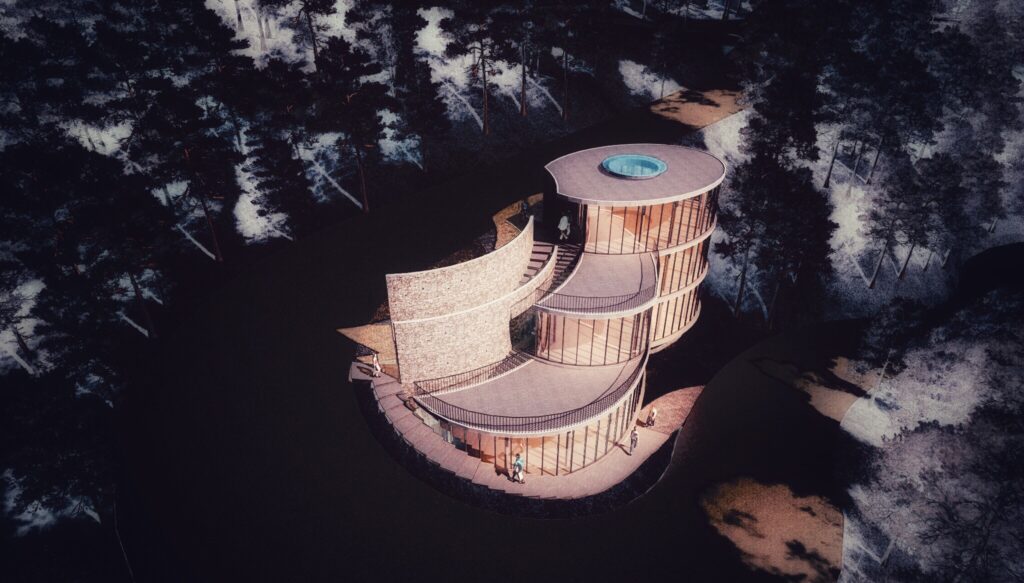
Solid and rough are the emotions of BaoLoc. Spatial topography consists of interlaced hills, layers hidden under layers of cold pine forests. In that autumn silence, the clouds are the witch who transforms to soften the rough, dry and cold.
CLOUD
Vinhho.2022
Following the wind, the stream flows in all directions,
The foggy road is dotted with flying dew drops.
Love is drunk at night in dreams,
Filled with the call of the human realm.
Next project | INVISIBLE
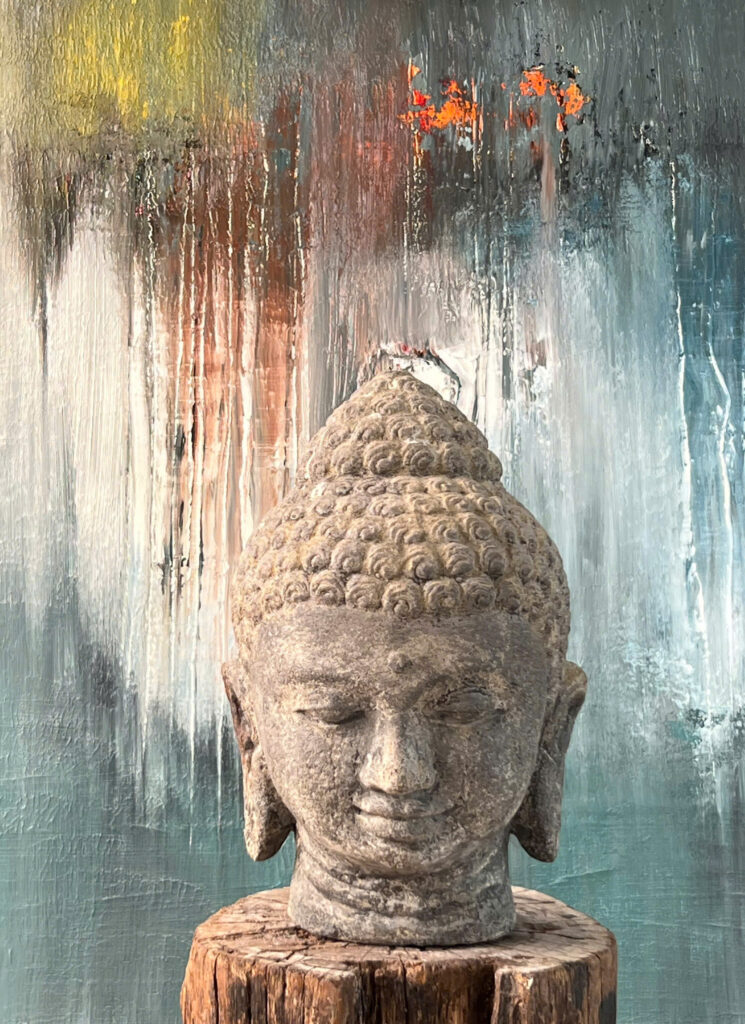
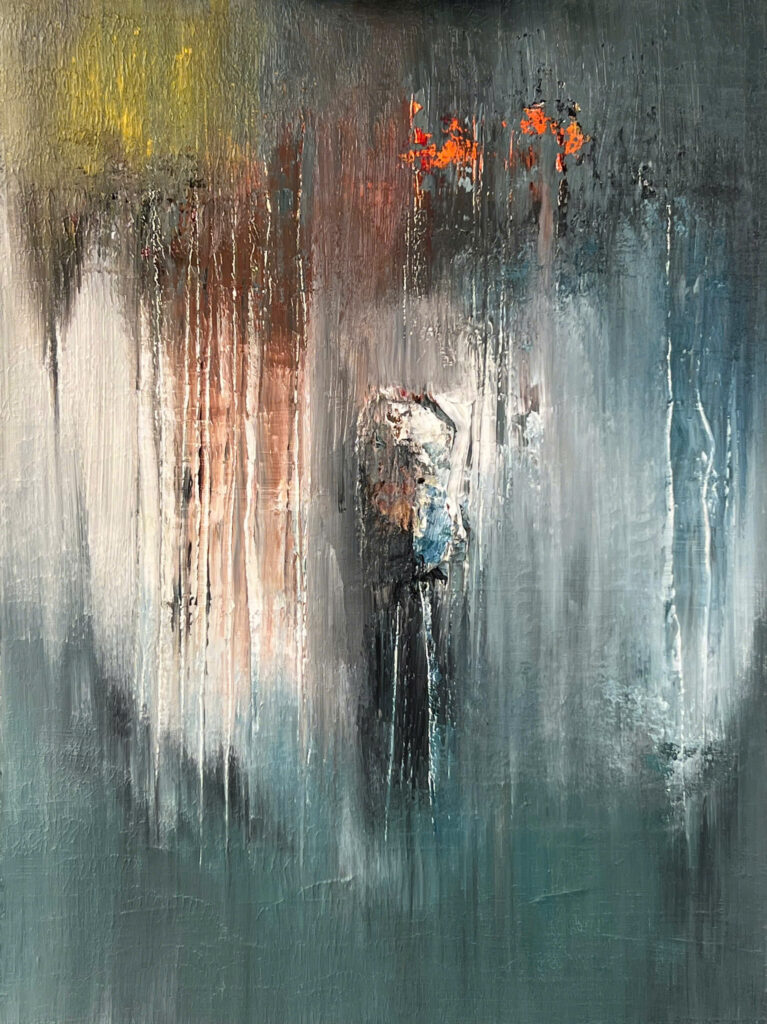
Invisible, Vinhho, Acrylic on canvas, 60×80, Maison de Corail, 2024
The overlapping layers of color create emotional and material depth, symbolizing disintegration and rebirth. The contrast between light and darkness, emphasizes the struggle between hope and suffering, opening up an abstract space rich in philosophical reflections on existence and history.
Next project | Cloud stream
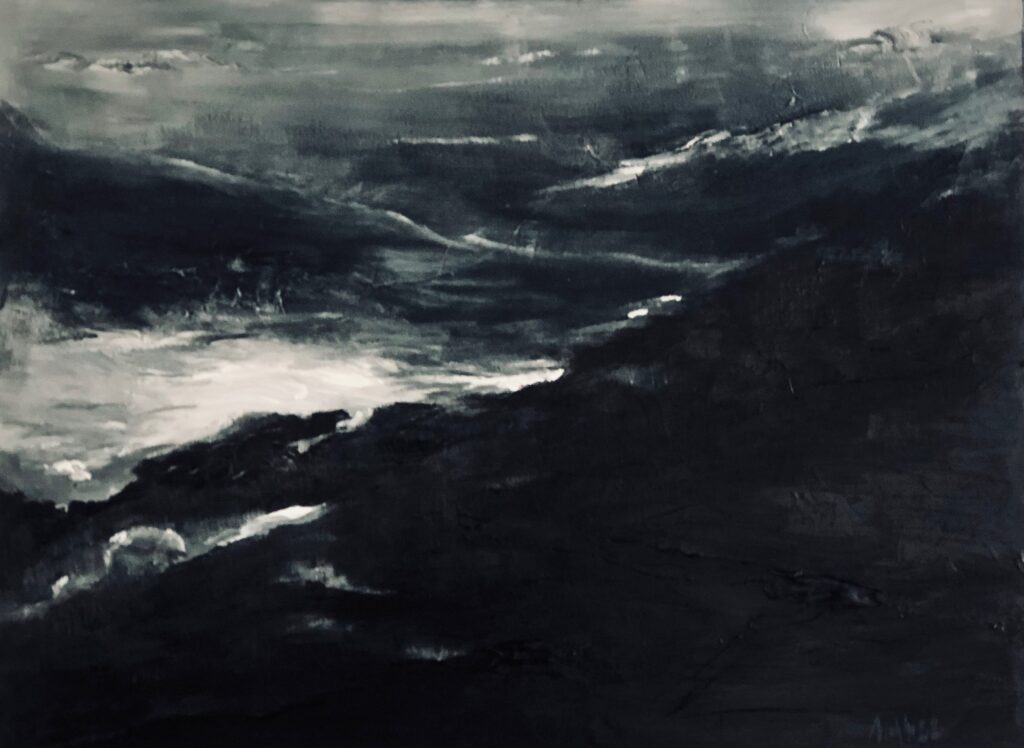
Vinhho, Arcylic on canvas, Dallat 2020
Solid and rough are the emotions of Da Lat. Spatial topography consists of interlaced hills, layers hidden under layers of cold pine forests. In that autumn silence, the clouds are the witch who transforms to soften the rough, dry and cold.
CLOUD STREAM
Following the wind, the stream flows in all directions,
The foggy road is dotted with flying dew drops.
Love is drunk at night in dreams,
Filled with the call of the human realm.
SUỐI MÂY
ho viet vinh. dallat 2019
Theo làn gió suối tuôn về muôn nẻo,
Đường mù sương lấm tấm hạt sương bay.
Tình men say gối đêm vào giấc mộng,
Cho ngập lời tiếng gọi cõi nhân sinh.
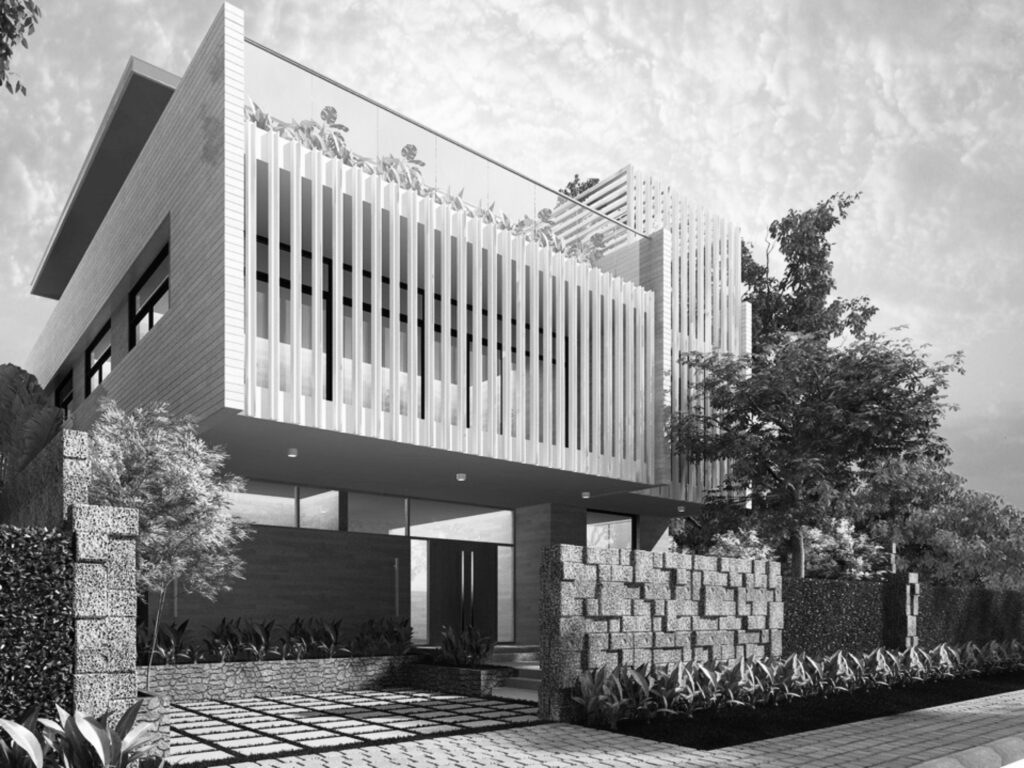
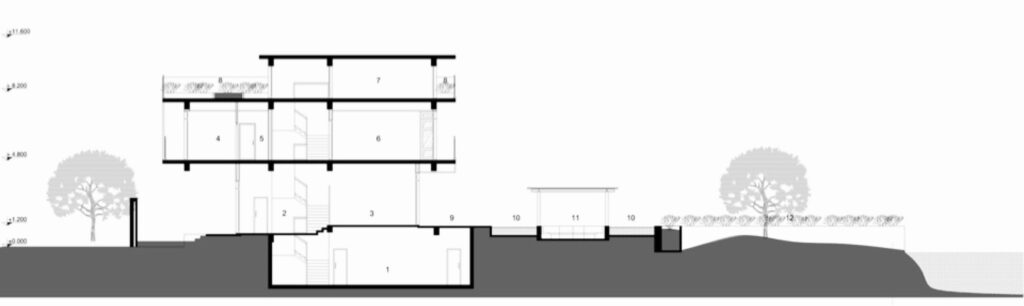
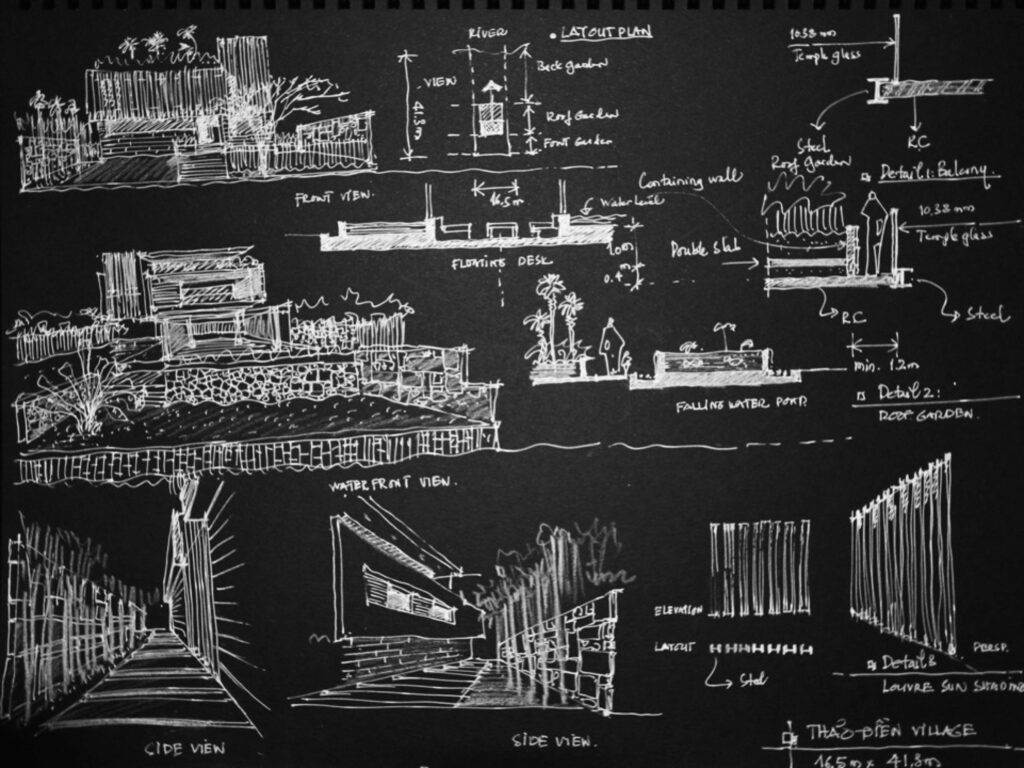
Next project | The VIDE Villa
Next project | Forest Station
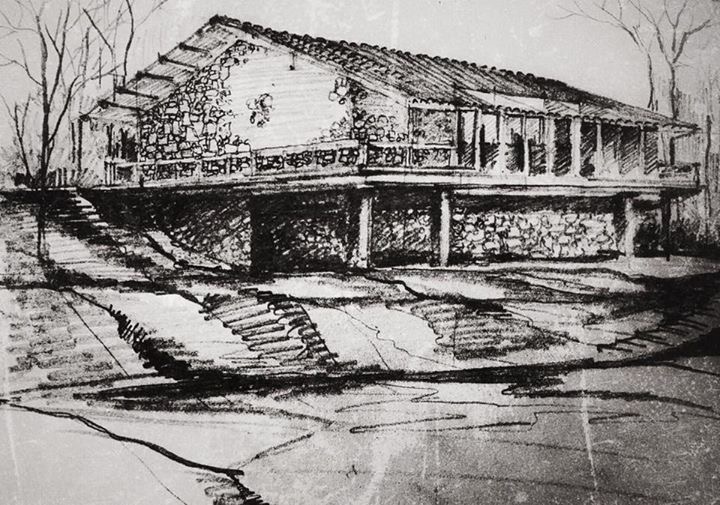
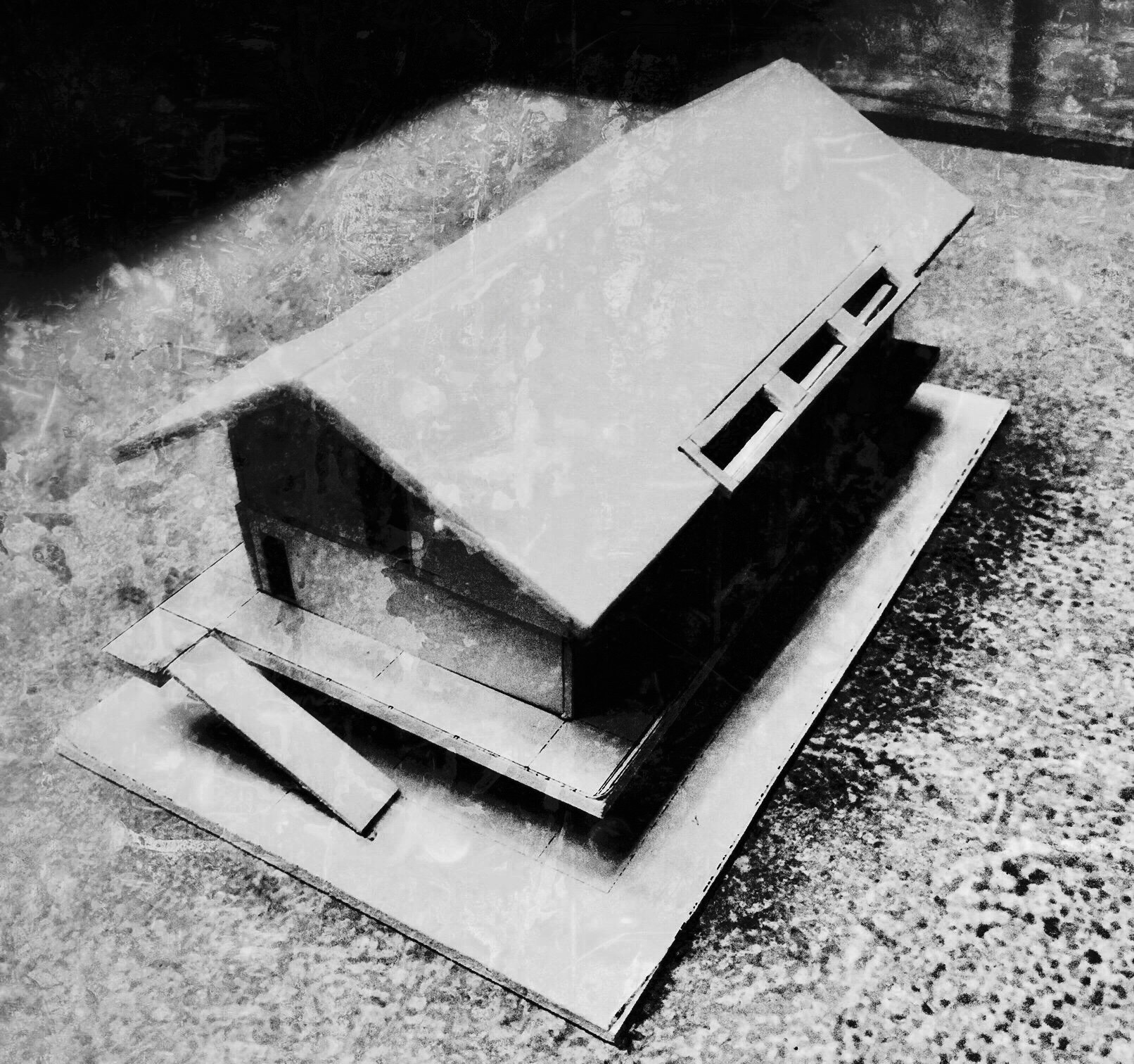
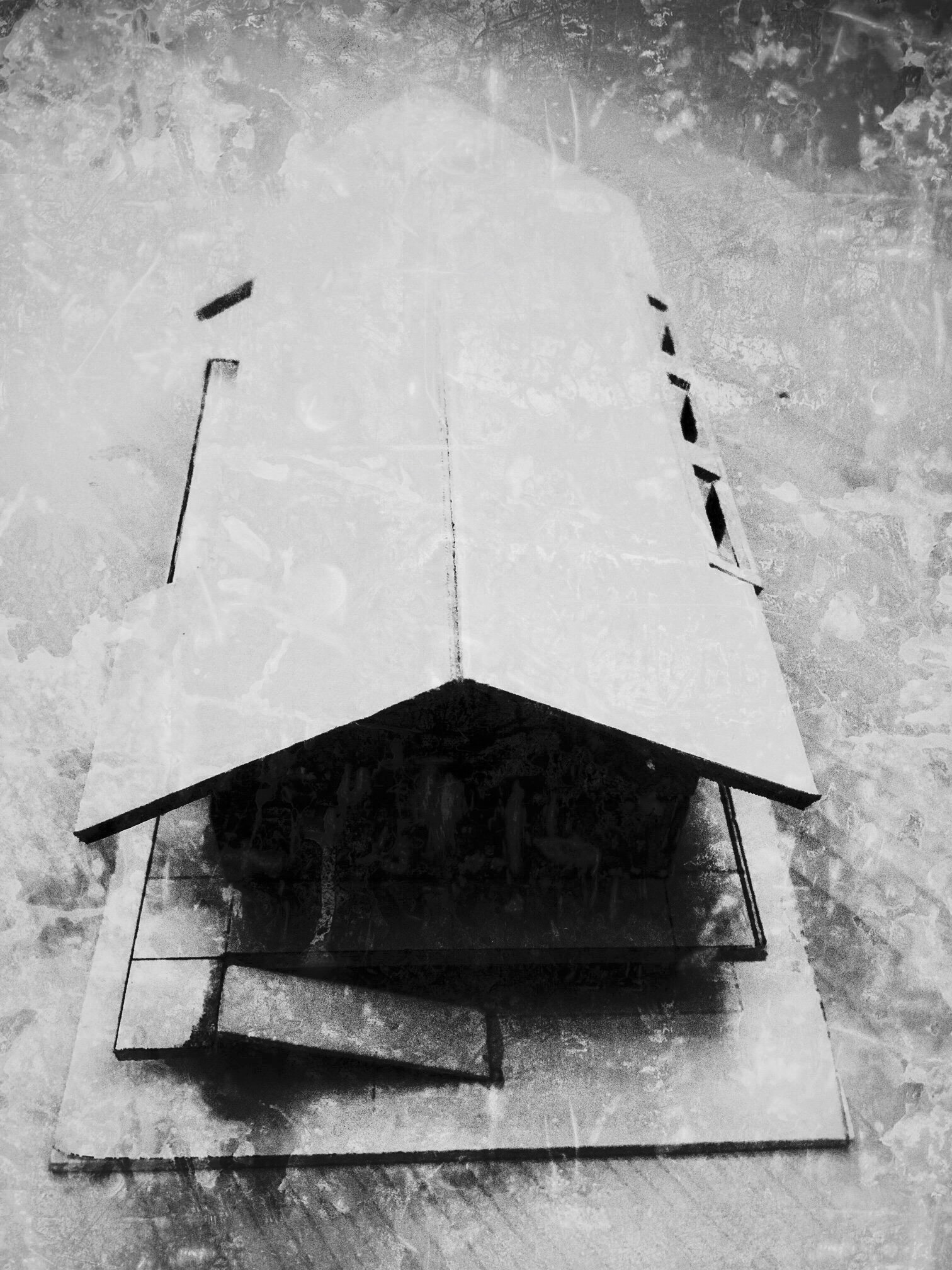
Returning to the forest is like being immersed in pure silence. Each breeze caressing the skin penetrates deep into each cell to wake up the body after a long deep sleep. The breath slowly fills all the skin, making the whole body immersed in the sweetness of heaven and earth. Returning to that place is the way returning your true home. 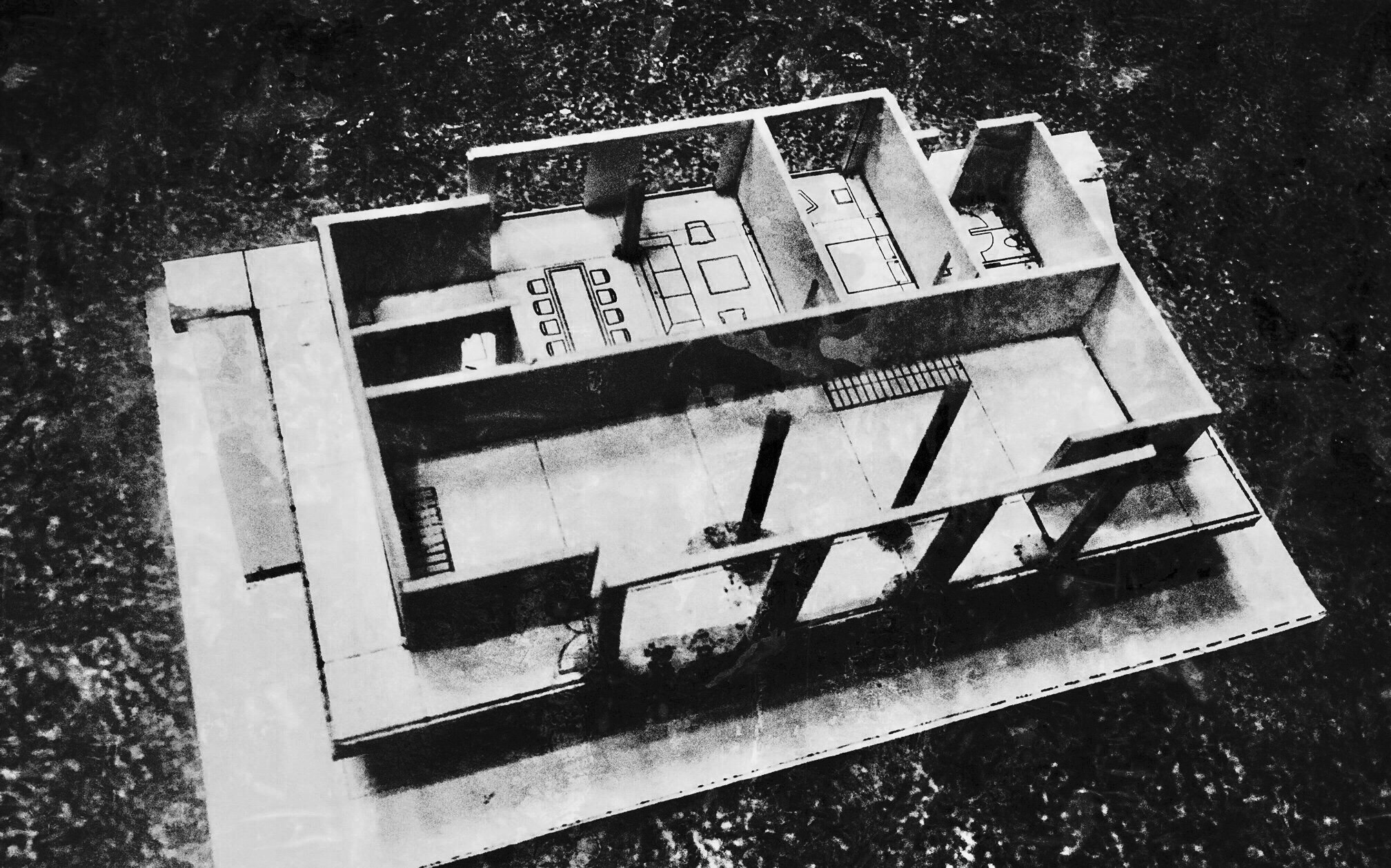
Next project | Desire
“A silent ode to the beauty of existence, portraying the sublime interplay of light and shadow that dances within the human soul. It is an invitation to wander through the corridors of one’s own soul, amidst the rain of introspection and the elusive sunsets of desires.”
Ho Viet Vinh
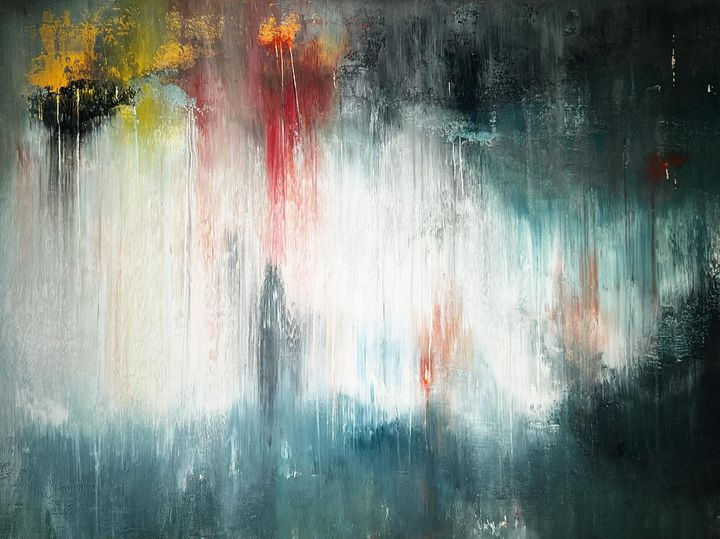
Acrylic on canvas, 97x130cm, Maison de Corail, 2024
Next project | Forest rain
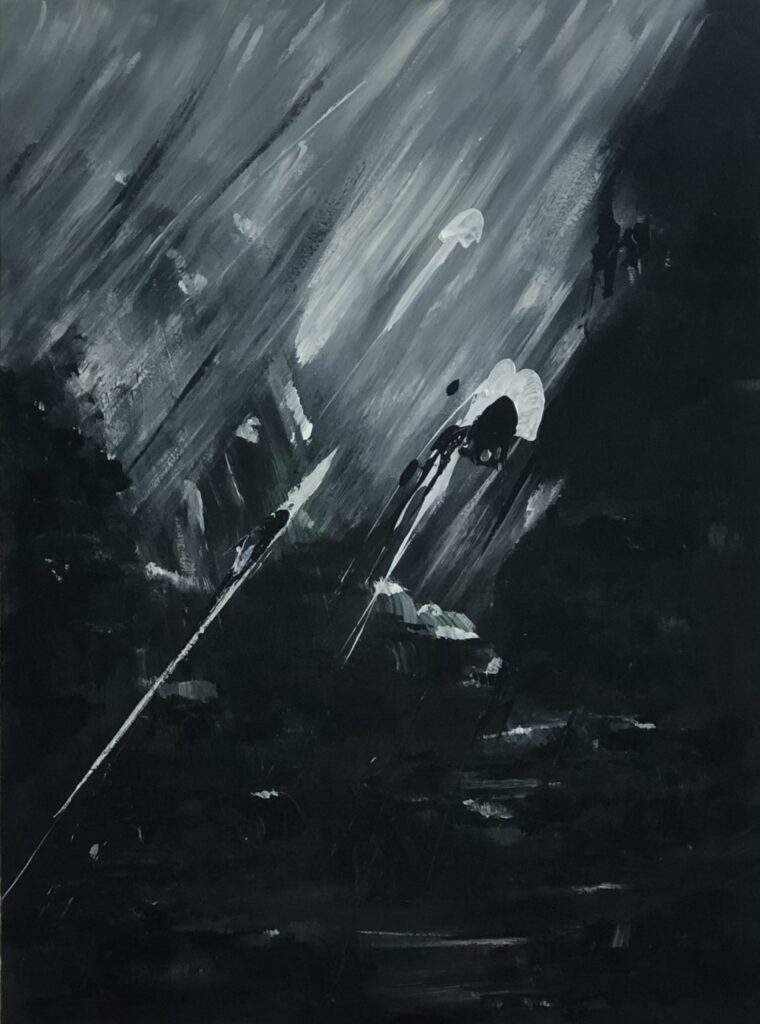
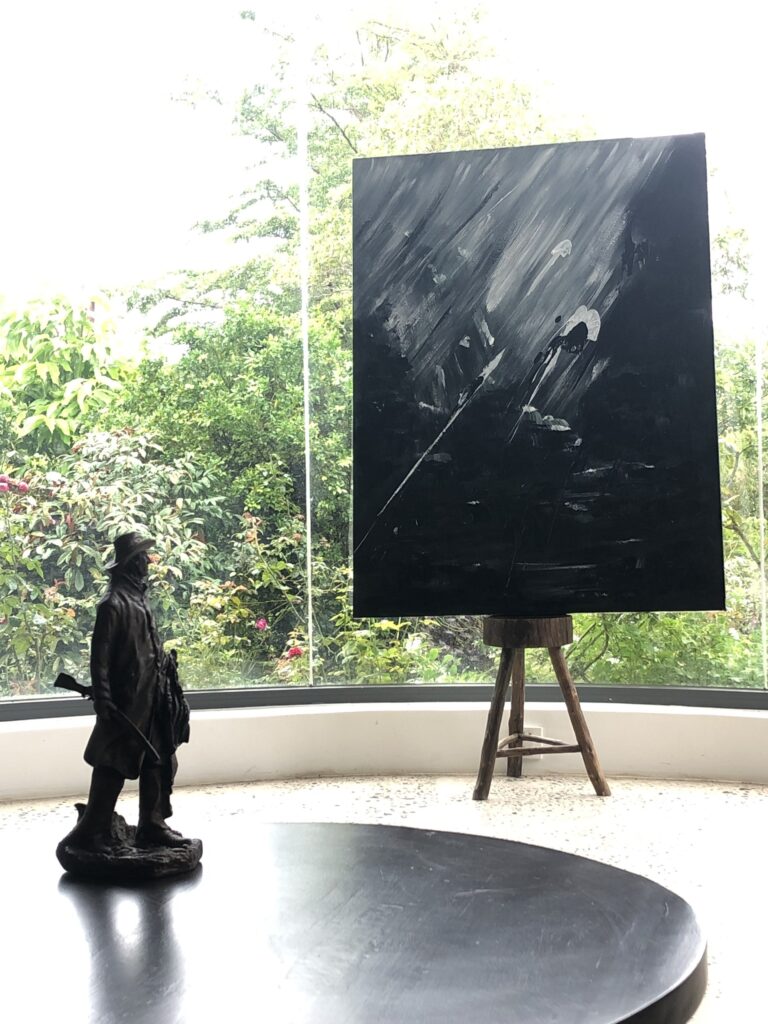
Forest rain.
Streams of water weave across the sky like a loom, tracing delicate horizontal lines. Thick fog veils the forest in the dark of night.
Ho Viet Vinh 2020
Vertical and horizontal water jets carve an intricate painting into the air.
Description
Exucuted in April 2020
Style
Lyrical Abstract
Technique
Acrylic on Canvas
Dimension
97W x 130H x 4D cm
The authenticity of this work has been confirmed by HVV Architect &Partners. A certificate of authenticity maybe delivered by the Company upon request to the buyer.
Vinhho Biography
Ho Viet Vinh is a Vietnamese architect who graduated with a Bachelor of Architecture degree in 1995 from the University of Architecture Ho Chi Minh City, Vietnam, where he received an award for creative design in his final year. He is a Registered Architect in Vietnam, a Registered Urban Planner in Ho Chi Minh City, and a member of the Association of Architects and Urban Planners of Vietnam.
Vinh’s career began in 1995 with participation in several design competitions in Ho Chi Minh City. That same year, he became a lecturer in the Urban Planning Department at the University of Architecture.
In 1998, he won second prize in the international competition organized by the Summer Workshop of Cergy-Pontoise, France, with the theme “Ho Chi Minh City and the Saigon River.”
In 2005, he was awarded a special prize in another international competition by the Summer Workshop of Cergy-Pontoise, France, for his project “Can Gio Emotional City.”
In 2010, he participated in the U.S. International Visitor Leadership Program (IVLP) focusing on Sustainable Urban Planning.
In 2015, Vinh was selected by the Lebadang Creative Foundation to design the Lebadang Memory Space Museum in Hue. During this time, he also became the Director of the Fund.
Next project | The Unveiling of Trịnh Công Sơn’s Sculpture
At 4:30 p.m. on February 28, the Trịnh Công Sơn Park in Gia Hội Ward, Huế City, will host a significant event—the unveiling of a bronze statue of Trịnh Công Sơn, sculpted by the late artist Trương Đình Quế (1939–2016). This bronze statue, weighing 500 kg, stands 170 cm tall, with a width of 230 cm and a depth of 160 cm. Its design exudes a sense of intimacy and familiarity.
The project is the culmination of years of dedication by Mr. Lê Hùng Mạnh from Gia Hòa Company in Ho Chi Minh City. The journey to place a statue in a public space was far from simple, but his passion for commemorating artists didn’t stop there—he dreams of creating similar tributes for other cultural icons, such as the poet Bùi Giáng.
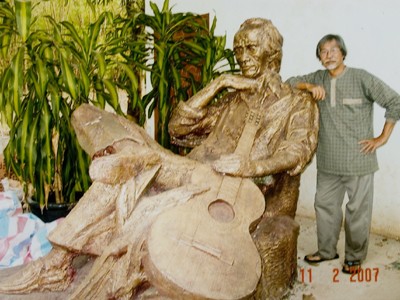
The choice of Trương Đình Quế as the sculptor was deliberate. He was one of Vietnam’s most renowned visual artists, celebrated with numerous national and international accolades. Born in 1939, the same year as Trịnh Công Sơn, Quế graduated from the Gia Định College of Fine Arts in 1960—the very year Trịnh penned his first song, Ướt Mi. This synchronicity in their lives laid the foundation for a deep friendship rooted in a shared passion for art and music, allowing Quế to capture the essence of his lifelong friend with ease.
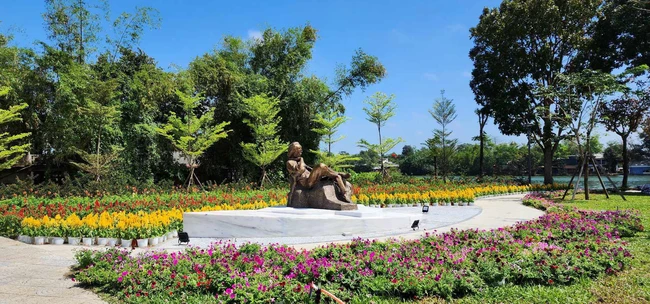
The statue took a year to complete at Giang Điền Waterfall in Đồng Nai. Reflecting on the creative process, Mr. Mạnh shared, “Trương Đình Quế and I agreed on how Trịnh should be depicted—as you now see him, leaning forward, as if gazing into a book, or perhaps into his own soul. Naturally, we couldn’t forget the ‘companion’ who stayed with him from ‘the day my mother bore me into this life of burden’ to ‘the noon field, where we met and vanished into the void’—his guitar.”
“The image of Trịnh bowing is intentional,” Mạnh explained, “and it aligns with his own lyrics: Cúi xuống. Cho tình dấy lên. Cho da thịt mềm. Cho cơn mặn nồng ngất lịm. Cúi xuống. Cho đời lãng quên. Cho mây trời chìm. Cho đêm mở hội âm thầm.
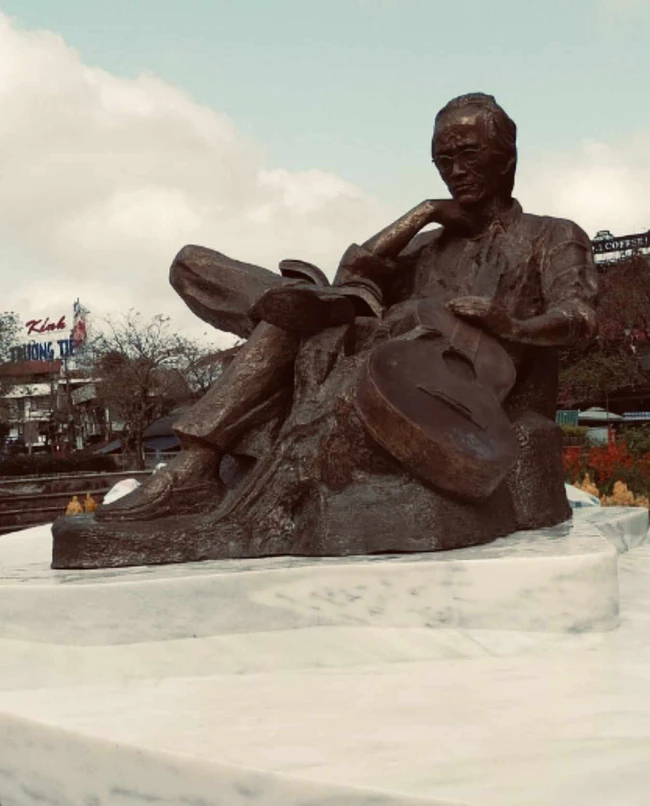
When designing the statue’s base, we collaborated with architect Hồ Viết Vinh, who envisioned it as an eye—650 cm long, 350 cm wide, and 55 cm high. This symbolic choice reflects Trịnh’s longing for human compassion: Những con mắt trần gian, Xin nguôi vết nhục nhằn. Những con mắt muộn phiền, Xin cấy lại niềm tin. Even when inspired by Bùi Giáng’s poetry, Trịnh expressed hope and tenderness: Con mắt còn lại nhẹ nhàng từ tâm. Nhìn em ra đi lòng em xa vắng. Con mắt còn lại là đêm tối tăm. Con mắt còn lại là đêm nồng nàn.
This collaboration between sculptor Trương Đình Quế and architect Hồ Viết Vinh embodies the essence of Trịnh Công Sơn’s music—where visual art and sound converge in a harmonious message of love and humanity.
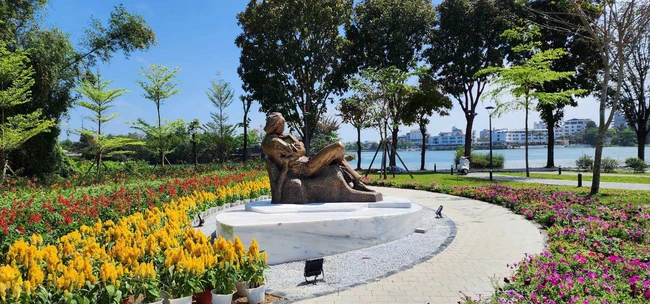
Today, as we gather to unveil this statue on Trịnh Công Sơn’s birthday, it is more than a celebration—it is the realization of a dream. With hearts full of love for his music, Mr. Mạnh and his team gift this statue to the city of Huế as a gesture of gratitude.
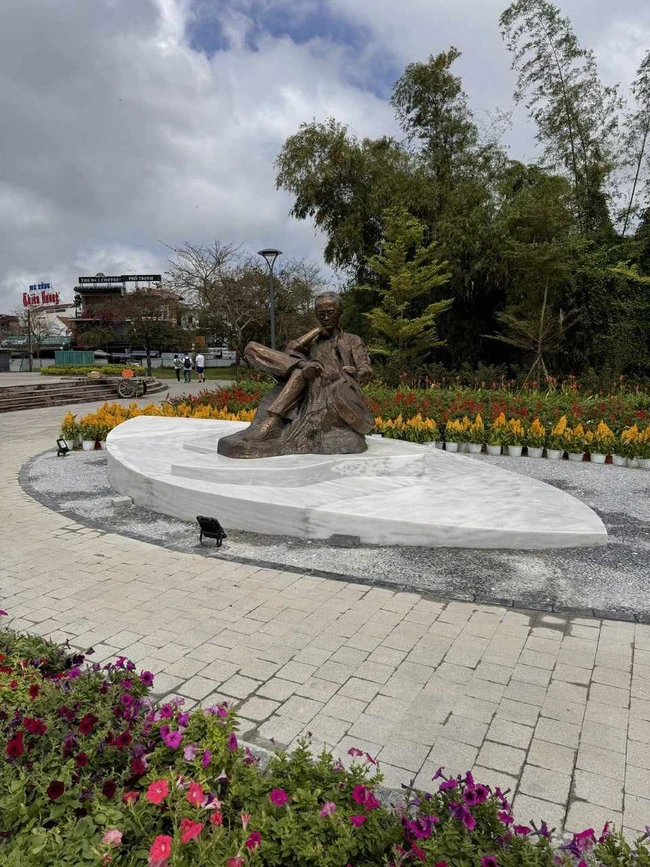
“With this sincere endeavor,” Mr Lê Hùng Mạnh remarked, “we are grateful for the support from the Huế City authorities and the province of Thừa Thiên-Huế, who have made this possible. Today, as the statue of Trịnh Công Sơn stands in the park bearing his name, we believe it brings joy to millions across the country who remember him. And surely, our gifted musician and his dear friend, sculptor Trương Đình Quế, would be pleased. For in life, they shared many moments of artistic communion, exchanging ideas and toasting to the beauty of creation.”
Next project | Shadowy
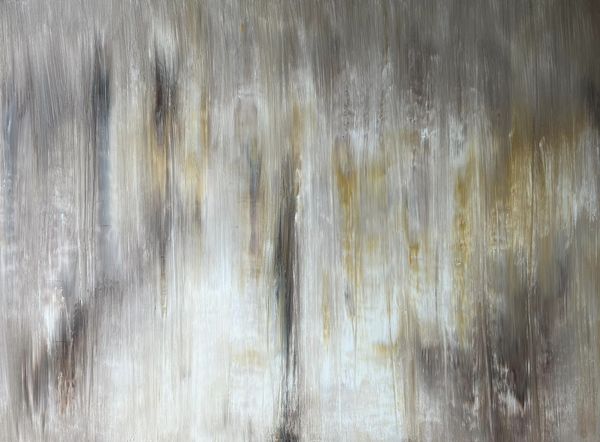
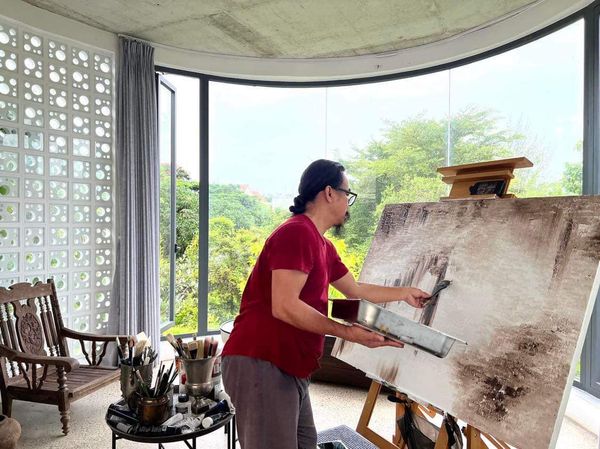
Vinhho, Acrylic on canvas, 130x97cm, Maison de Corail, 2024
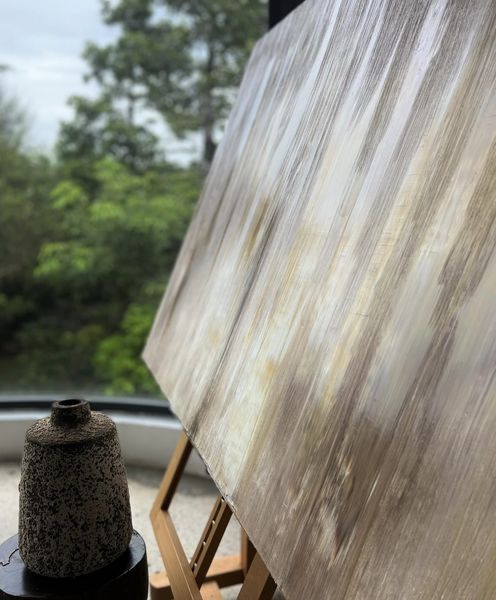
“The interplay of dark and light hues conjures a spectral dance of shadows, evoking the elusive nature of the intangible, whispers of the hidden dimensions that lie beneath the surface, suggesting an eternal struggle between presence and absence.”
Ho Viet Vinh
Next project | Maison de la LUNE
Maison de la Lune embodies a poetic interplay between architecture and nature, where the invisible space reflects upon the surface of existence. The fluid curves of the structure mirror the organic forms of the surrounding environment, creating a harmonious dialogue between the built and the natural. The expansive glass panels invite the outside in, blurring the boundaries between interior and exterior. Light and shadow dance across the surfaces, evoking a sense of tranquility and introspection. This architectural masterpiece is a serene sanctuary, a place where the essence of nature is captured and reflected, offering a contemplative retreat from the chaos of the world.
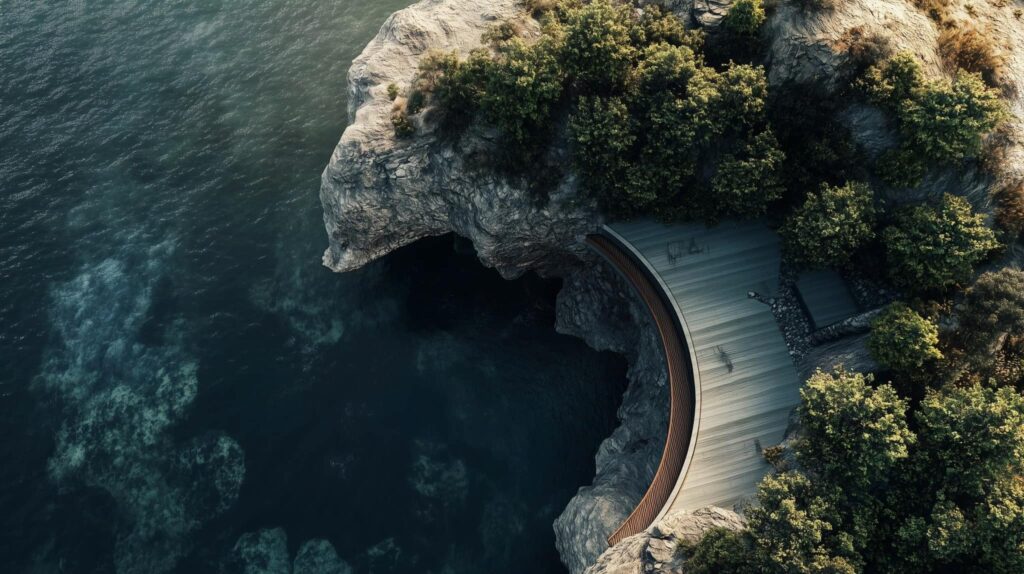
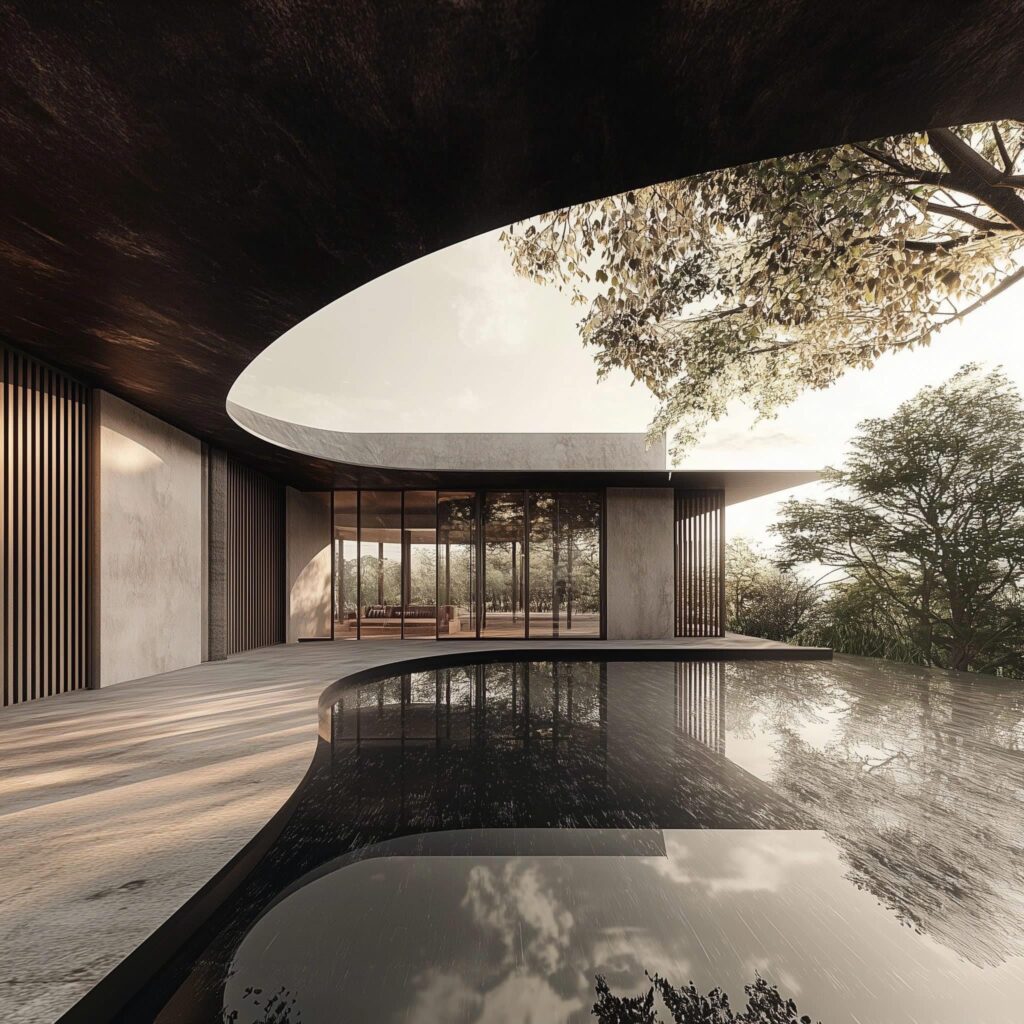
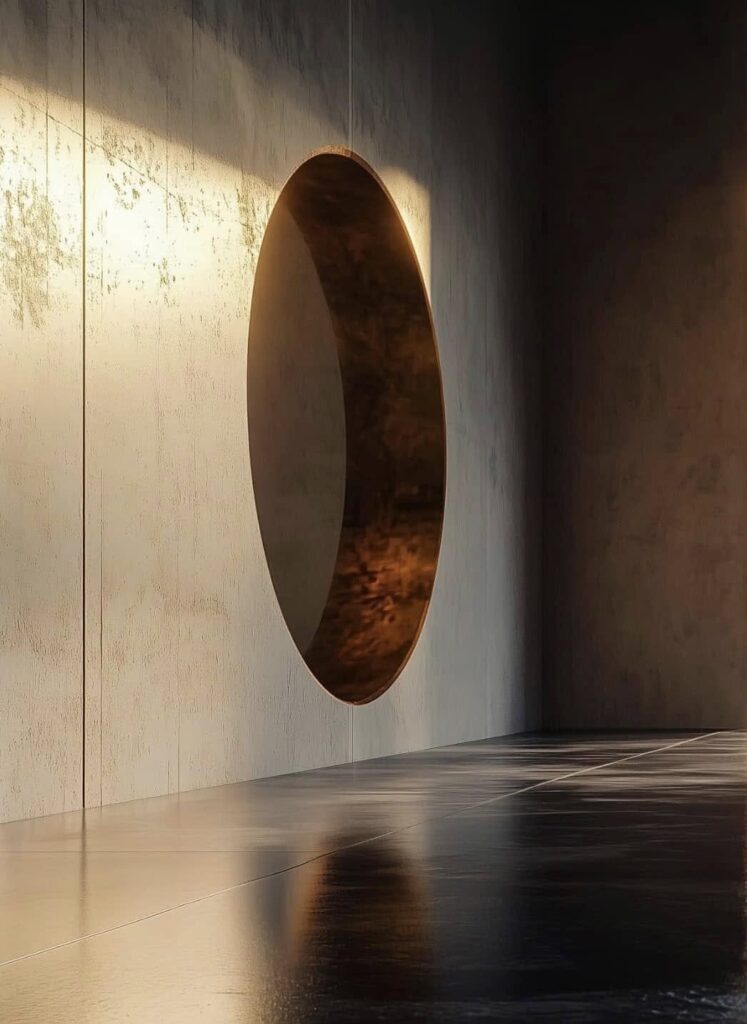
HVV Architect & Partners with AI supported
Next project | Dragon d’Annam
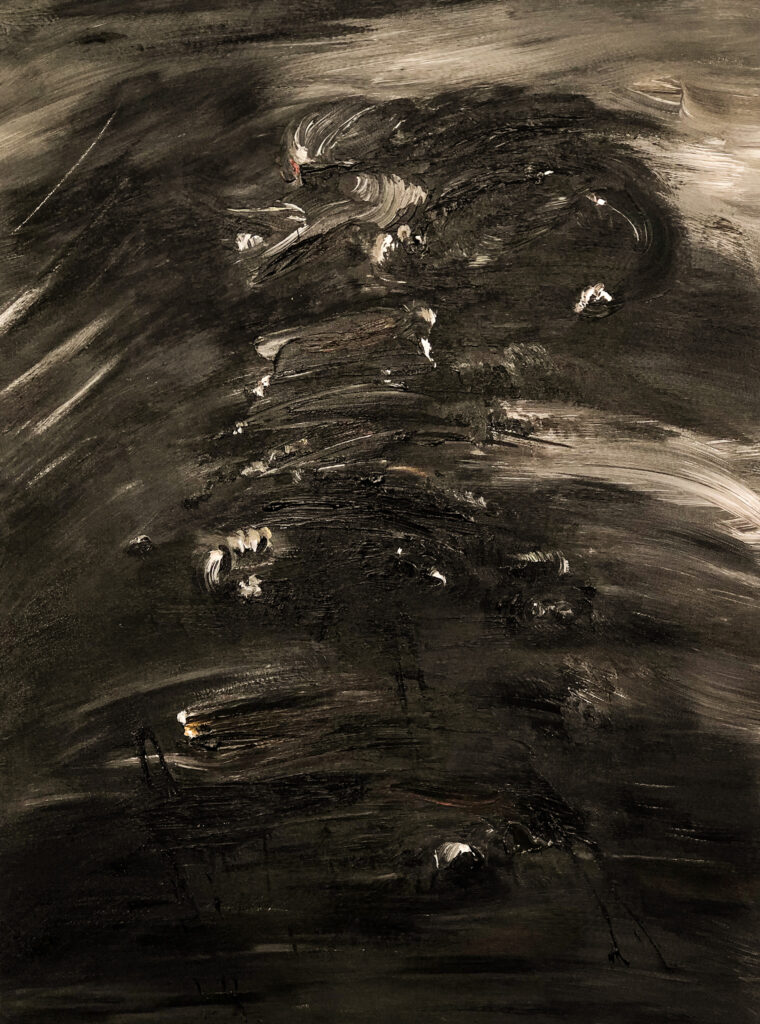
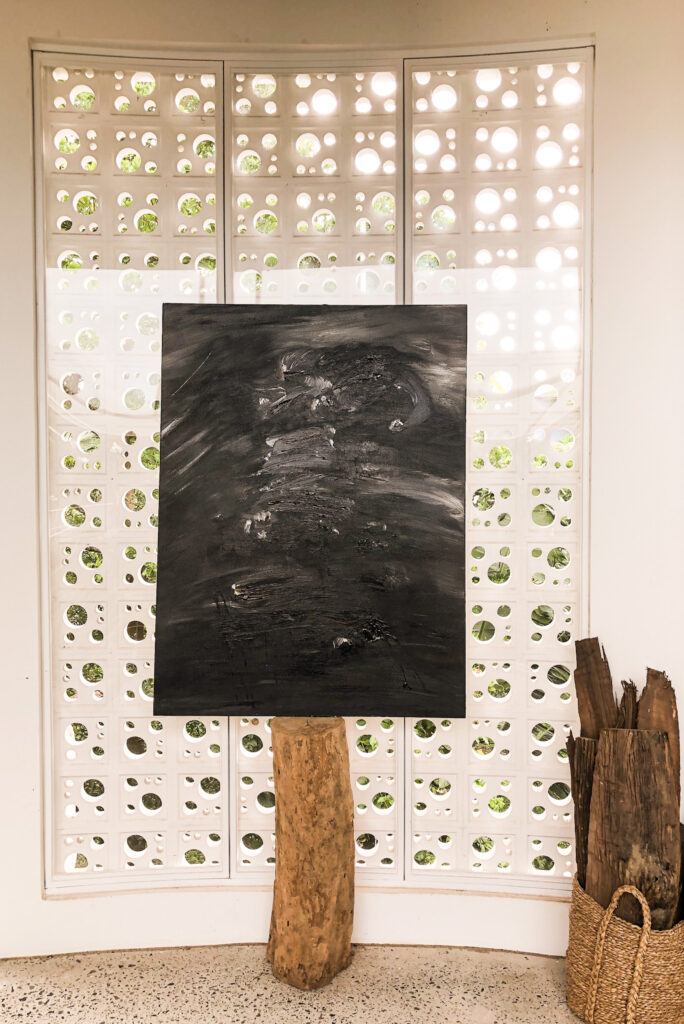
The Dragon d’Annam is a place where the mountains and the sea come together, standing between the South and the North, the land is high, the mountains and rivers are surrounding. In waterways, there are Thuan An and Tu Hien the mouth of the sea bay, which are deep and dangerous; by road, Hoanh Son and Hai Van gates are blocked; The great river opens the front, the high mountain protects the back, the adoration dragon and guard tiger, the place is solid, it is arranged by heaven and earth, it is truly the king’s capital.
Source: According to the national history of the Nguyen Dynasty
Description
Exucuted in April 2020
Style
Lyrical Abstract
Technique
Acrylic on Canvas
Dimension
97W x 130H x 4D cm
The authenticity of this work has been confirmed by the HVV Architect & Partners. A certificate of authenticity maybe delivered by the Company upon request to the buyer.
Vinhho Biography
Ho Viet Vinh is a Vietnamese architect who graduated with a Bachelor of Architecture degree in 1995 from the University of Architecture Ho Chi Minh City, Vietnam, where he received an award for creative design in his final year. He is a Registered Architect in Vietnam, a Registered Urban Planner in Ho Chi Minh City, and a member of the Association of Architects and Urban Planners of Vietnam.
Vinh’s career began in 1995 with participation in several design competitions in Ho Chi Minh City. That same year, he became a lecturer in the Urban Planning Department at the University of Architecture.
In 1998, he won second prize in the international competition organized by the Summer Workshop of Cergy-Pontoise, France, with the theme “Ho Chi Minh City and the Saigon River.”
In 2005, he was awarded a special prize in another international competition by the Summer Workshop of Cergy-Pontoise, France, for his project “Can Gio Emotional City.”
In 2010, he participated in the U.S. International Visitor Leadership Program (IVLP) focusing on Sustainable Urban Planning.
In 2015, Vinh was selected by the Lebadang Creative Foundation to design the Lebadang Memory Space Museum in Hue. During this time, he also became the Director of the Fund.