HVV Recruitment - Ho Viet Vinh Architect & Partners

HVV Recruitment:
In 2025, HVV is looking to recruit talented individuals for the following positions:

  • 2 Urban Planners;
  • 2 Landscape Architects;
  • 2 Architects specialized in Architecture and Interior Design.

Requirements:

  • Bachelor’s degree in a relevant field for each position;
  • 2–3 years of work experience;
  • Proficiency in commonly used design software, such as ACAD, SU, Lumion, Rhino, 3Dmax,…;
  • Skilled in one or more of the following areas: 3D and 2D concept visualization, design implementation, design management;
  • A professional attitude, eagerness to learn, creativity, and integrity.

Join us in creating inspiring living spaces that reflect cultural identity!
At HVV, we are not just looking for talented architects but also seeking to collaborate with creative minds who are passionate about innovation and aspire to achieve timeless values. Let your talent bring meaningful projects to life and leave a lasting mark with us.
Contact:
HVV Architect and partners
Architect Ho Viet Vinh
Phone: +84 908 376 727
Email: [email protected]

Join us now to turn unique ideas into reality!

Next project | Can Gio emotional city

Can Gio Clam beach panorama
Photo by Vinhho

The goal is to enhance connectivity between Can Gio and neighboring provinces, particularly Vung Tau. As Ho Chi Minh City continues to expand, the demand for infrastructure grows, posing potential risks to Can Gio’s ecological integrity. Special attention is given to strengthening links with the nearby beach resort of Vung Tau, initially through a speedboat network and eventually with the proposed construction of an undersea tunnel.
While the jury found the tunnel proposal highly debatable, they acknowledged that the previously approved masterplan lacked adequate provisions for improving these connections. Team 4 prioritized these links, making them a central focus of their proposal.

Connectivity between Can Gio and neighboring provinces.

Another key aspect of the development proposed by the team is the diversification of tourism activities. These could range from walking or boating excursions through the mangroves to farm visits, beach activities, and trips to nearby provinces made more accessible through the improved transportation links.
The team also presented a project to reclaim land and create two artificial islands off the coast at the eastern and western ends. These islands are envisioned as hubs for diverse tourism activities, offering unique experiences to visitors.

Spatial Development Models

Achieving these objectives will require significant improvements to infrastructure. A high-speed transportation system must be implemented in a way that respects the environment and minimizes pollution, bringing Can Gio closer to nearby development areas.
Freshwater supply is critical for both residents and tourists. A sustainable water collection and recycling system should be established to optimize this valuable resource while preventing water pollution.
The construction of eco-houses will help balance the infrastructural development, ensuring harmony with the natural surroundings. Additionally, all other modes of transportation within the area will be designed to be environmentally friendly.

The project seeks to enhance the quality of life for the residents of Can Gio. This will be accomplished by preserving and upgrading traditional activities such as farming and those along the beach.
Locals will be encouraged to participate in service, trade, and production activities to meet the demands of tourism while maintaining their cultural heritage. Traditional practices will be promoted, enabling those living in the forest, on the beach, or along the river to share their unique ways of life.
Additionally, numerous public spaces and recreational activities will be developed, fostering leisure and entertainment opportunities for both residents and visitors.

The southern area of Can Gio along the beach will be developed with a focus on preserving the connections between the forest and the sea. Six key axes will serve as the foundation for these links: an agricultural production axis, a commercial axis, a festival axis, a handicraft village axis, a traditional market axis, and a public space axis.
This approach ensures that development respects the natural and cultural heritage of the region while creating vibrant and functional spaces for both residents and visitors.

The ultimate aim of this proposal is to evoke and enrich people’s senses and emotions, creating an “emotional city”. Both visitors and locals will be immersed in a symphony of sensory experiences:
They will listen to the soothing sounds of the forest and the rhythmic waves of the beach. They will marvel at breathtaking views of the sea and lush forests, swim in the waves, and feel the textures of the forest’s natural wonders.
The air will carry the refreshing scent of the sea, mingling with the intricate fragrances of the mangrove. They will savor the local flavors, from seafood harvested from the river and sea to traditional delicacies.
Beyond these sensory delights, their emotions will be further deepened by the rich history, vibrant culture, and timeless traditions of Can Gio, making every moment a journey of discovery and connection.

Team 4

  • Ho Viet Vinh – Leader Architect, Urban Planner
  • Pham Phu Cuong – Architect
  • Nguyen Hong Minh – Architect
  • Hoang Anh Tu – Architect, Urban Planner
  • Pham Anh Tuan – Architect, Urban Planner
  • Nguyen Anh Tuan – Architect, Landscape Architect

Team 4, comprised entirely of Vietnamese professionals and led by Architect Ho Viet Vinh, brought a profound vision for the future of Can Gio. The team outlined a series of key objectives, including the preservation of the mangrove ecosystem—both its core and transitional areas—the optimization and development of local production activities, and the protection of water resources from pollution originating from the Saigon-Dong Nai River and the sea.
For their insightful and forward-thinking approach, Team 4 awarded a special mention from the Workshops of Cergy-Pontoise.

Next project | Dragon d’Annam

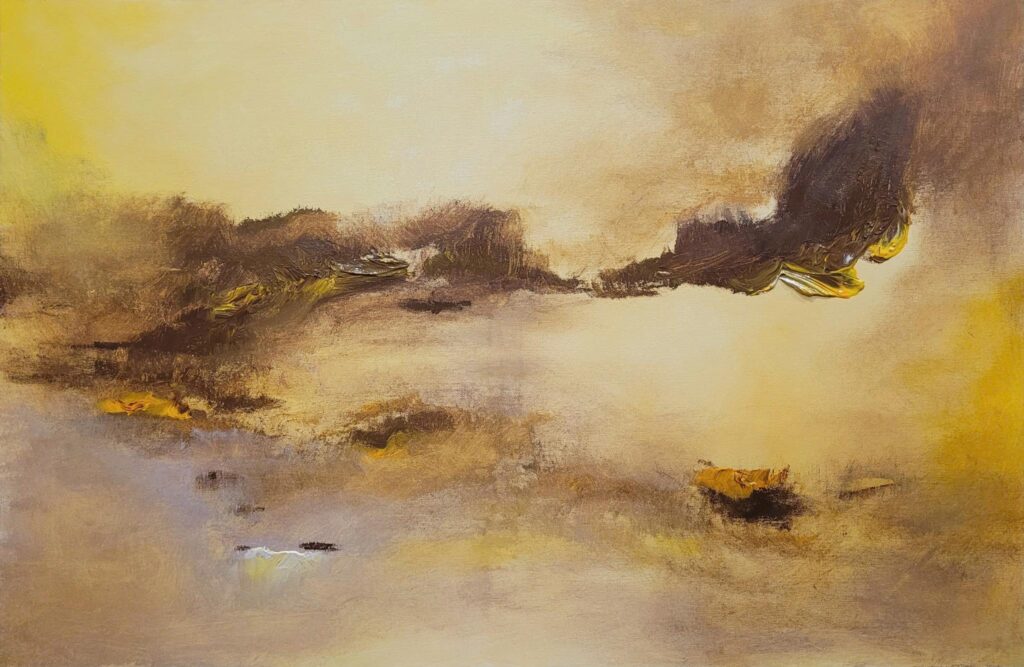
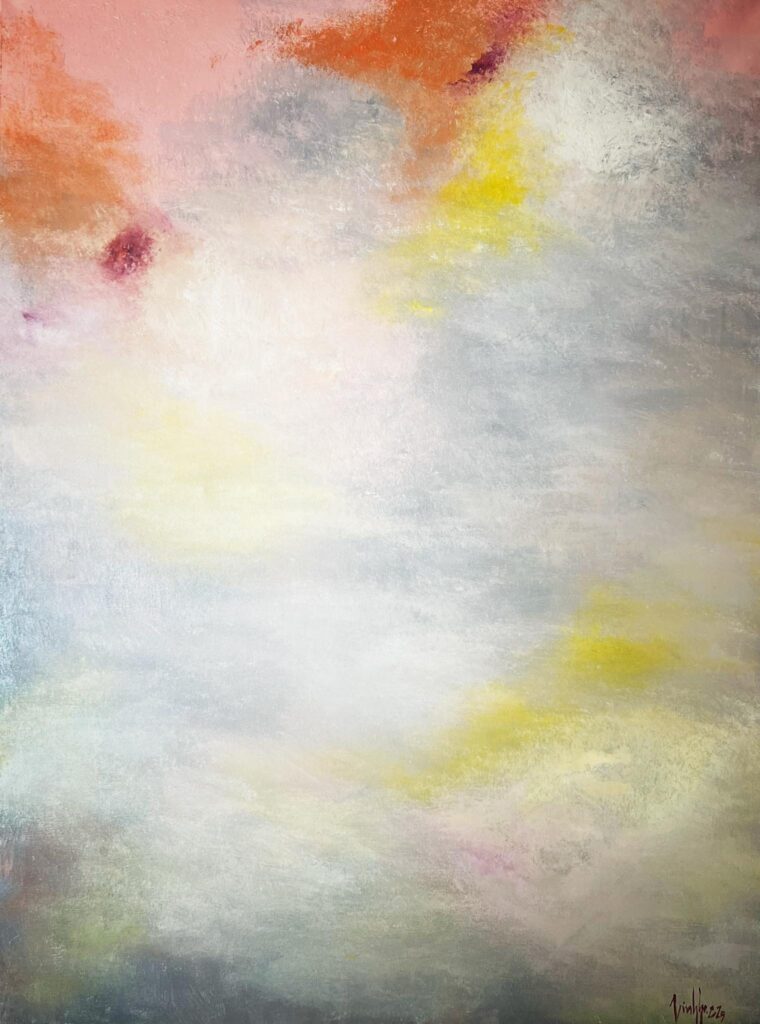
The Dragon d’Annam is a place where the mountains and the sea come together, standing between the South and the North, the land is high, the mountains and rivers are surrounding. In waterways, there are Thuan An and Tu Hien the mouth of the sea bay,  which are deep and dangerous; by road, Hoanh Son and Hai Van gates are blocked; The great river opens  the front, the high mountain protects  the back, the adoration dragon and guard tiger, the place is solid, it is arranged by heaven and earth, it is truly the king’s capital.

Source: According to the national history of the Nguyen Dynasty


Description
Exucuted in April 2020
Style
Lyrical Abstract
Technique
Acrylic on Canvas
Dimension
97W x 130H x 4D cm

The authenticity of this work has been confirmed by the HVV Architect & Partners. A certificate of authenticity maybe delivered by the Company upon request to the buyer.

Vinhho Biography
Ho Viet Vinh is a Vietnamese architect who graduated with a Bachelor of Architecture degree in 1995 from the University of Architecture Ho Chi Minh City, Vietnam, where he received an award for creative design in his final year. He is a Registered Architect in Vietnam, a Registered Urban Planner in Ho Chi Minh City, and a member of the Association of Architects and Urban Planners of Vietnam.
Vinh’s career began in 1995 with participation in several design competitions in Ho Chi Minh City. That same year, he became a lecturer in the Urban Planning Department at the University of Architecture.
In 1998, he won second prize in the international competition organized by the Summer Workshop of Cergy-Pontoise, France, with the theme “Ho Chi Minh City and the Saigon River.”
In 2005, he was awarded a special prize in another international competition by the Summer Workshop of Cergy-Pontoise, France, for his project “Can Gio Emotional City.”
In 2010, he participated in the U.S. International Visitor Leadership Program (IVLP) focusing on Sustainable Urban Planning.
In 2015, Vinh was selected by the Lebadang Creative Foundation to design the Lebadang Memory Space Museum in Hue. During this time, he also became the Director of the Fund.

Next project | Spiritual Sustainability as the Core Essence

Spiritual Sustainability as the Core Essence

For Architect Hồ Viết Vinh, a sustainable structure must encompass multiple dimensions: structural sustainability, environmental sustainability, aesthetic sustainability, and cultural sustainability. Yet, there is one essential, foundational element that underpins them all: spiritual sustainability. One of his upcoming and most cherished projects currently in development is the Trịnh Công Sơn Park in the ancient capital of Huế.

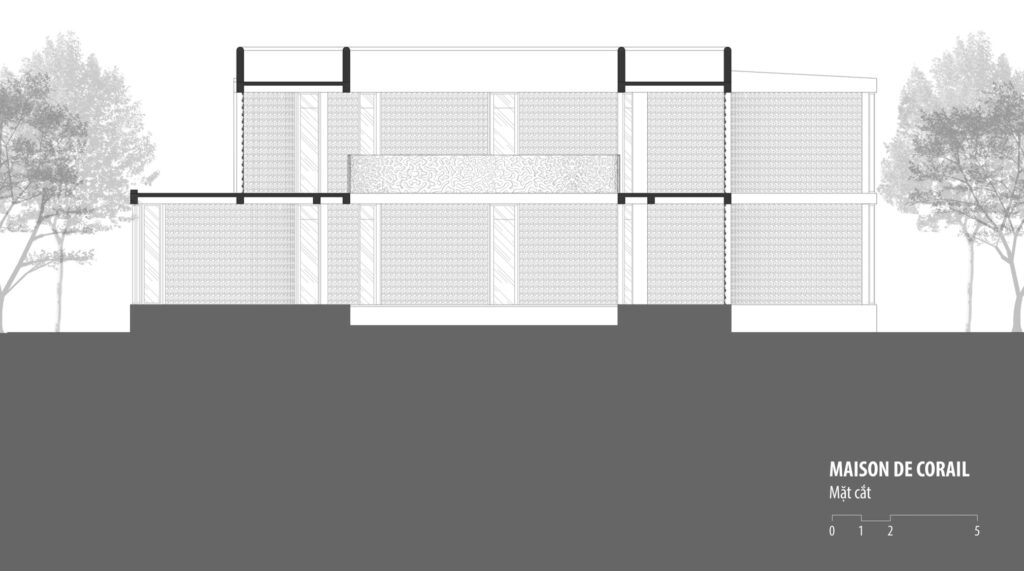
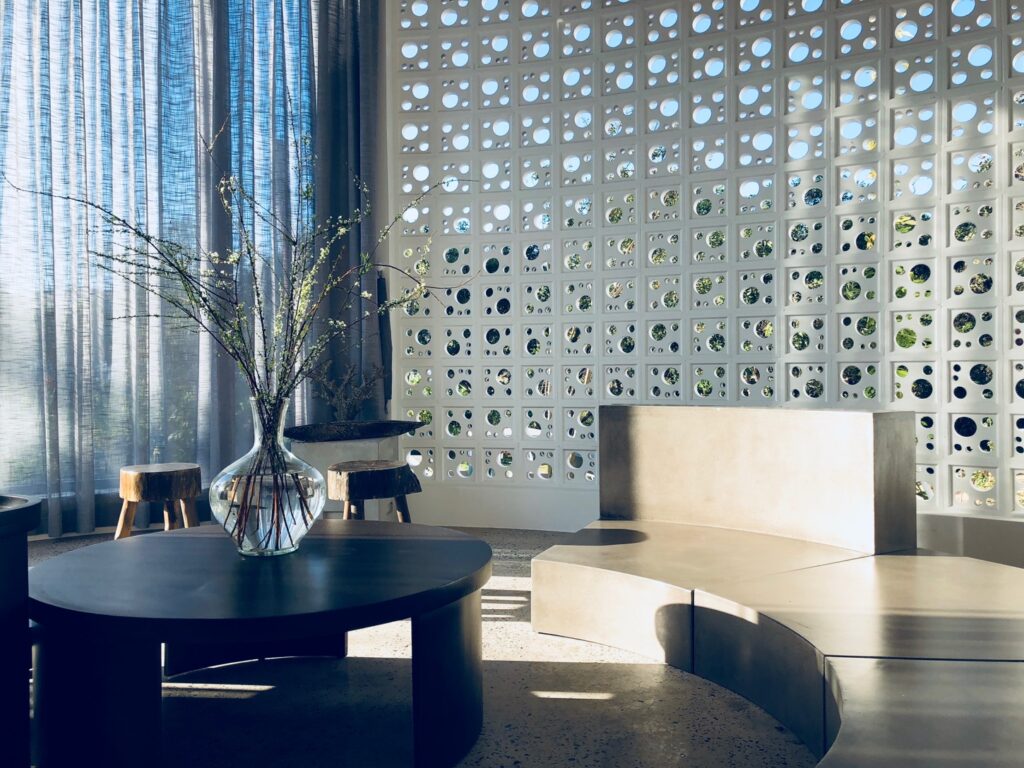
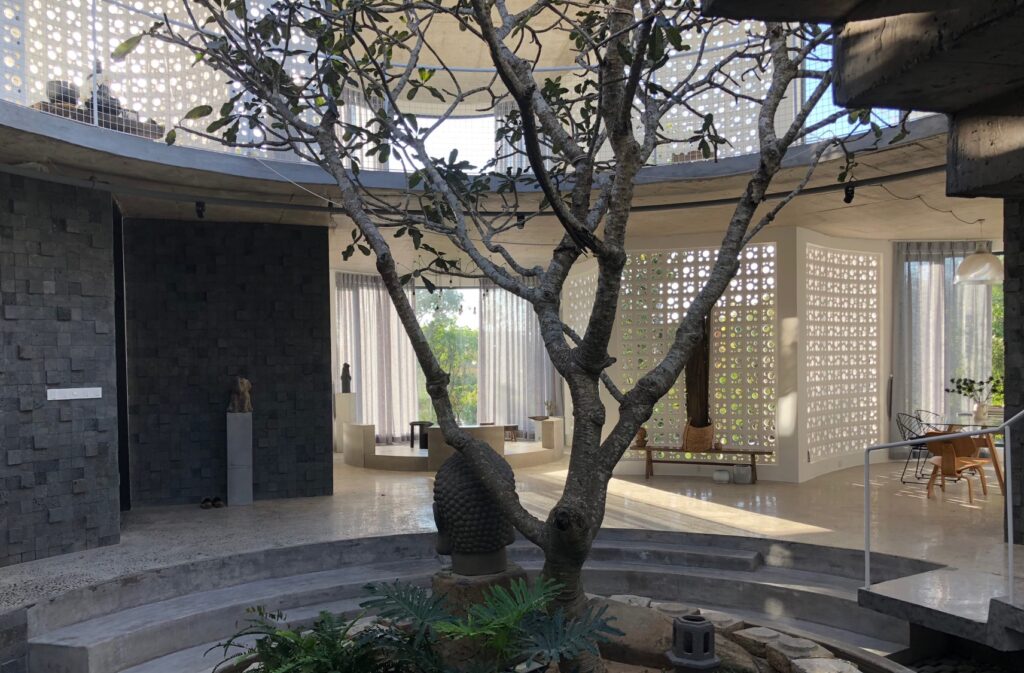
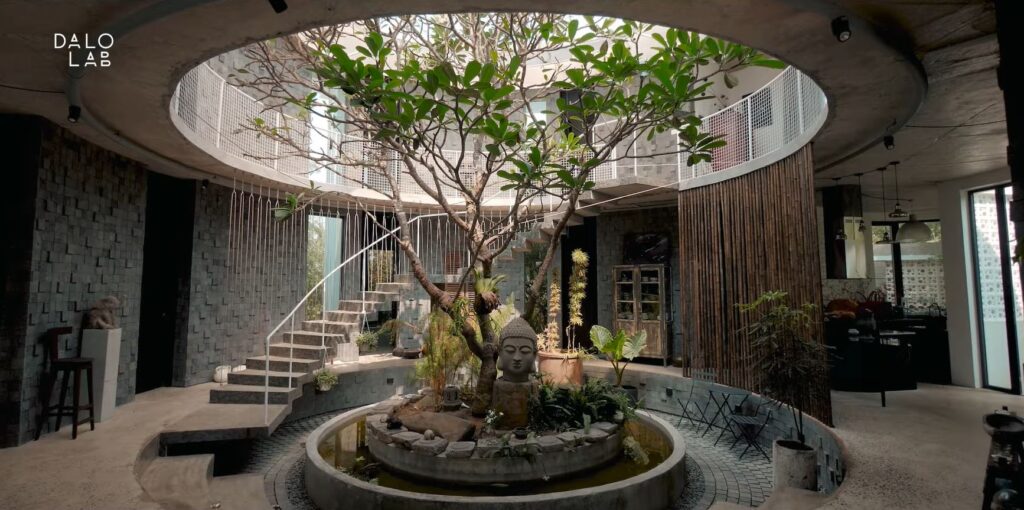
Guided by a philosophy of holistic sustainability, Hồ Viết Vinh has crafted unique architectural works such as Lebadang Memory Space and more recently, the Coral House in Hồ Tràm.

Could you share more about the milestones that have shaped your 25-year career?
I can summarize my more than 25 years of navigating this profession—full of challenges—into four stages: searching, understanding, contemplation, and practice.
The first stage took me around five years. I was seeking a way to survive in this field, with much effort but little clarity beyond earning a living.
The second stage arrived when I realized that architecture demands not only physical effort but also profound intellectual engagement.
The third stage was contemplation—reflecting on the distinct values that drive creativity. This was perhaps the most challenging period. It required me to relinquish things I had painstakingly gathered over time, clearing my mind to make space for the new.
Finally, the fourth stage is practice—not merely following thought processes, but letting intuition and wisdom guide my actions.

Your design philosophy seems inspired by Buddhist thought, correct?
Yes, indeed! The teacher who profoundly influenced my design philosophy is Thích Nhất Hạnh from Làng Mai (Plum Village), with his wisdom of interbeing (tương tức). According to Thích Nhất Hạnh, interbeing means: “If we understand that humans and nature are inseparable, we will know how to treat nature as we would treat ourselves—with care, gentleness, and love, free from violence. If we don’t want to harm ourselves, we should not harm nature, for harming nature is ultimately harming ourselves, and vice versa.”

How do you incorporate the concept of emptiness in your architectural works?
In essence, space is defined by emptiness. Without emptiness, there is no space. We must distinguish between the concepts of empty/full and open/closed. The former refers to spatial density, while the latter concerns the degree of openness to the external environment.
Emptiness is where dialogues unfold—between humans and nature, between individuals, and between oneself and the spiritual realm. It is a void that leads to infinite transformation and change.

What is your perspective on sustainable architecture? What, in your view, is the primary factor that defines sustainability?
When discussing sustainability, we must ask: sustainable in what sense? Is it structural, environmental, aesthetic, or cultural sustainability? Today, most conversations focus on environmental sustainability, as we face the brink of ecological destruction.
In my perspective, a truly sustainable structure must integrate all four aspects, with an additional core foundation: spiritual sustainability. This form of sustainability is rooted in an intuitive understanding of the fundamental truth of life on Earth—harmony, where all beings support one another to coexist.

“Architecture is a part of nature, and thus, it must harmonize with its surroundings. Light, wind, rain, storms, and even insects are all guests of the space.”

Is there a project that best embodies your design philosophy?
That would be the Lebadang Memory Space in Huế. This space is a harmonious blend of three elements: nature, form, and poetry. Nature includes the creations of the Earth—trees, flowers, rivers, skies, stones, humans, and animals. Form is defined by lines, shapes, colors, and materials that shape the space. Poetry is the soul that breathes life into it, creating a space that resonates with both the physical and the spiritual.

The thread that connects natural elements with the crafted form is poetry—a melody that flows from the primordial, carrying with it layers of cultural sediment, merging with the rhythm of life to shape the memory of time.

An Architect who has influenced you?
That would be Peter Zumthor, the renowned Swiss architect known for his famous quote:
“To design buildings that captivate the senses, architects must transcend the limits of form and structure.”

What experience do you consider most important for an architect like yourself?
Architecture came to me as destiny. Therefore, every experience carries its own value—there is no good or bad experience.
However, one pivotal experience stands out as a turning point in my creative journey. In 2005, I had the opportunity to participate in the 8th International Creative Competition organized by Les Ateliers Internationaux de Maitrise d’Oeuvre Urbaine Cergy Pontoise in France.
The competition brought together nearly 40 architects, urban planners, economists, managers, and environmental specialists from 17 countries. The theme was Ecological Tourism Urbanism in Cần Giờ (Can Gio entre ville ecologique et destination touristique).
Our project, titled “The City of Distinct Emotions” made a powerful impression on the jury and won the Special Award.

What is your perspective on materials in architecture? Are you experimenting with any specific materials?
Materials play a vital role in evoking aesthetic emotions within architectural spaces, alongside form and design language. Under the influence of light, these three elements harmonize to create the texture of space.
In my architectural designs, I place particular emphasis on exploring and incorporating local materials. These materials infuse spaces with the spirit of the place, giving them a unique identity and soul.

Could you share more about an upcoming project you are excited about?
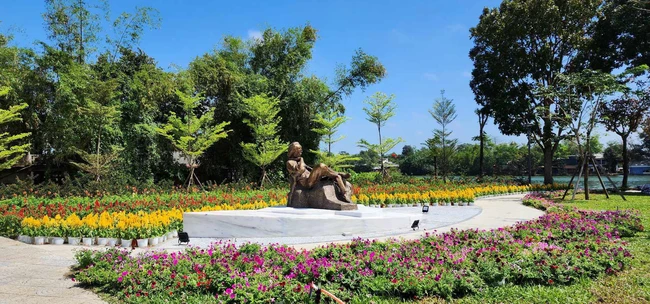
A project I hold dear and that is currently being developed in Huế is the Trịnh Công Sơn Park.
Located at the confluence of three rivers, it rests against the Gia Hội Ancient Quarter, gazes upon the Hương River, and looks towards Ngự Bình Mountain as its front shield, with the Kim Phụng Range stretching across the landscape. This harmonious geographical setting provides the perfect foundation for the park in the heart of the ancient capital.
The park spans approximately 6.2 hectares and stretches nearly 1 kilometer along the lower reaches of Hương River, surrounded by water landscapes. Its structure is divided into two main sections: (1) The Space of “The Great Circle of Unity (20,000 m²); (2) The Musical Garden Space (42,000 m²).
The Great Circle of Unity is designed around the symbol of the Vietnamese Embrace, forming a double-layered circle representing the Fields of Vietnam. This concept draws inspiration from Trịnh Công Sơn’s musical longing for peace.
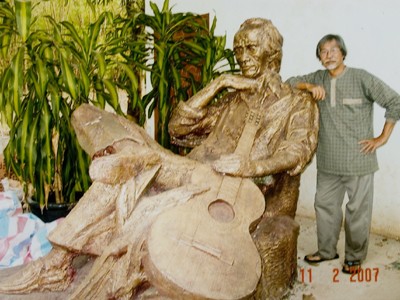
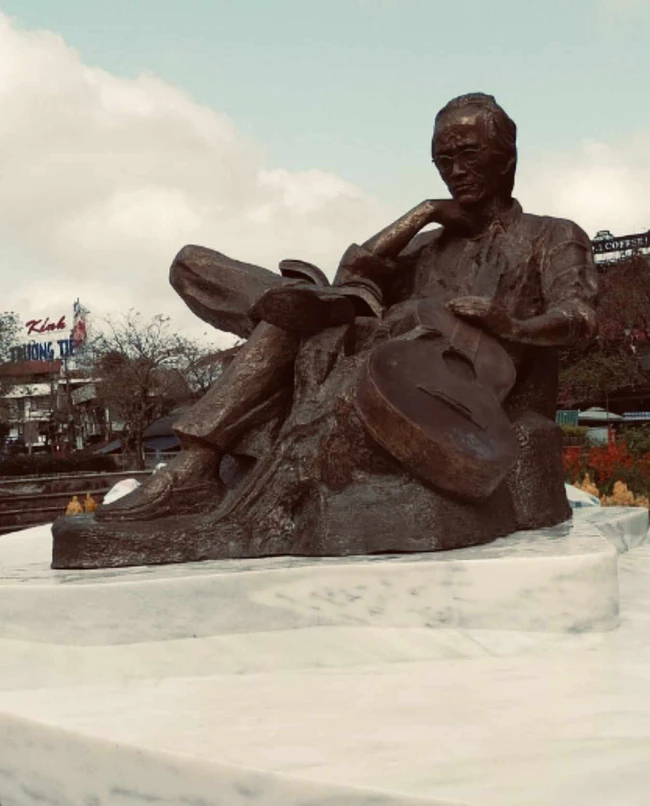
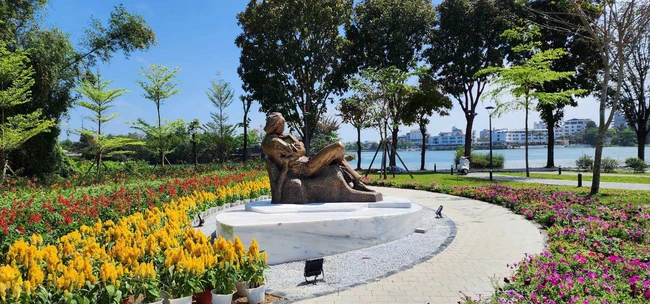
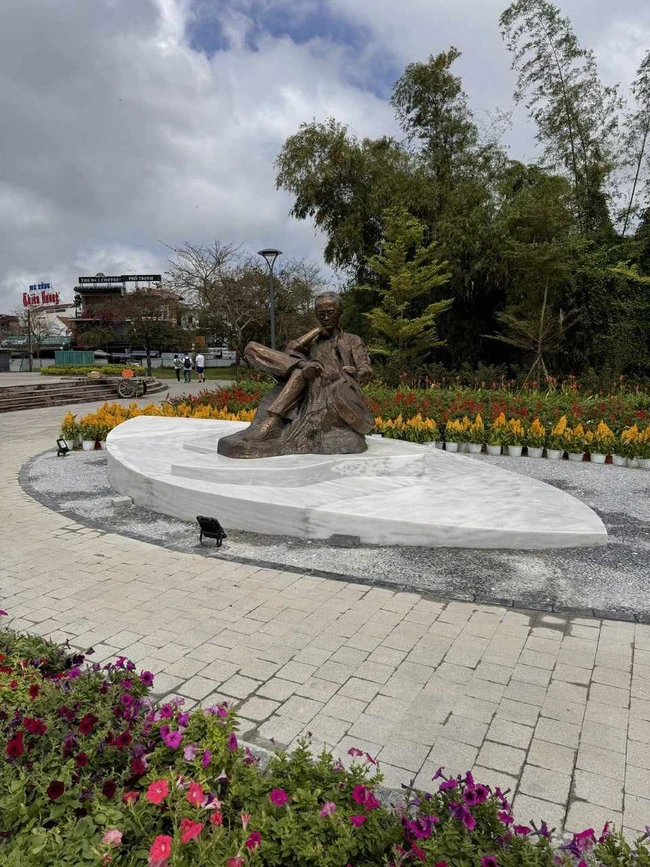
At its heart stands the statue of Trịnh Công Sơn, with a poised and serene posture, emerging from the landscape like a mountain standing tall. He becomes a symbol of the nation’s desire for unity, love for humanity, and a reflection on the human condition.
Every step into this space echoes with the uplifting and refreshing melodies of his music. It invites us to connect, hand in hand, forming a unified entity called Vietnam.
The Musical Garden Space, on the other hand, captures the lingering melodies of nature. Here, one can sense the gentle whispers of grass, flowers, birds, and the vibrant life that surrounds us—a symphony of nature’s tender serenade.

See the original article at the link.

Next project | MIỀN TUỆ UYỂN – TUE GIAC MONASTERY

“The beauty of the four seasons helped him heal his mind and heart from the wounds of war. The peaceful and wholesome atmosphere of the campus helped him have many deep insights, flowers, and fruits of the practice. Perhaps that is why Thay always remind us that nature can help us heal ourselves.”

Zen master Thich Nhat Hanh – [At home in the World]

Location:
Tan Binh commune, Nhu Xuan District, Thanh Hoa Province, Vietnam
Size:
1,53 hectares
Services:
Master plan, Architecture and Interior design
Status:
Approved Master plan at scale 1/500, 2024
Under construction.
Team:
HVV Architect & Partners

Intro

As our society advances and technology continues to evolve, our quality of life has seen remarkable improvements. Yet, the desire for relaxation, tranquility, and a deeper connection with oneself has become a fundamental part of our daily existence. This need is increasingly pressing, given the rising prevalence of mental health challenges like stress and anxiety.
The relentless pace of modern life, combined with the pressures of work, often leads to heightened stress, anxiety, and various mental health concerns. Taking a moment to pause and breathe can offer us a valuable chance to reconnect with nature and reflect on ourselves. Nature holds a profound healing power: when our minds are no longer disrupted by the constant noise of traffic, when our emotions are no longer constrained by concrete jungles, and when we can breathe clean, unpolluted air, we experience true inner peace. Immersed in nature, we rediscover the serenity that lies within our souls.
Thus, creating a meditation retreat that harmonizes with nature is essential. This sanctuary will offer a tranquil haven where individuals can find solace, cultivate mindfulness, practice meditation, heal their souls, and share positive values with the world.

Site location

Tue Giac Zen Monastery is located northwest of Song Muc Lake – in Ben En National Park, Tan Binh Commune, Nhu Xuan District, Thanh Hoa Province; The distance from this area to Tho Xuan airport is about 143374ft along National route 15.

Song Muc Lake | Source: internet
Ben En | Source: HVV, supported by AI

The planned research area features a convergence of hillside topographical elements, with valleys and lakes nestled below. It is a location that boasts pristine natural landscapes. Furthermore, the terrain’s structure and geomorphology provide many sites with expansive, diverse, and breathtaking views.

Design principles

Master plan

To create a space for returning, studying, and practicing the teachings of Buddhism, cultivating virtue, and enhancing moral awareness. A place that offers a harmonious environment with nature, where individuals can engage in meditation, seek enlightenment, and liberate themselves from the afflictions and suffering of life.

The architectural layout harmonizes seamlessly with the natural terrain, incorporating a variety of structures within distinct spaces to create visual appeal. The pagoda, meditation hall, main hall, guest house, and dining hall are arranged in a descending terraced formation. The design employs overlapping and rhythmic elements, offering dynamic perspectives from different viewpoints and highlighting the surrounding natural beauty of the mountains, lakes, and cliffs. The architecture, landscape, and on-site activities are interwoven in a cohesive and fluid manner.

“Light from Above| Source: HVV, supported by Ai

Next project | Naked Garden

A symphony of earth and water that whispers of hidden desires. This enchanting scene blurs the line between reality and illusion, inviting the viewer into a realm of sublime beauty. The interplay of light and shadow evokes a sense of eternal mystery, reflecting the poet’s fascination with the ephemeral and the divine. It is a mesmerizing vision of a garden stripped bare, revealing the seductive essence of nature’s true form.

Naked Garden
HVV Architect & Partners with AI supported

Next project | RED KINGDOM – Masterplan of Brickyard village at Mang Thit, Mang Thit District, Vinh Long province

“This is a project to preserve and develop the Mang Thit traditional brick and masonry heritage area, combining production space and water landscape. This area is planned into a contemporary product with different functional layers: preserving ceramic tile craft villages, expanding living space along the river and recreating the unique river landscape of the South. The multi-level dike approach helps maintain riverside living space, supports ceramic production and also develops eco-tourism, turning the area into a cultural and experiential destination for visitors.”

HVV Architect & Partners

Client:
Board of Civil and Industrial Construction Project Management – Vinh Long province People’ s Committee
Location:
Mang Thit dictrist, Vinh Long province, Vietnam
Size:
3.060 hectares
Services:
Masterplan
Status:
Approved on 2024
Team:
HVV Architect & Partners –  Urban Planning Institute

Intro
Mang Thit District, Vinh Long Province, is one of the few remaining localities in Vietnam that preserves a unique and extensive architectural complex alongside a traditional craft. This architectural ensemble comprises nearly 1,000 domed kilns, spanning over 3,060 hectares along the banks of the Thay Cai, Hoa My, Cai Nhum canals, forming a southern arc that extends to the Nhon Phu and Hoa Tinh canals within the district. This is truly a valuable treasure, shaped by over a century of cultural and technological exchange between Khmer, Kinh, and Hoa people, resulting in a distinctive architectural heritage and traditional craft. However, this treasure has not been fully recognized or appreciated.
Over the past decade, more than 1,000 kilns have been demolished, and the remaining kilns are deteriorating and face the imminent threat of complete destruction. Given this alarming situation, it is imperative and urgent to conduct research and develop solutions to preserve and promote this architectural complex and traditional craft.

Learning from the Past and Looking to the Future

Over 100 years of formation and development, the structure of the craft village ecological system have established with 6 main space, including: surface water, brickyard system, yards, storage, fruite garden and house, fields.

The system of canals and land has formed a distinctive, easily recognizable landscape. Rivers and canals flowing from Co Chien River along Thay Cai canal, going deep into agricultural areas, have determined the main landscape axes; Residents live along the canals, inside are fruit and vegetable gardens, and deeper are fields and aquaculture areas. The ecosystem associated with the brick kiln area has created a closed process in the production of Mang Thit red ceramic. This is a characteristic and value that needs to be preserved and promoted.

Adaptive conservation in continued development

Adaptive conservation in continued development – preserving the existence of production space heritage, symbiotic ecological space, and Southern garden development cultural heritage; These valuable materials and spiritual values ​​have been perfected during the development process, providing a contemporary breath and improving the quality of each space, gradually improving the quality of life of local people, so that their politics will gradually transform, reviving the soul of the place.
The heritage of Mang Thit – known as The Red Kingdom will be an interesting destination in Mekong Delta and should not be missed in your lifetime.

Zonning plan

The area is divided into 9 main zones according to 3 layers.

No.1. Mixed-Use Development (Services – Tourism – Rural Residential): Approximately 347.91 hectares, with primary functions including residential development, mixed-use development (tourism services – rural residential), mixed-use development (services – urban residential), public services, public utility green spaces, specialized green spaces, other technical infrastructure, transportation, agricultural areas, and other functions.

No.2. Mixed-Use Development (Services – Urban Residential) along Co Chien River: Approximately 250.05 hectares, with primary functions including residential development, mixed-use development (services – urban residential), public services, public utility green spaces, specialized green spaces, heritage and religious sites, other technical infrastructure, transportation, agricultural areas, and other functions.

No.3.  My An – Hoa My Residential Area: Approximately 415.50 hectares, with primary functions including residential development, mixed-use development (services – urban residential), public services, public utility green spaces, specialized green spaces, heritage and religious sites, other technical infrastructure, transportation, agricultural areas, and other functions.

No.4. Cai Nhum Eco-Residential Area: Approximately 150.31 hectares, with primary functions including residential development, public services, public utility green spaces, other technical infrastructure, transportation, agricultural areas, and other functions.

No.5. My Phuoc Eco-Resort: Approximately 106.43 hectares, with primary functions including residential development, public services, public utility green spaces, tourism development, other technical infrastructure, transportation, agricultural areas, and other functions.

No.6.  My Phuoc Eco-Residential Area: Approximately 253.76 hectares, with primary functions including residential development, public services, public utility green spaces, specialized green spaces, heritage and religious sites, offices, other technical infrastructure, transportation, agricultural areas, and other functions.

No.7. Nhon Phu Eco-Residential Area: Approximately 309.78 hectares, with primary functions including residential development, public services, public utility green spaces, heritage and religious sites, offices, other technical infrastructure, transportation, agricultural areas, and other functions.

No.8. Hoa Tinh Eco-Resort: Approximately 198.23 hectares, with primary functions including residential development, mixed-use development (services – urban residential), public services, public utility green spaces, heritage and religious sites, offices, transportation, agricultural areas, and other functions.

No.9. High-Tech Agriculture Area: Approximately 1,028.03 hectares, with primary functions including residential development, public utility green spaces, tourism development, other technical infrastructure, transportation, agricultural areas, and other functions.

Master plan

The plan identifies 3 main development axes including:

  • Mang Thit brick and ceramic kiln space at the center combined with service corridor along Co Chien river, agricultural experience corridor – traditional garden village along Cai Nhum river, high-end resort tourism corridor in the South;
  • Mixed service axis – contemporary residential area in the Southern region of the West;
  • The Eastern resort tourism axis will create motivation for development of the entire region.

The resort spaces around heritage area (My Phuoc eco resort, My Phuoc Eco-Residential area, Nhon Phu Eco-Residential Area, Hoa Tinh Eco-Resort) offer a variety of ecological, cultural and agricultural production experiences, taking the ceramic brick kiln area as inspiration for creativity.

Oriented masterplan development diagram to 2045

With 5 gateways – 5 landscape architectural spaces typical of the Southern rivers and the ceramic brick kiln area, it will be an unforgettable, impressive identification point when visitors approach the ceramic brick kiln area by both Water transport and road transport.

The landscape of the welcome gate, orchard and ceramic tiles combined with the riverside landscape follows a multi-level soft embankment model, providing many different experience spaces for visitors to explore the traditional Tile and Ceramic Craft Village along the Co Chien River.
The new residential community landscape is associated with the internal canal system. The riverside spaces are shaped by multi-level soft embankments creating different functions and landscape nuances according to the flooding season.
Landscape on both sides of Thay Cai canal, the core conservation area of ​​the ceramic craft village with a system of multi-storey soft embankments and alternating hard stepped embankments combined with a boat wharf and ceramic tile service space organized along the river. Support the transition process, while developing ecotourism, turning this area into a cultural and experiential destination for tourists.

Conclusion

This is a project to preserve and develop the Mang Thit traditional brick and masonry heritage area, combining production space and water landscape. This area is planned into a contemporary product with different functional layers: preserving ceramic tile craft villages, expanding living space along the river and recreating the unique river landscape of the South. The multi-level dike and heritage landscape approach helps maintain riverside living space, supports ceramic production and also develops eco-tourism, turning the area into a cultural and experiential destination for visitors.

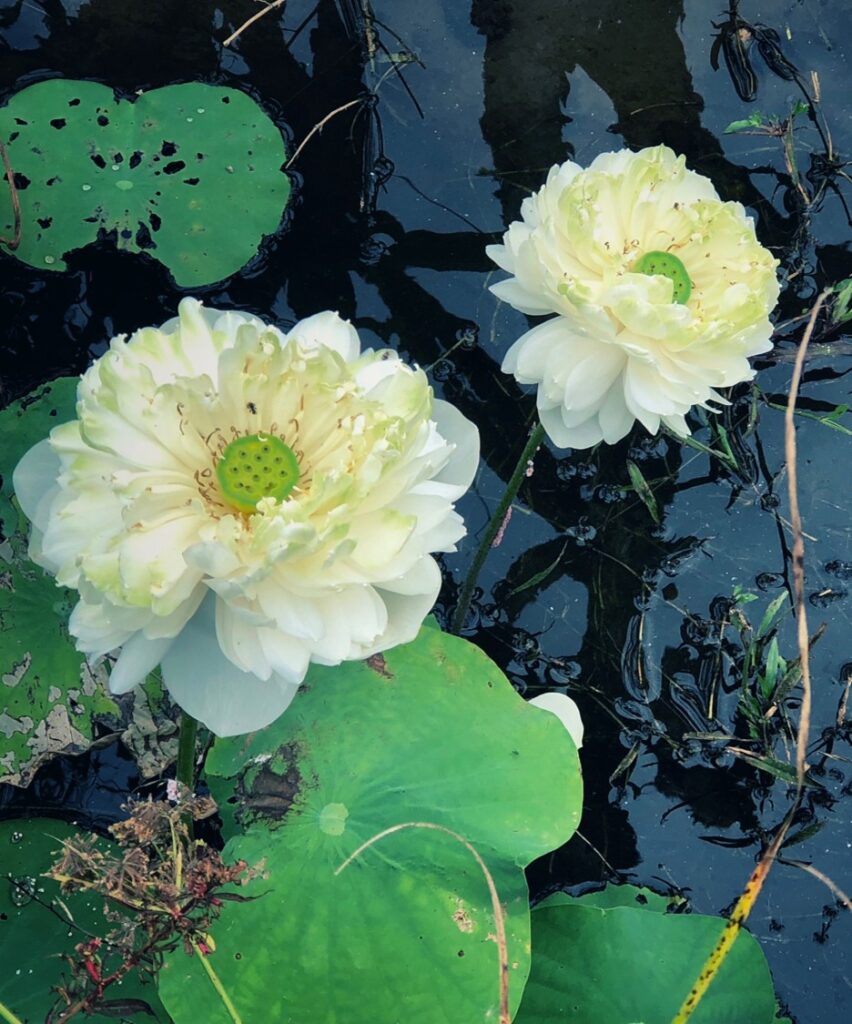
Next project | Lotus

Ngẩng đầu nghe gió hát,
Tắm mát mạch nguồn khơi,
Chơi vơi miền êm ả,
Nghiêng ngã một đời không?

Ho Viet Vinh
Photo by Vinhho @ Aobaom

Next project | Marina Saigon Villa

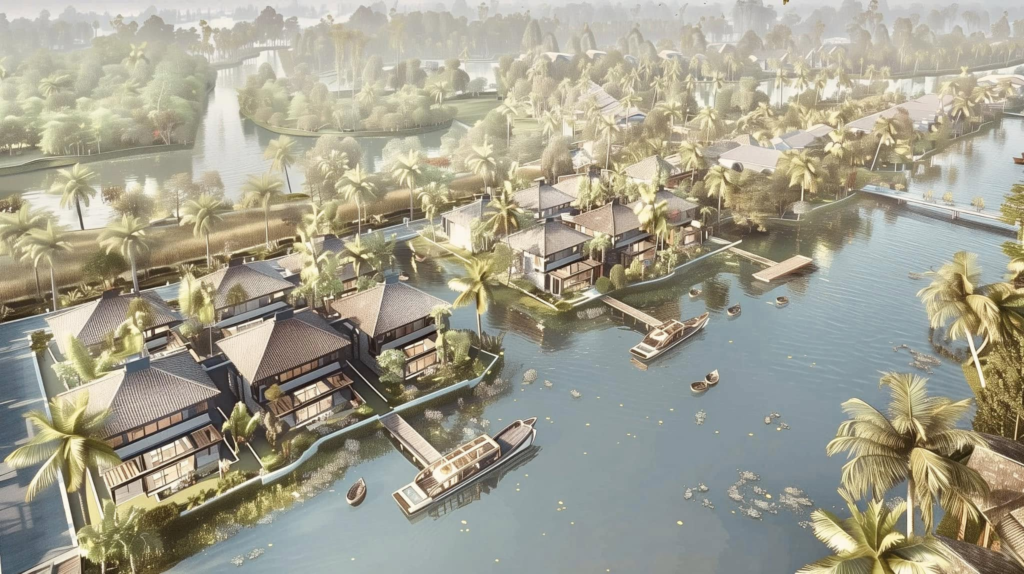
Aerial view

The marina lifestyle has its own allure, and life at Marina Saigon Villa elevates it to a unique experience, allowing you to savor life your way. Even if you’ve never owned a yacht before, you’ll seamlessly join the circle of enthusiasts reminiscent of 19th-century European aristocrats.
From the marina, where every villa boasts its own sparkling turquoise sails, you can personally navigate your yacht to capture moments of emotional conquest and freedom.
Each time you step aboard, you’ll realize that time ceases to be an obstacle. Whether heading to the trading center or the stock exchange in the heart of Saigon Trade Center, the journey is effortless.
In just a few minutes, you’ll arrive at your favorite golf course. Within 30 minutes, you can sail across the Saigon River to breathe the fresh air of Can Gio, a UNESCO Biosphere Reserve, or head upstream to explore the historic Cu Chi tunnels—or venture anywhere your heart desires.
Experience the unparalleled beauty of the vast riverscape and open skies, where every journey is an adventure waiting to unfold.

Master Plan

Type
Residential
Year
2015
Area
20 hectares
Location
District 2, Ho Chi Minh City
Team
Ho Viet Vinh
Tran Thanh Hai
Nguyen Dinh Nhat Thu
Truong Anh Thu

Next project | The VIDE Villa

VIDE Front Facade
VIDE Section
VIDE Sketches

Next project | Angel

Angel.
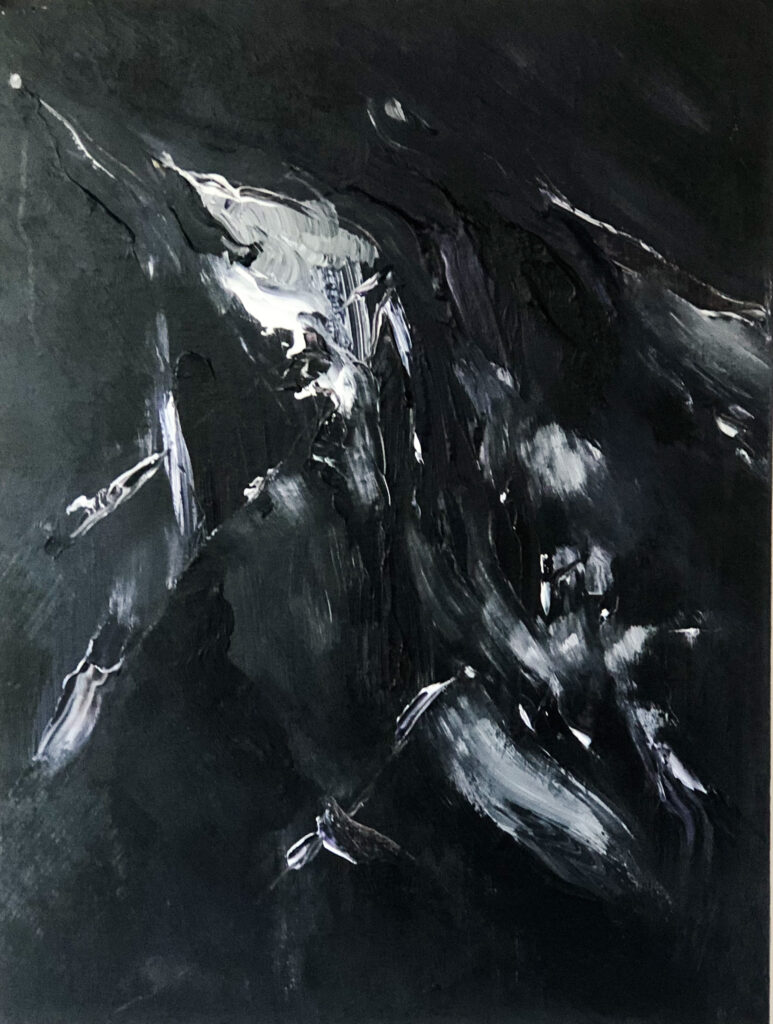
The powerful little angels are flying freely in the world of perfection. Each angel represents each characteristic of the ego, breaking free from bondage, being free and enjoying the triumphant moments of the long journey to eliminate the ego.
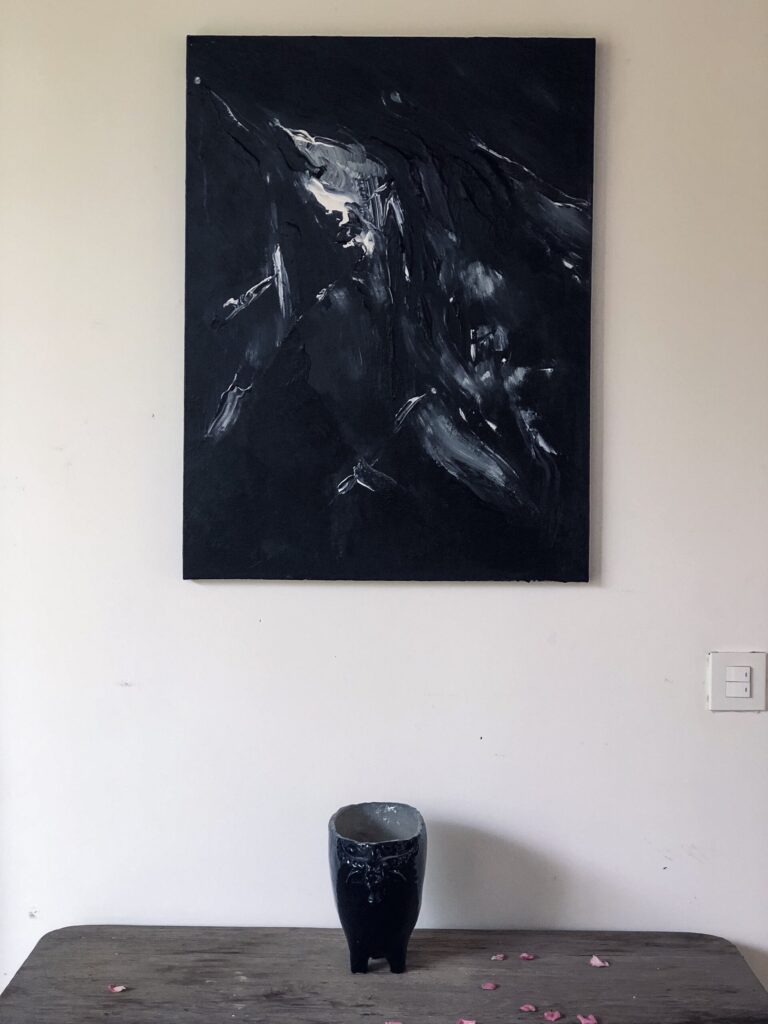
Ho Viet Vinh

Description
Exucuted in April 2020.
Style
Lyrical Abstract
Technique
Acrylic on Canvas
Dimension
60W x 80H x 2D cm

The authenticity of this work has been confirmed by HVV Architect &Partners. A certificate of authenticity maybe delivered by the Company upon request to the buyer.

Vinhho Biography
Ho Viet Vinh is a Vietnamese architect who graduated with a Bachelor of Architecture degree in 1995 from the University of Architecture Ho Chi Minh City, Vietnam, where he received an award for creative design in his final year. He is a Registered Architect in Vietnam, a Registered Urban Planner in Ho Chi Minh City, and a member of the Association of Architects and Urban Planners of Vietnam.
Vinh’s career began in 1995 with participation in several design competitions in Ho Chi Minh City. That same year, he became a lecturer in the Urban Planning Department at the University of Architecture.
In 1998, he won second prize in the international competition organized by the Summer Workshop of Cergy-Pontoise, France, with the theme “Ho Chi Minh City and the Saigon River.”
In 2005, he was awarded a special prize in another international competition by the Summer Workshop of Cergy-Pontoise, France, for his project “Can Gio Emotional City.”
In 2010, he participated in the U.S. International Visitor Leadership Program (IVLP) focusing on Sustainable Urban Planning.
In 2015, Vinh was selected by the Lebadang Creative Foundation to design the Lebadang Memory Space Museum in Hue. During this time, he also became the Director of the Fund.