Next project | Vietnam’s new biophilic architecture is going wild
Picture architecture in Vietnam and you might imagine ancient temples buried down countryside lanes or faded colonial buildings lining the city streets. But spurred by unprecedented economic growth, this Southeast Asian country of almost 100 million is revamping its traditional image – and architecture is part of the overhaul. After decades spent trying to keep Vietnam’s unrelenting jungles out of the cities, visionary architects now harness the wilderness to enhance their urban creations. And the countryside is no longer designated for relics of the past – but also innovations for the future. From contemporary art hubs hiding in the hills to city tower blocks blooming with foliage, here is the architecture that is making its mark on Vietnam.

Lebadang Memory Space, by Architect Ho Viet Vinh
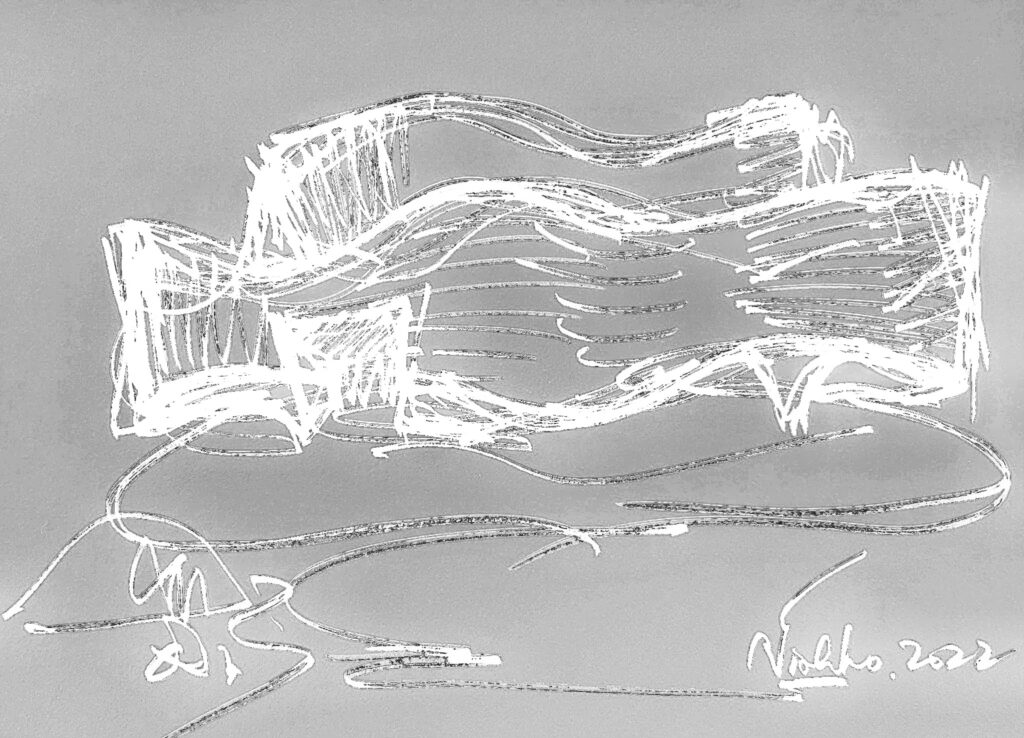
Nestled in the countryside together with Hue’s centuries-old royal tombs, Lebadang Memory Space is a lively architectural update to the city’s monarchical heritage. This contemporary art museum is dedicated to late local artist Le Ba Dang, who sketched the drawing that the blueprints are based on. Local architect Ho Viet Vinh designed the structure, completed in April 2019, with a central skylight that allows beams of light to track through the exhibition hall throughout the day.

Sky House by MIA Design Studio
Vegetation bulges from the balconies and rooftops of Sky House, a home in Ho Chi Minh City completed in December 2019. The plot was spacious enough to accommodate a large townhouse, but instead of creating unrequired rooms, MIA Design Studio designated half the house to light, wind, water and trees. The result is a generous sky well that feeds light to the habitable rooms and chambers with no practical purpose but to house plants, trees, and indoor ponds.

Chicland, by Vo Trong Nghia
Award-winning architect Vo Trong Nghia is celebrated for his use of natural materials and foliage, such as bamboo and tropical plants. The 21-floor Chicland Hotel, completed in June 2019 in the modern seaside city of Danang, features both. The on-site café has earthy bamboo interiors while the balconies overflow with greenery. Similarly biophilic, Vo Trong Nghia’s Silver Cloud, slated for completion later this year, is a leafy long-stay hotel that blends with the lakes and mountains of Cuc Phuong National Park, 100km south of Hanoi.

Brick Cave, by Doan Thanh Ha
In Vietnam, bricks have been used for at least a millennium. Doan Thanh Ha, who recently won the Turgut Cansever International Award, constructed the Brick Cave in the suburbs of Hanoi with an additional exterior wall to form a narrow atrium around the house. This perforated exterior casing with large windows invites natural light into the family home while keeping it cool during Hanoi’s scorching summers. The rooftop features a vegetable garden.

Central Park, by LAVA and ASPECT Studio
LAVA and ASPECT Studio won the commission to revamp Ho Chi Minh City’s September 23 Park, one of the city centre’s largest green spaces. As well as outdoor art galleries, performance pavilions and sport zones, LAVA and ASPECT Studio are deploying smart city artificial trees. Water purification trees collect and recycle rainwater, ventilation trees provide fresh air and solar trees generate power. Construction is scheduled to begin later in 2020.

VAC Library, by Farming Architects
While large-scale ventures are making a bold impact, smaller innovations are surfacing more quietly. In Hanoi, VAC Library by Farming Architects (Pictured above) is both climbing frame and reading room set within a three-dimensional grid fashioned from wooden beams. Other small projects of great promise include the Chieng Yen Community House in Son La Province by 1+1>2 Architects, which has a semi-cylindrical thatch roof supported by a bamboo frame. In Danang, architecture studio Tropical Space used brick to construct Cuckoo House, a family home perched above a café.

Empire City, by Ole Scheeren
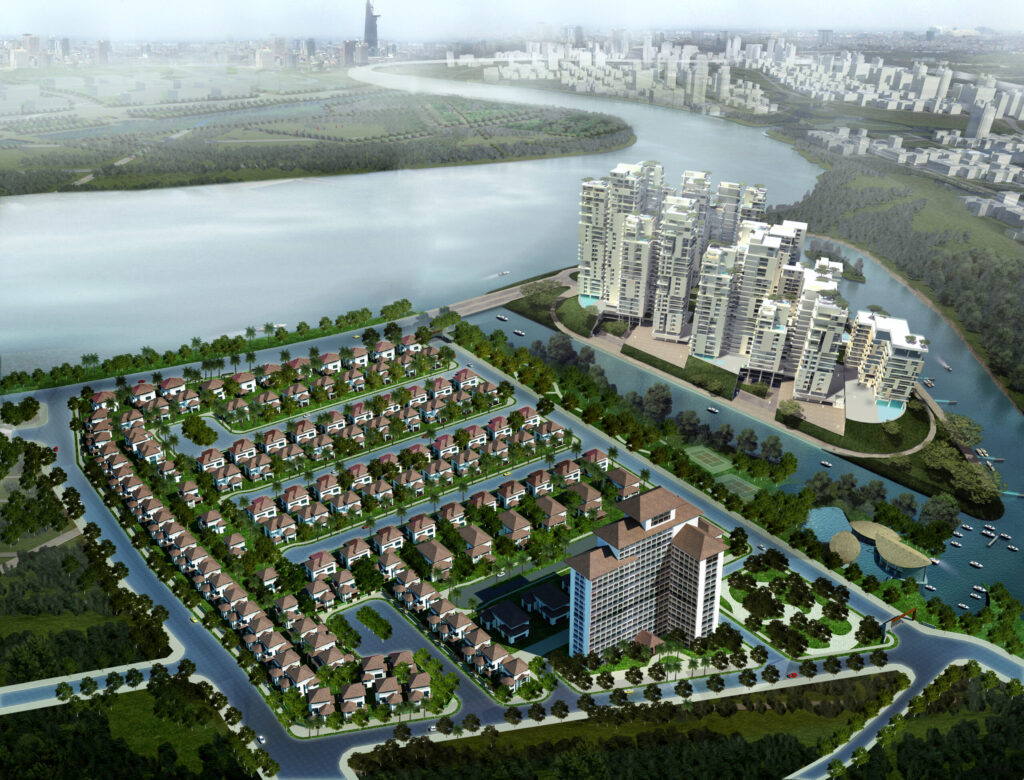
As Vietnam’s commercial capital, Ho Chi Minh City is entertaining many of the country’s most ambitious projects. With Empire City, Ole Scheeren explores how ‘nature can become an iconic element of architecture’ with a complex of three towers overlooking the Saigon River. At the building’s base, layered platforms evoke the swirling rice terraces of northern Vietnam. Over halfway up Empire Tower 88, the tallest of the three skyscrapers at 333 metres, sits the Sky Forest with verdant water gardens that echo the country’s jungles. Construction is expected to start in early 2021.
Next project | Can Gio emotional city

Photo by Vinhho
The goal is to enhance connectivity between Can Gio and neighboring provinces, particularly Vung Tau. As Ho Chi Minh City continues to expand, the demand for infrastructure grows, posing potential risks to Can Gio’s ecological integrity. Special attention is given to strengthening links with the nearby beach resort of Vung Tau, initially through a speedboat network and eventually with the proposed construction of an undersea tunnel.
While the jury found the tunnel proposal highly debatable, they acknowledged that the previously approved masterplan lacked adequate provisions for improving these connections. Team 4 prioritized these links, making them a central focus of their proposal.

Another key aspect of the development proposed by the team is the diversification of tourism activities. These could range from walking or boating excursions through the mangroves to farm visits, beach activities, and trips to nearby provinces made more accessible through the improved transportation links.
The team also presented a project to reclaim land and create two artificial islands off the coast at the eastern and western ends. These islands are envisioned as hubs for diverse tourism activities, offering unique experiences to visitors.

Achieving these objectives will require significant improvements to infrastructure. A high-speed transportation system must be implemented in a way that respects the environment and minimizes pollution, bringing Can Gio closer to nearby development areas.
Freshwater supply is critical for both residents and tourists. A sustainable water collection and recycling system should be established to optimize this valuable resource while preventing water pollution.
The construction of eco-houses will help balance the infrastructural development, ensuring harmony with the natural surroundings. Additionally, all other modes of transportation within the area will be designed to be environmentally friendly.

The project seeks to enhance the quality of life for the residents of Can Gio. This will be accomplished by preserving and upgrading traditional activities such as farming and those along the beach.
Locals will be encouraged to participate in service, trade, and production activities to meet the demands of tourism while maintaining their cultural heritage. Traditional practices will be promoted, enabling those living in the forest, on the beach, or along the river to share their unique ways of life.
Additionally, numerous public spaces and recreational activities will be developed, fostering leisure and entertainment opportunities for both residents and visitors.

The southern area of Can Gio along the beach will be developed with a focus on preserving the connections between the forest and the sea. Six key axes will serve as the foundation for these links: an agricultural production axis, a commercial axis, a festival axis, a handicraft village axis, a traditional market axis, and a public space axis.
This approach ensures that development respects the natural and cultural heritage of the region while creating vibrant and functional spaces for both residents and visitors.

The ultimate aim of this proposal is to evoke and enrich people’s senses and emotions, creating an “emotional city”. Both visitors and locals will be immersed in a symphony of sensory experiences:
They will listen to the soothing sounds of the forest and the rhythmic waves of the beach. They will marvel at breathtaking views of the sea and lush forests, swim in the waves, and feel the textures of the forest’s natural wonders.
The air will carry the refreshing scent of the sea, mingling with the intricate fragrances of the mangrove. They will savor the local flavors, from seafood harvested from the river and sea to traditional delicacies.
Beyond these sensory delights, their emotions will be further deepened by the rich history, vibrant culture, and timeless traditions of Can Gio, making every moment a journey of discovery and connection.

Team 4
- Ho Viet Vinh – Leader Architect, Urban Planner
- Pham Phu Cuong – Architect
- Nguyen Hong Minh – Architect
- Hoang Anh Tu – Architect, Urban Planner
- Pham Anh Tuan – Architect, Urban Planner
- Nguyen Anh Tuan – Architect, Landscape Architect
Team 4, comprised entirely of Vietnamese professionals and led by Architect Ho Viet Vinh, brought a profound vision for the future of Can Gio. The team outlined a series of key objectives, including the preservation of the mangrove ecosystem—both its core and transitional areas—the optimization and development of local production activities, and the protection of water resources from pollution originating from the Saigon-Dong Nai River and the sea.
For their insightful and forward-thinking approach, Team 4 awarded a special mention from the Workshops of Cergy-Pontoise.
Next project | Tự tại
Êm đềm tựa giọt sương tinh khiết gieo mầm an lành.
Can trường cắm cội rễ sâu bền trước bão lũ.
Hoa trôi nở hương thơm giữa dòng nổi sóng, bờ cỏ lặng lẽ tựa mặt hồ thu.
Hương Giang trở thành ngọn đuốc chánh niệm – vừa tỏa sáng tự thân, vừa soi đường dẫn lối.

Next project | Forest Station

Returning to the forest is like being immersed in pure silence. Each breeze caressing the skin penetrates deep into each cell to wake up the body after a long deep sleep. The breath slowly fills all the skin, making the whole body immersed in the sweetness of heaven and earth. Returning to that place is the way returning your true home. 


Next project | Clay Pottery Gallery

Inspired by Professor Thai Kim Lan’s collection of over 7,000 ceramic artifacts recovered from the Perfume River, the idea was conceived to restore and elevate these artifacts to reflect their true value. All ceramic products originate from the earth and are matured through fire. The intense heat of fire hardens the earth, enabling it to endure the test of time.
To symbolize this tempering quality, dark red painted steel will be used. The interplay of contrasting elements—hot and cold, hard and soft—will be applied in the design language to accentuate the significance of time and place.

Type
Art gallery
Year
2019
Project
Thai Kim Lan Garden house
Team
HVV Artchitect & Partners, Ho Viet Vinh, Tran Thu Ha
Next project | Angel

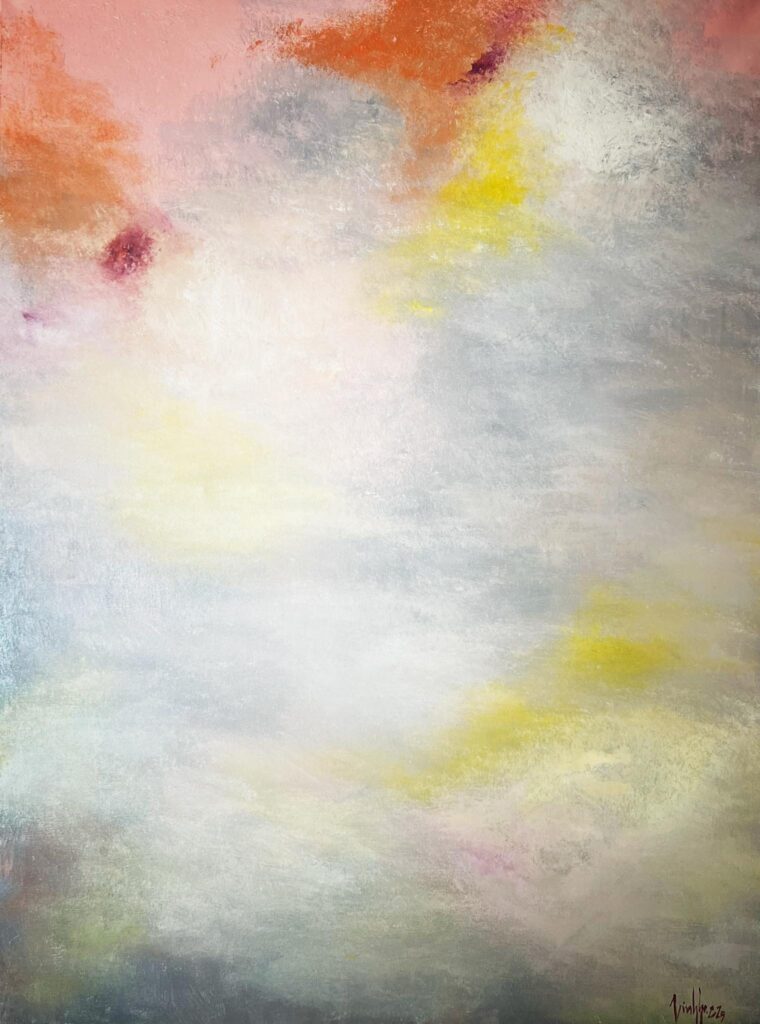
Angel.
Ho Viet Vinh
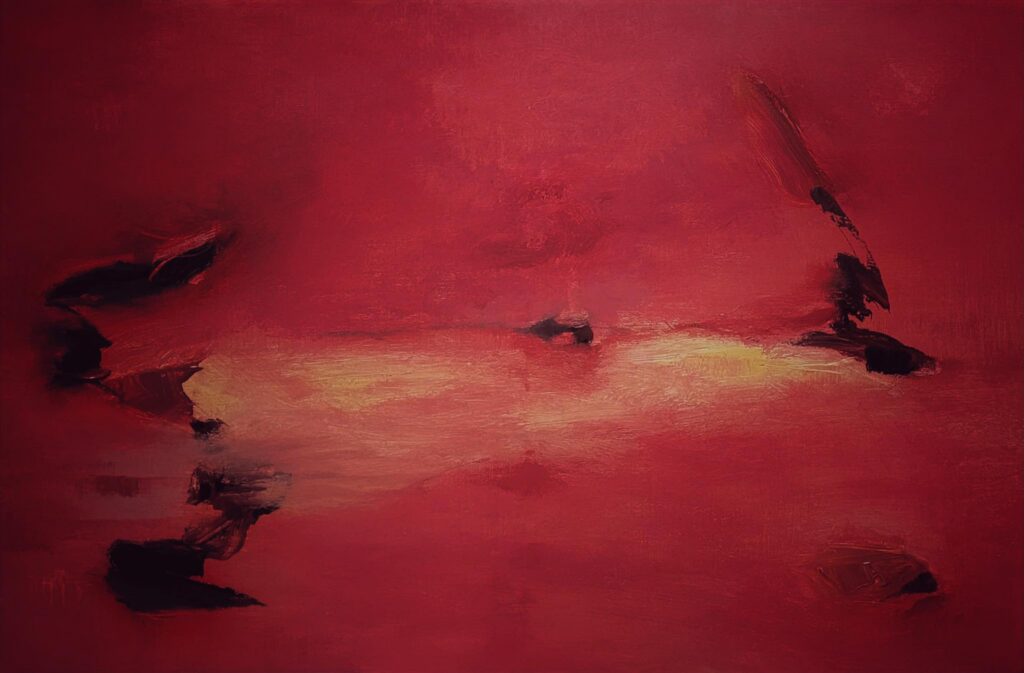
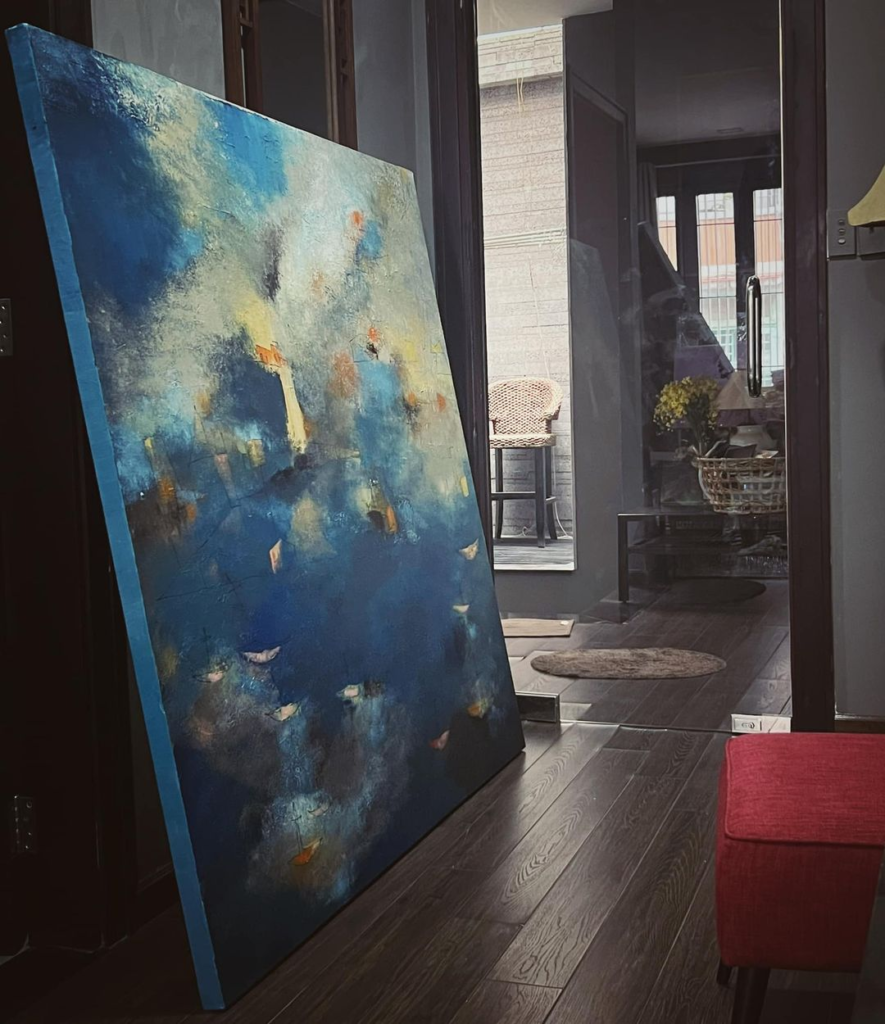
The powerful little angels are flying freely in the world of perfection. Each angel represents each characteristic of the ego, breaking free from bondage, being free and enjoying the triumphant moments of the long journey to eliminate the ego.

Description
Exucuted in April 2020.
Style
Lyrical Abstract
Technique
Acrylic on Canvas
Dimension
60W x 80H x 2D cm
The authenticity of this work has been confirmed by HVV Architect &Partners. A certificate of authenticity maybe delivered by the Company upon request to the buyer.
Vinhho Biography
Ho Viet Vinh is a Vietnamese architect who graduated with a Bachelor of Architecture degree in 1995 from the University of Architecture Ho Chi Minh City, Vietnam, where he received an award for creative design in his final year. He is a Registered Architect in Vietnam, a Registered Urban Planner in Ho Chi Minh City, and a member of the Association of Architects and Urban Planners of Vietnam.
Vinh’s career began in 1995 with participation in several design competitions in Ho Chi Minh City. That same year, he became a lecturer in the Urban Planning Department at the University of Architecture.
In 1998, he won second prize in the international competition organized by the Summer Workshop of Cergy-Pontoise, France, with the theme “Ho Chi Minh City and the Saigon River.”
In 2005, he was awarded a special prize in another international competition by the Summer Workshop of Cergy-Pontoise, France, for his project “Can Gio Emotional City.”
In 2010, he participated in the U.S. International Visitor Leadership Program (IVLP) focusing on Sustainable Urban Planning.
In 2015, Vinh was selected by the Lebadang Creative Foundation to design the Lebadang Memory Space Museum in Hue. During this time, he also became the Director of the Fund.
Next project | Spiritual Sustainability as the Core Essence
Spiritual Sustainability as the Core Essence
For Architect Hồ Viết Vinh, a sustainable structure must encompass multiple dimensions: structural sustainability, environmental sustainability, aesthetic sustainability, and cultural sustainability. Yet, there is one essential, foundational element that underpins them all: spiritual sustainability. One of his upcoming and most cherished projects currently in development is the Trịnh Công Sơn Park in the ancient capital of Huế.

Guided by a philosophy of holistic sustainability, Hồ Viết Vinh has crafted unique architectural works such as Lebadang Memory Space and more recently, the Coral House in Hồ Tràm.
Could you share more about the milestones that have shaped your 25-year career?
I can summarize my more than 25 years of navigating this profession—full of challenges—into four stages: searching, understanding, contemplation, and practice.
The first stage took me around five years. I was seeking a way to survive in this field, with much effort but little clarity beyond earning a living.
The second stage arrived when I realized that architecture demands not only physical effort but also profound intellectual engagement.
The third stage was contemplation—reflecting on the distinct values that drive creativity. This was perhaps the most challenging period. It required me to relinquish things I had painstakingly gathered over time, clearing my mind to make space for the new.
Finally, the fourth stage is practice—not merely following thought processes, but letting intuition and wisdom guide my actions.
Your design philosophy seems inspired by Buddhist thought, correct?
Yes, indeed! The teacher who profoundly influenced my design philosophy is Thích Nhất Hạnh from Làng Mai (Plum Village), with his wisdom of interbeing (tương tức). According to Thích Nhất Hạnh, interbeing means: “If we understand that humans and nature are inseparable, we will know how to treat nature as we would treat ourselves—with care, gentleness, and love, free from violence. If we don’t want to harm ourselves, we should not harm nature, for harming nature is ultimately harming ourselves, and vice versa.”
How do you incorporate the concept of emptiness in your architectural works?
In essence, space is defined by emptiness. Without emptiness, there is no space. We must distinguish between the concepts of empty/full and open/closed. The former refers to spatial density, while the latter concerns the degree of openness to the external environment.
Emptiness is where dialogues unfold—between humans and nature, between individuals, and between oneself and the spiritual realm. It is a void that leads to infinite transformation and change.

What is your perspective on sustainable architecture? What, in your view, is the primary factor that defines sustainability?
When discussing sustainability, we must ask: sustainable in what sense? Is it structural, environmental, aesthetic, or cultural sustainability? Today, most conversations focus on environmental sustainability, as we face the brink of ecological destruction.
In my perspective, a truly sustainable structure must integrate all four aspects, with an additional core foundation: spiritual sustainability. This form of sustainability is rooted in an intuitive understanding of the fundamental truth of life on Earth—harmony, where all beings support one another to coexist.
“Architecture is a part of nature, and thus, it must harmonize with its surroundings. Light, wind, rain, storms, and even insects are all guests of the space.”
Is there a project that best embodies your design philosophy?
That would be the Lebadang Memory Space in Huế. This space is a harmonious blend of three elements: nature, form, and poetry. Nature includes the creations of the Earth—trees, flowers, rivers, skies, stones, humans, and animals. Form is defined by lines, shapes, colors, and materials that shape the space. Poetry is the soul that breathes life into it, creating a space that resonates with both the physical and the spiritual.
The thread that connects natural elements with the crafted form is poetry—a melody that flows from the primordial, carrying with it layers of cultural sediment, merging with the rhythm of life to shape the memory of time.
An Architect who has influenced you?
That would be Peter Zumthor, the renowned Swiss architect known for his famous quote:
“To design buildings that captivate the senses, architects must transcend the limits of form and structure.”
What experience do you consider most important for an architect like yourself?
Architecture came to me as destiny. Therefore, every experience carries its own value—there is no good or bad experience.
However, one pivotal experience stands out as a turning point in my creative journey. In 2005, I had the opportunity to participate in the 8th International Creative Competition organized by Les Ateliers Internationaux de Maitrise d’Oeuvre Urbaine Cergy Pontoise in France.
The competition brought together nearly 40 architects, urban planners, economists, managers, and environmental specialists from 17 countries. The theme was Ecological Tourism Urbanism in Cần Giờ (Can Gio entre ville ecologique et destination touristique).
Our project, titled “The City of Distinct Emotions” made a powerful impression on the jury and won the Special Award.

What is your perspective on materials in architecture? Are you experimenting with any specific materials?
Materials play a vital role in evoking aesthetic emotions within architectural spaces, alongside form and design language. Under the influence of light, these three elements harmonize to create the texture of space.
In my architectural designs, I place particular emphasis on exploring and incorporating local materials. These materials infuse spaces with the spirit of the place, giving them a unique identity and soul.

Could you share more about an upcoming project you are excited about?
A project I hold dear and that is currently being developed in Huế is the Trịnh Công Sơn Park.
Located at the confluence of three rivers, it rests against the Gia Hội Ancient Quarter, gazes upon the Hương River, and looks towards Ngự Bình Mountain as its front shield, with the Kim Phụng Range stretching across the landscape. This harmonious geographical setting provides the perfect foundation for the park in the heart of the ancient capital.
The park spans approximately 6.2 hectares and stretches nearly 1 kilometer along the lower reaches of Hương River, surrounded by water landscapes. Its structure is divided into two main sections: (1) The Space of “The Great Circle of Unity“ (20,000 m²); (2) The Musical Garden Space (42,000 m²).
The Great Circle of Unity is designed around the symbol of the Vietnamese Embrace, forming a double-layered circle representing the Fields of Vietnam. This concept draws inspiration from Trịnh Công Sơn’s musical longing for peace.
At its heart stands the statue of Trịnh Công Sơn, with a poised and serene posture, emerging from the landscape like a mountain standing tall. He becomes a symbol of the nation’s desire for unity, love for humanity, and a reflection on the human condition.
Every step into this space echoes with the uplifting and refreshing melodies of his music. It invites us to connect, hand in hand, forming a unified entity called Vietnam.
The Musical Garden Space, on the other hand, captures the lingering melodies of nature. Here, one can sense the gentle whispers of grass, flowers, birds, and the vibrant life that surrounds us—a symphony of nature’s tender serenade.

Next project | MANG THIT RED CERAMIC BRICKS FESTIVAL 2024
An Article by Architect Ho Viet Vinh
(Mang Thit 16/11/2024)
Mang Thit – where brick kilns tell stories, where rivers light up Vietnam’s heritage.

A Journey of Riverside Culture and Traditional Craft
Mang Thit – more than just a name, it is the pulse of a riverside culture unique to the Mekong Delta. Inspired by the legendary Thay Cai Canal, where the nearly century-old brick and ceramic craft village flourished, the stage for the 2024 Mang Thit Brick and Ceramic Festival promises to be a creative symbol, not only preserving but also spreading the values of tradition.
1. A Floating Stage on the River – A Symbol of Harmony Between Culture and Nature
Imagine a stage designed as a living painting on water, where wooden boats adorned with shimmering lights drift gently, carrying the echoes of time and life. The main stage is not merely a place for performances but a “creative island” floating on the canal, pulsating as the heart of nature.
On the stage, the iconic imagery of traditional brick kilns will be reimagined through a blend of lighting and materials, creating a space that feels both familiar and magical. The arches of red bricks – a signature of Mang Thit – will be crafted as gateways to a journey of cultural discovery while producing dazzling reflections on the water’s surface.

2. Dynamic Living Scenes – When Riverside Life Becomes Art
Beyond being a static stage, the festival elevates its appeal with vibrant, living scenes performed directly on the river. Boats loaded with red-fired bricks, artistic ceramics, and baskets of orchard fruits will become part of the performance – telling the story of diligent, skillful locals.
The audience will not just watch but feel immersed in the flow of life during the craft village’s heyday. Cultural performances such as traditional opera, southern folk music, or ceramic dance displays will unfold on vividly decorated boats, gracefully moving across the water.

3. Lighting – A Language of Timeless Emotion
Lighting is the soul of the festival. The entire event space will be enveloped in modern artistic lighting, seamlessly blending with natural light reflections on the water. Multicolored laser effects will not only create a mystical atmosphere but also convey the theme of harmony between tradition and modernity.
Light beams will sketch the iconic brick kilns glowing against the night sky, while floating lanterns released on the river will symbolize hope, gratitude, and pride for Mang Thit’s traditional brick and ceramic craft.

4. Explosive Media Impact – Bringing Mang Thit to the World
This festival is not just a local event but an opportunity to showcase Mang Thit on a larger scale. Every corner of the stage, every captured moment from the festival will be a unique work of art – ready to “go viral” on social media. Images of sparkling lights, vibrant boats, and lively performances will make anyone yearn to visit Mang Thit.

5. Conclusion – A Journey of Heritage in a New Era
The 2024 Mang Thit Brick and Ceramic Festival is not just a cultural celebration but a powerful message about the resilience of heritage and the aspiration to rise in a modern age. Come to Mang Thit to experience the beauty of its rivers, its craft villages, and its genuine people. This is not just an opportunity to explore but also a chance for everyone to rediscover a part of their roots in every brick, every smile, and every melody echoing from the rivers.

Brilliant at night and vibrant during the day.


Let’s join hands to promote Mang Thit – the cultural gem of the Mekong Delta – to proudly thrive on the cultural map of Vietnam and the world!
Next project | KHỞI NGUỒN

a photo by Vinhho 2025
Tôi không nhớ chính xác lần đầu tiên mình xem Rêu không phải là rêu mà là nhân chứng của thời gian và nơi chốn tự bao giờ? Có lẽ đó là một buổi sáng sớm khi sương còn đọng trên những phiến đá bên bờ suối. Hoặc có thể là một buổi chiều mưa, khi những mảng rêu xanh mướt trải dài trên tường gạch cũ, như những vết tích của một thời đại đã ngủ quên.
Dù là lúc nào, Rêu vẫn luôn ở đó, lặng lẽ, trầm mặc, bám rễ vào thời gian theo cách riêng của nó.
Rêu không phải là cỏ cây, cũng không hoàn toàn là rong rêu trôi dạt theo dòng nước. Nó là một thực thể kỳ lạ, vừa nguyên sơ, vừa vĩnh cửu. Rêu không có rễ, nhưng lại bám chặt vào đá. Không có thân cành, nhưng lan rộng như một tấm thảm. Không có tiếng nói, nhưng lại kể những câu chuyện cổ xưa hơn bất cứ cuốn sách nào từng được viết ra.
Thế giới của Rêu là một vùng giao thoa giữa cái hữu hình và cái vô hình. Nếu nhìn từ xa, Rêu chỉ là một lớp xanh nhạt, một mảng màu lặng lẽ trên nền đá xám. Nhưng nếu cúi xuống thật gần, ta sẽ thấy một hệ sinh thái thu nhỏ, nơi những sợi tơ mềm mại vươn lên, đón lấy ánh sáng đầu ngày. Rêu không chỉ sống trong không gian – nó còn bám vào ký ức, len lỏi vào những vết nứt của thời gian.
Tôi gọi Rêu mang một diễn trình với tên gọi “biên niên sử”: một cuốn sách không cần giấy mực, nhưng lưu giữ được những gì đã qua. Một hạt rêu nhỏ bé có thể mang theo nó câu chuyện của hàng trăm năm. Nó lớn lên trên bề mặt những công trình cổ, trên đá núi, trên mái ngói, trên những phiến đường rêu phong của một thành phố cũ. Nó ghi lại dấu vết của từng cơn mưa, từng đợt nắng, từng trận gió mùa.
Và như thế, Rêu bước vào cuộc đời tôi như một chứng nhân lặng lẽ nhưng không thể nào lơ đãng. Cùng với Thời gian, Rêu tồn tại trong một vũ điệu chậm rãi, không màng đến sự hối hả của thế gian. Tôi trở thành người chứng kiến: không, đúng hơn là kẻ lang thang giữa những lớp ký ức thời gian mà Rêu lưu giữ, cố gắng hiểu những gì mà nó muốn nói.
Nhưng liệu Biên niên sử Rêu có thực sự là một câu chuyện thú vị? Hay chỉ là tôi đang cố gắng tìm kiếm ý nghĩa trong một thứ vốn dĩ vô ngôn?
Kiến trúc sư Hồ Viết Vinh, Huế 2025
Next project | Sự im lặng
Có những điều thoạt nghe thấy trái ngược nhưng khi ngẫm cho thật kỹ thì ta thấy chí lý vô cùng. Người thông thái khuyên ta rằng:
“Đừng nói gì trừ khi bạn đã học được cách im lặng.”

Điều này có nghĩa rằng nếu bạn chưa đủ thời gian để nghĩ suy thật sâu, thật tường tận vấn đề thì lời nói sẽ hời hợt, nông cạn và thiếu sức thuyết phục. Trong ngạn ngữ Việt cũng có câu: “uốn lưỡi bảy lần trước khi nói” là vậy! Cuộc sống gấp gáp, nhịp đập cuồng quay tác động làm cho ta cũng đảo điên theo sự trôi lăn.
Vậy im lặng là ngồi im mặc cho cuộc đời kéo trôi hay sao?
Không hề!
Diễn dịch theo ngôn ngữ đạo là “im lặng hùng tráng”, tịnh khẩu để thân tâm tập trung khai mở năng lượng tuệ, chiếu kiến để thấu đạt vấn đề. Sau khi quán được bản chất sự vật, hiện tượng ta sẽ dễ dàng hiểu và minh giải được căn nguyên của nó. Từ đó ngôn từ của ta sẽ chuyên chở được đầy đủ thể, tướng và dụng để lời nói trở nên có phẩm chất. Ông bà ta thường chê những lời nói “sáo rỗng” nghĩa là không có phẩm chất, chỉ là đùa vui vậy thôi.
Để im lặng đạt đến sự hùng tráng mà không phải câm lặng là cả một quá trình tu thân và hiểu đạo. Người tu thân phải buông bỏ được tà kiến để thấy được tánh không của vạn pháp mà ngay cả thân và tâm ta cũng do duyên hợp nên bản tánh là không, giả danh và hư dối.
Thấy được như vậy thì ta sẽ hoà làm một với vấn đề mà ta muốn biết nên ta sẽ hiểu nó như nó đã là. Khi đó ta sẽ thông đạt thực tướng để nói những điều nên nói và những điều nên im lặng.
Hồ Viết Vinh.15012026