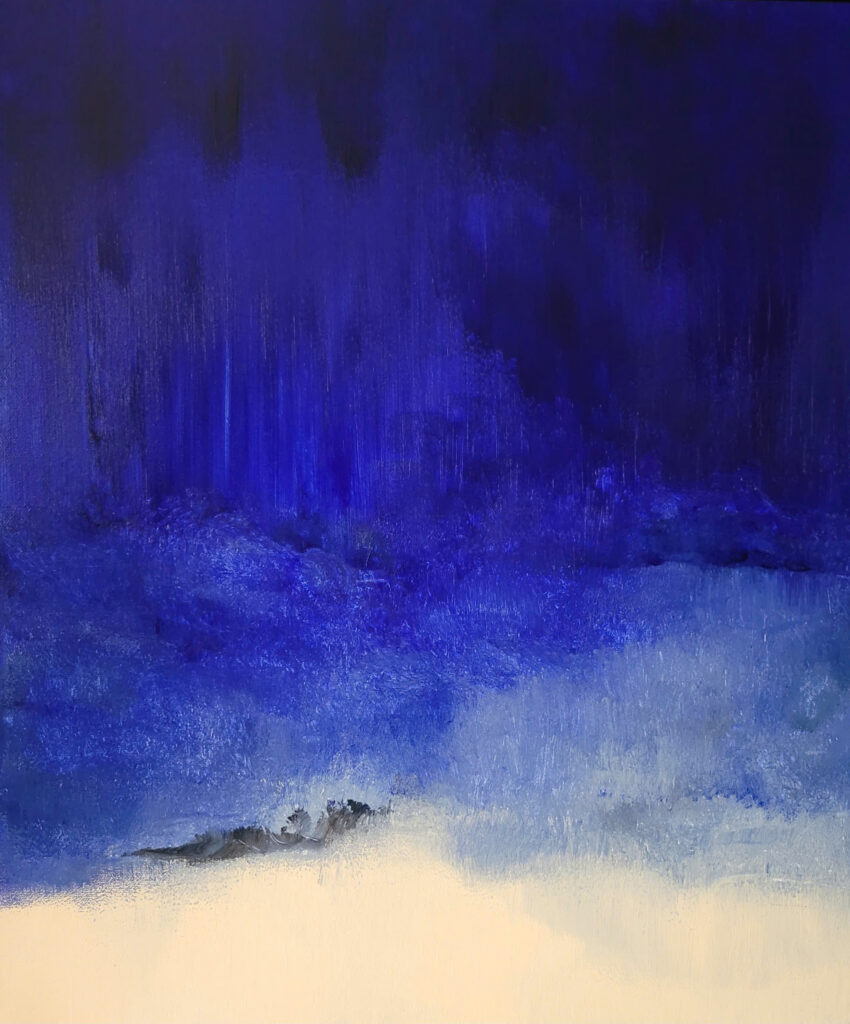
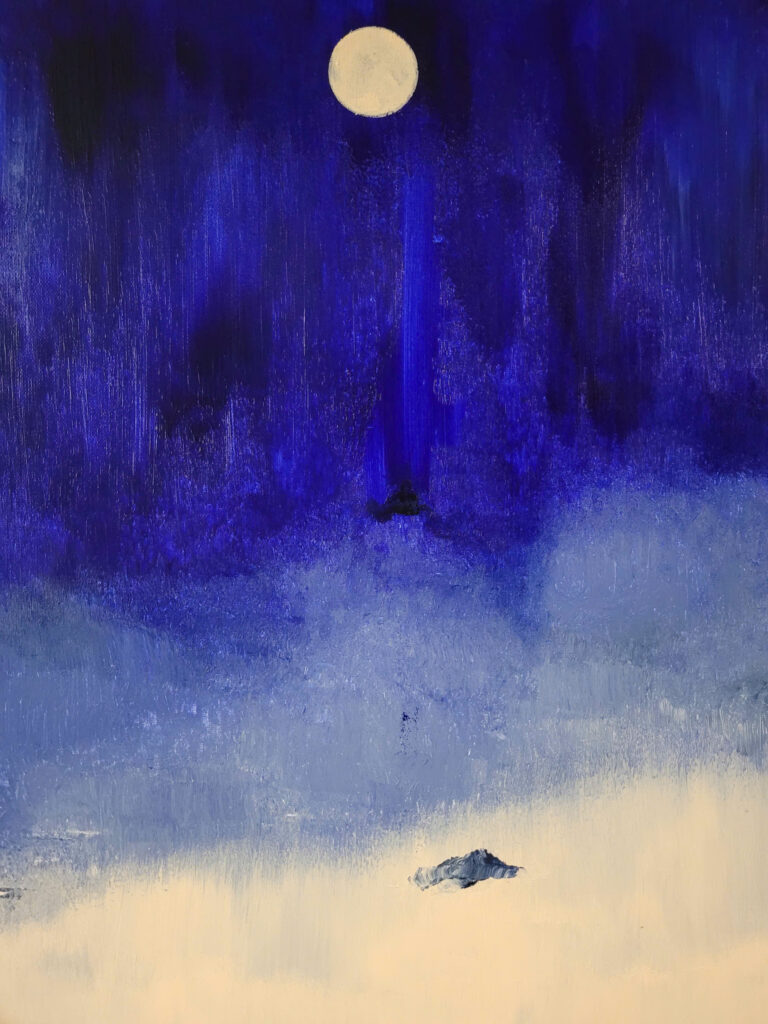
Next project | Angel
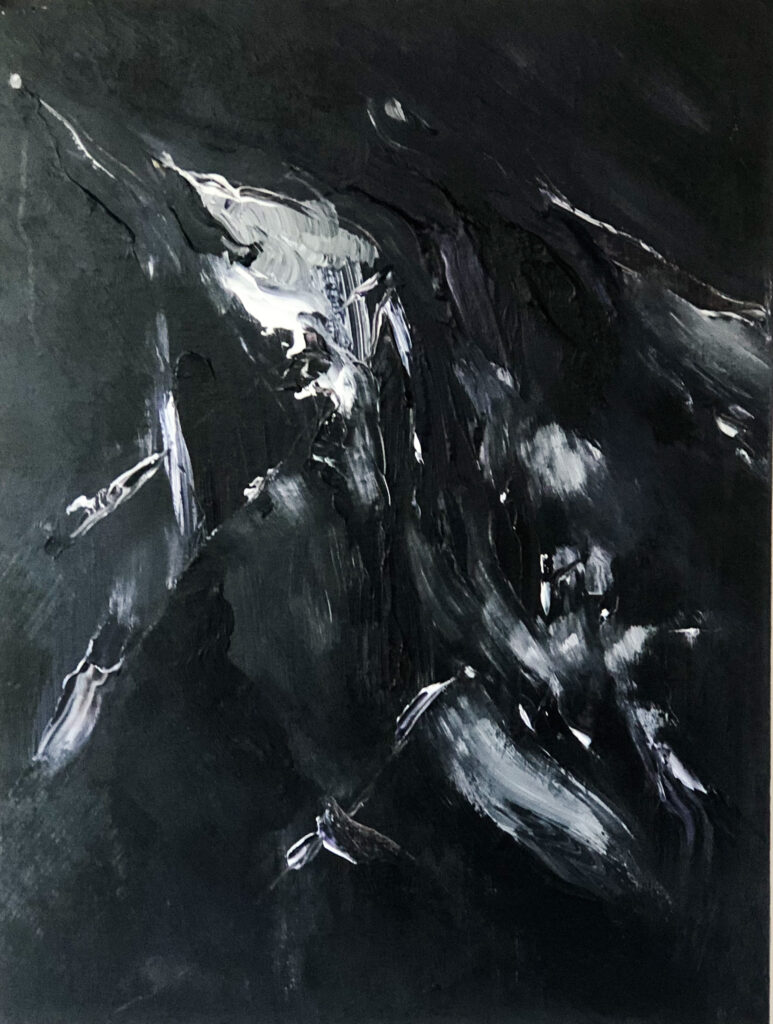
Angel.
Ho Viet Vinh
The powerful little angels are flying freely in the world of perfection. Each angel represents each characteristic of the ego, breaking free from bondage, being free and enjoying the triumphant moments of the long journey to eliminate the ego.
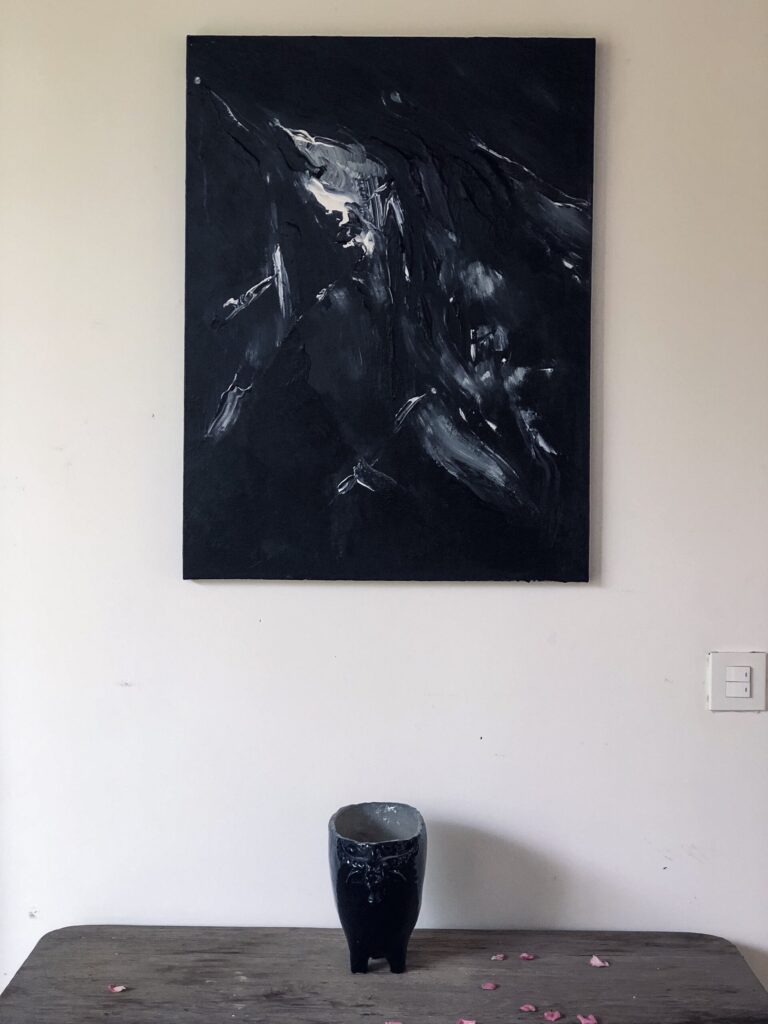
Description
Exucuted in April 2020.
Style
Lyrical Abstract
Technique
Acrylic on Canvas
Dimension
60W x 80H x 2D cm
The authenticity of this work has been confirmed by HVV Architect &Partners. A certificate of authenticity maybe delivered by the Company upon request to the buyer.
Vinhho Biography
Ho Viet Vinh is a Vietnamese architect who graduated with a Bachelor of Architecture degree in 1995 from the University of Architecture Ho Chi Minh City, Vietnam, where he received an award for creative design in his final year. He is a Registered Architect in Vietnam, a Registered Urban Planner in Ho Chi Minh City, and a member of the Association of Architects and Urban Planners of Vietnam.
Vinh’s career began in 1995 with participation in several design competitions in Ho Chi Minh City. That same year, he became a lecturer in the Urban Planning Department at the University of Architecture.
In 1998, he won second prize in the international competition organized by the Summer Workshop of Cergy-Pontoise, France, with the theme “Ho Chi Minh City and the Saigon River.”
In 2005, he was awarded a special prize in another international competition by the Summer Workshop of Cergy-Pontoise, France, for his project “Can Gio Emotional City.”
In 2010, he participated in the U.S. International Visitor Leadership Program (IVLP) focusing on Sustainable Urban Planning.
In 2015, Vinh was selected by the Lebadang Creative Foundation to design the Lebadang Memory Space Museum in Hue. During this time, he also became the Director of the Fund.
Next project | Self – hypnosis
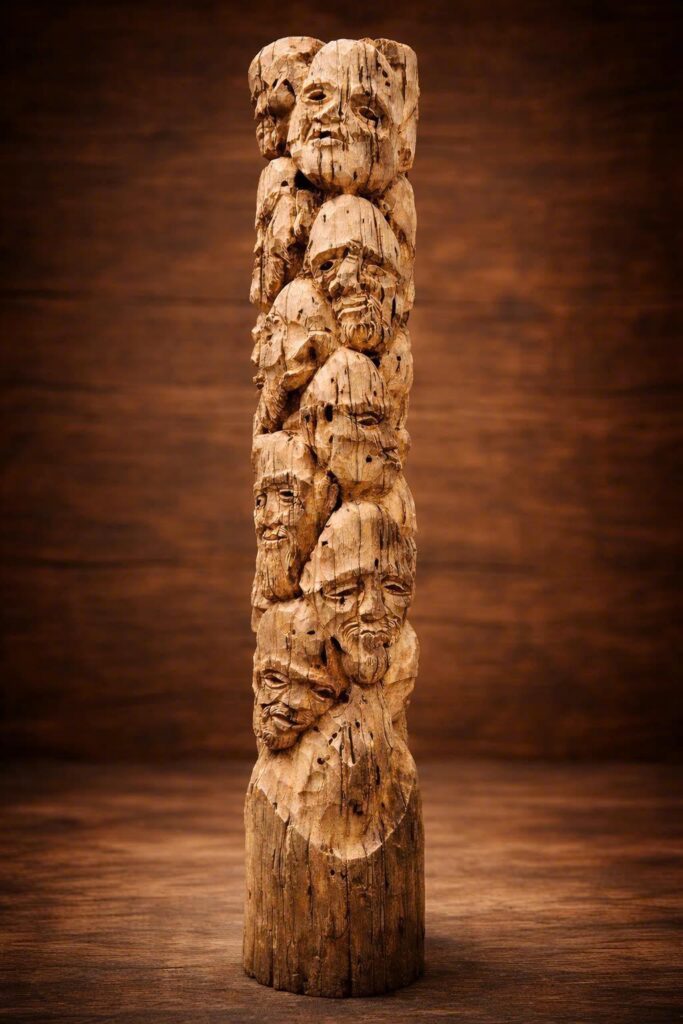
“Thi ca – Kiến trúc – điêu khắc – hội hoạ đang chuyển từ “tạo hình” sang “tạo điều kiện” cho con người tham gia, cho đô thị hồi sinh, cho vật liệu truy nguyên, và cho ký ức được tái sinh trong một trải nghiệm mới.”
“Poetry – Architecture -Sculpture – Painting are transmuting from sculpting forms into orchestrating conditions: for human participation, for urban reawakening, for materials to recount their origins, and for memory to be reborn within a new experience.”
KTS. Hồ Viết Vinh 260105
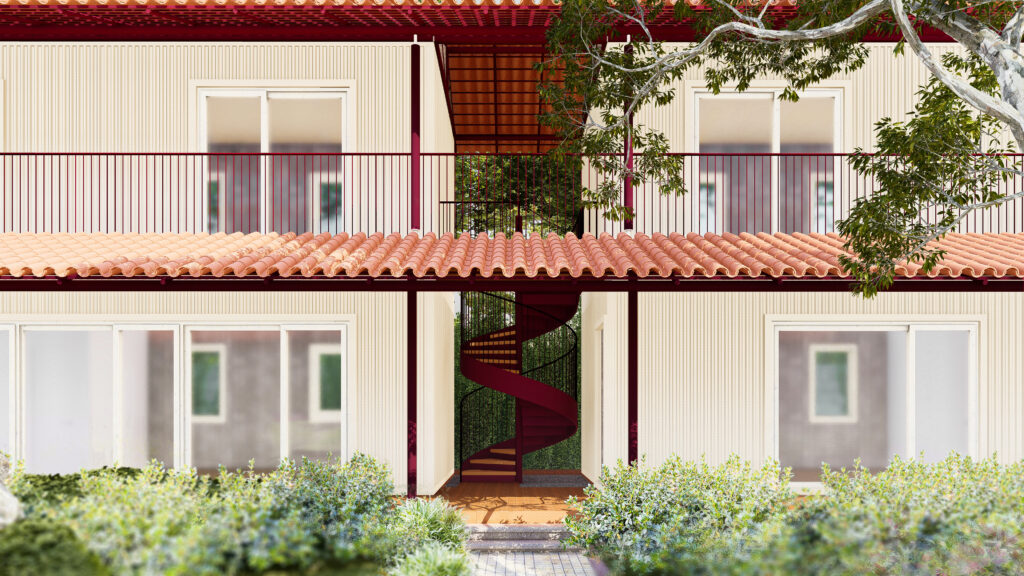
Next project | Container Resort
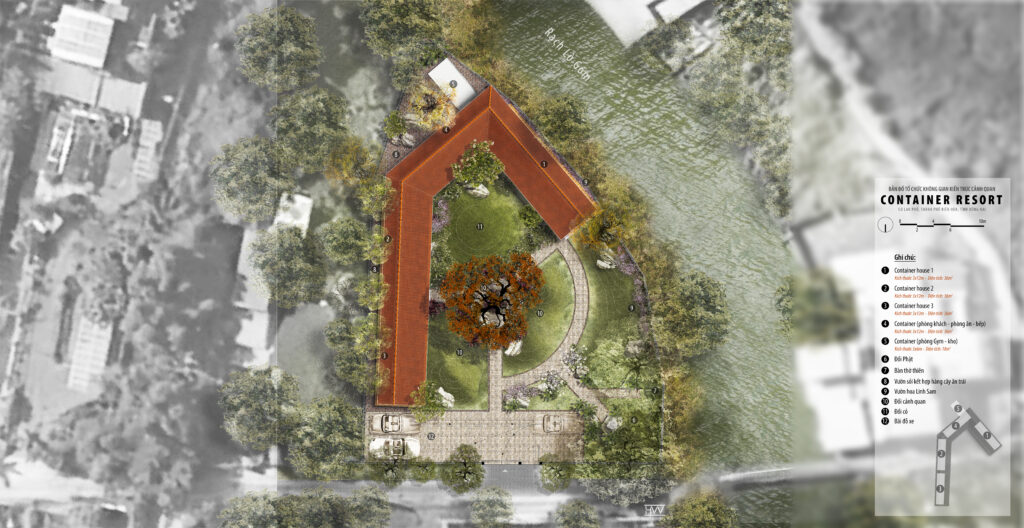
Project
Container Resort
Location
Cu Lao Pho, Bien Hoa City, Dong Nai Province, Vietnam
Area
1.500 m²
Services
Masterplan, Architecture and Interior design
Status
Under construction
Team
HVV Architect & Partners
Intro
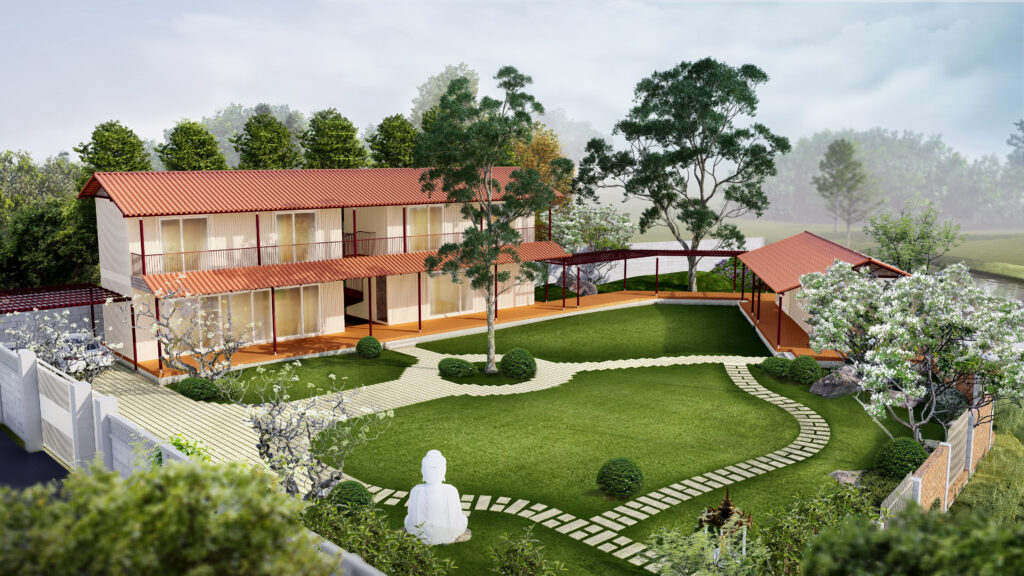
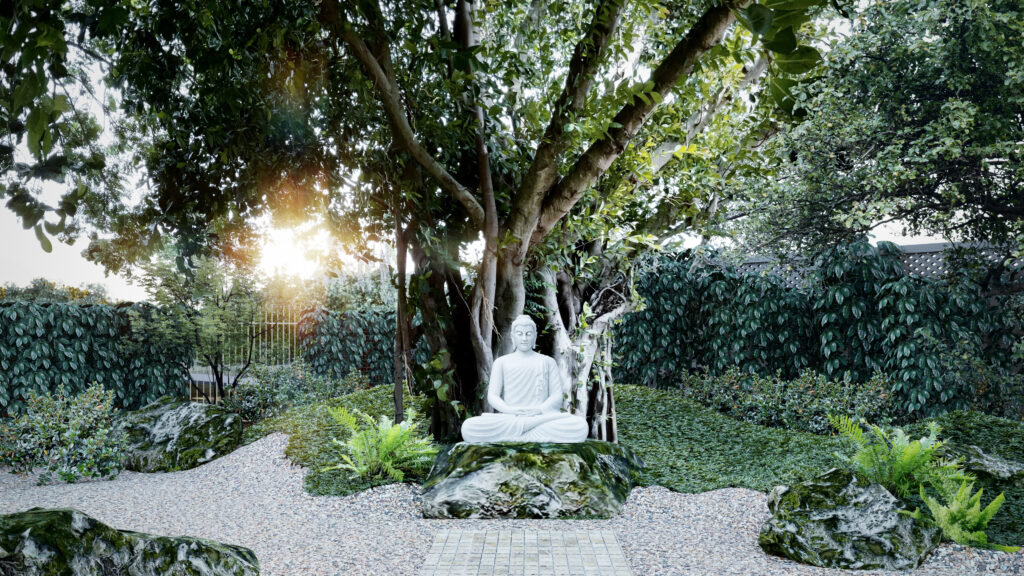
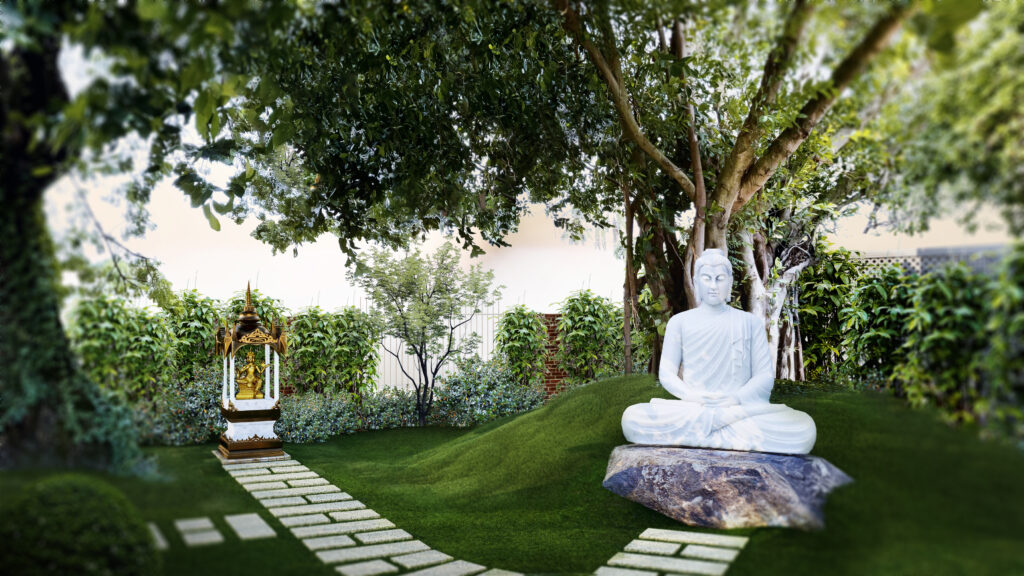
Standing in the garden feels like stepping into a separate realm, where time seems to pause, leaving only gentle sounds and serene imagery. Beneath the shade of an ancient Bodhi tree, the Buddha statue exudes a quiet majesty, offering a soft reminder to let go of burdens and listen to the tranquil rhythm within the depths of the soul.
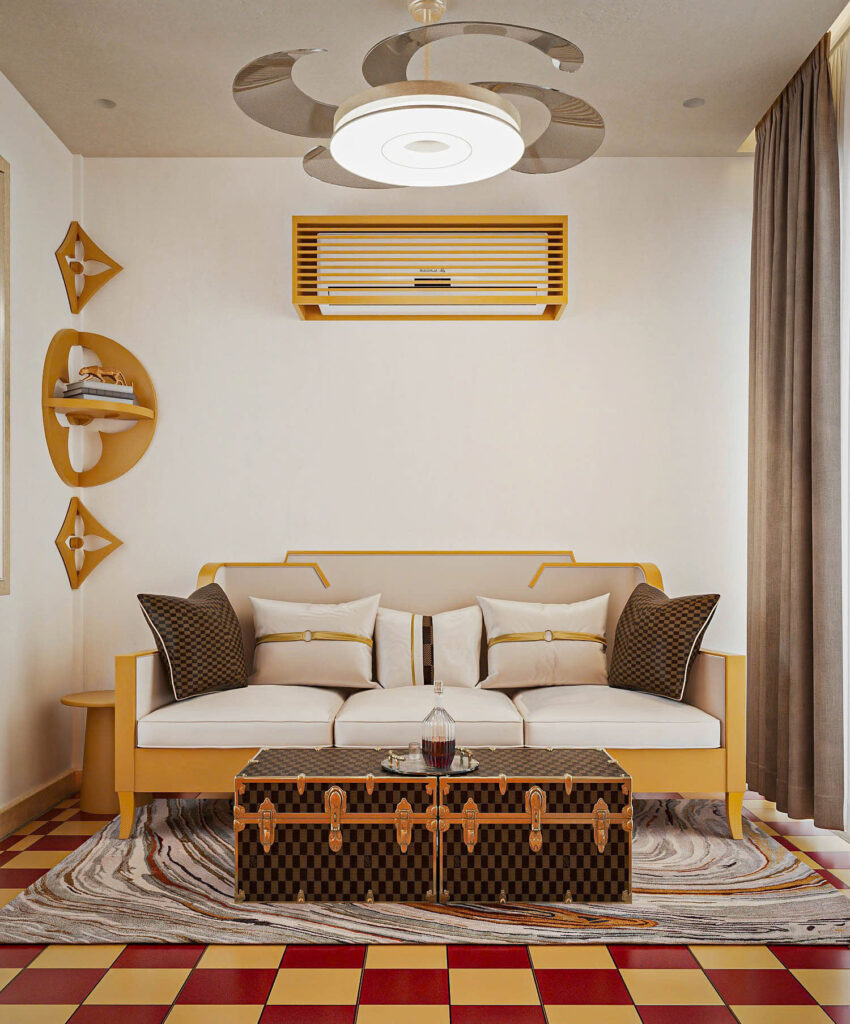
This is not just a place of retreat but a sanctuary for rediscovering peace amidst life’s constant flow. Here, lush greenery embraces every contour of modern architecture, together composing a perfect harmony that guides individuals back to their true selves.


Next project | Nostalgia
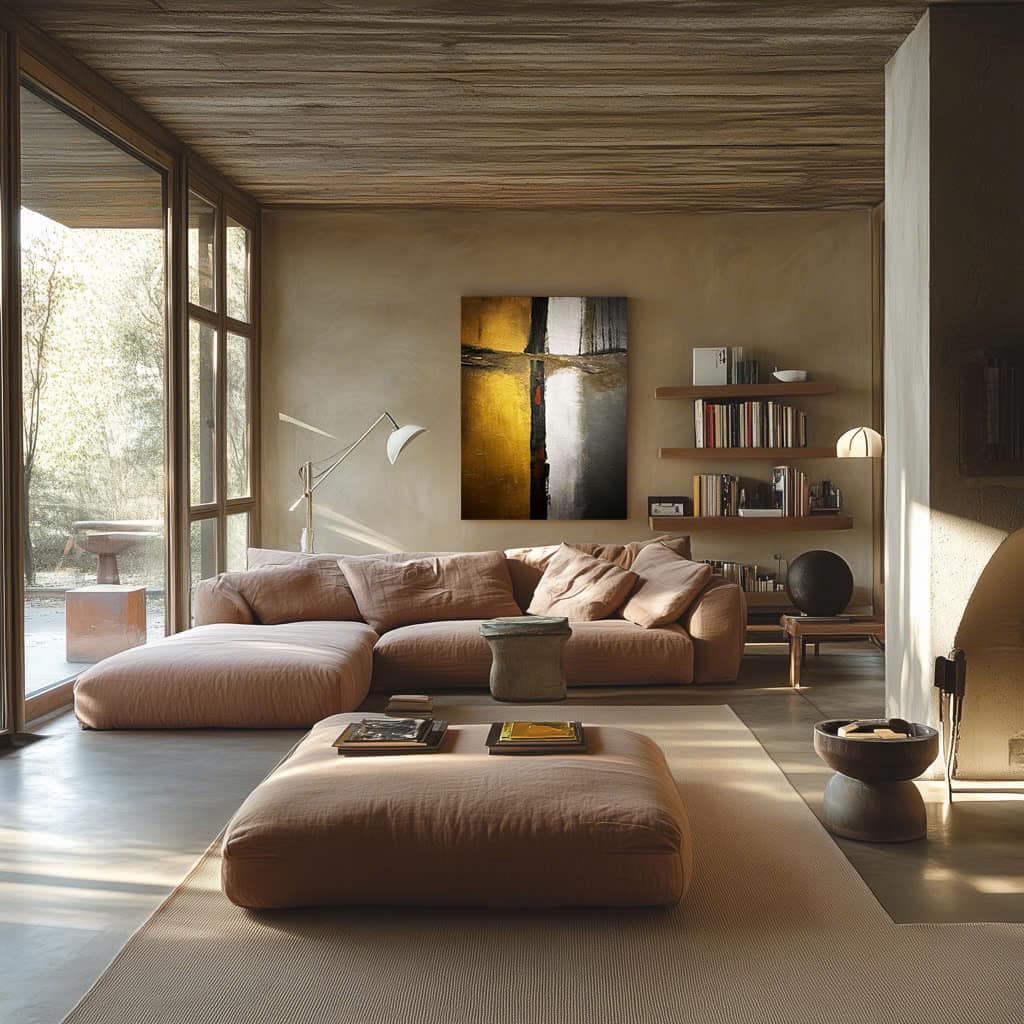
“The gentle interplay of light and shadow dances across the room, reminiscent of a fading memory. Each element, from the plush seating to the artful arrangement of books, whispers stories of bygone days. The warmth of wood and fabric envelops the senses, creating a cocoon of comfort and reflection. This harmonious blend of textures and hues captures the essence of nostalgia, a poetic journey through time, where beauty and melancholy coexist in a delicate balance.”
Next project | DANCE of LIGHT
The “Dance of light” stirring a feeling of motion and vitality. This interplay between brilliance and obscurity crafts an enigmatic allure, coaxing the observer to explore the depths of light.
Ho Viet Vinh
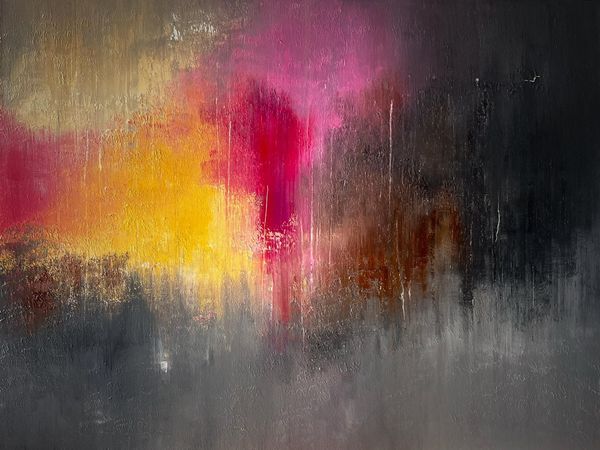
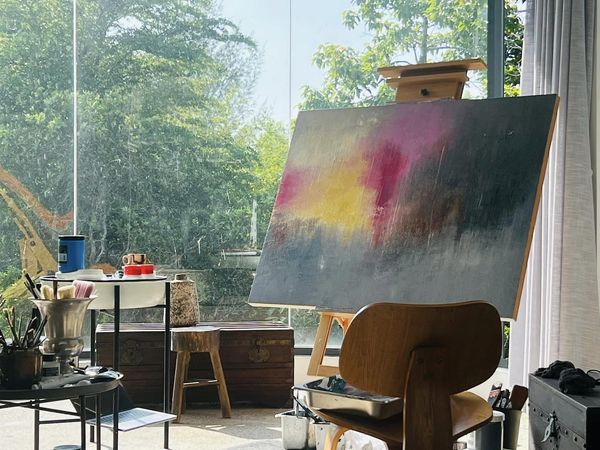
(Vinhho, Acrylic on canvas, 130x97cm, Maison de Corail.2024)
Next project | DRIFTING
“A delicate symphony of muted hues pirouettes in the ever-changing light. Its dance mirroring the soul’s ebb and flow, serving as a melancholic ode to time’s fleeting passage and life’s ephemeral beauty: a poignant reflection of existential drift.”
Ho Viet Vinh


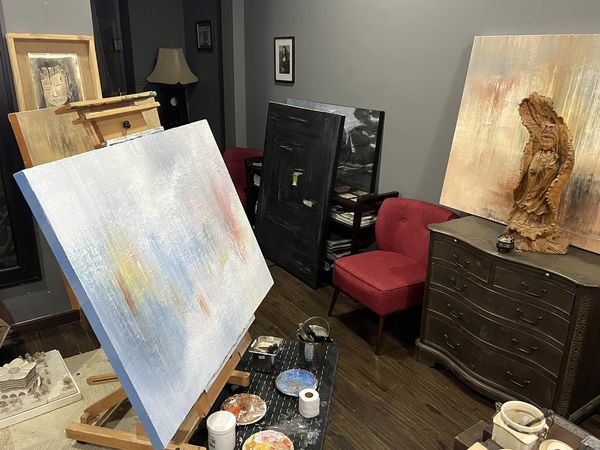
Acrylic on canvas, 130x97cm, Maison d’Art, 2024
Next project | Maison des Marais
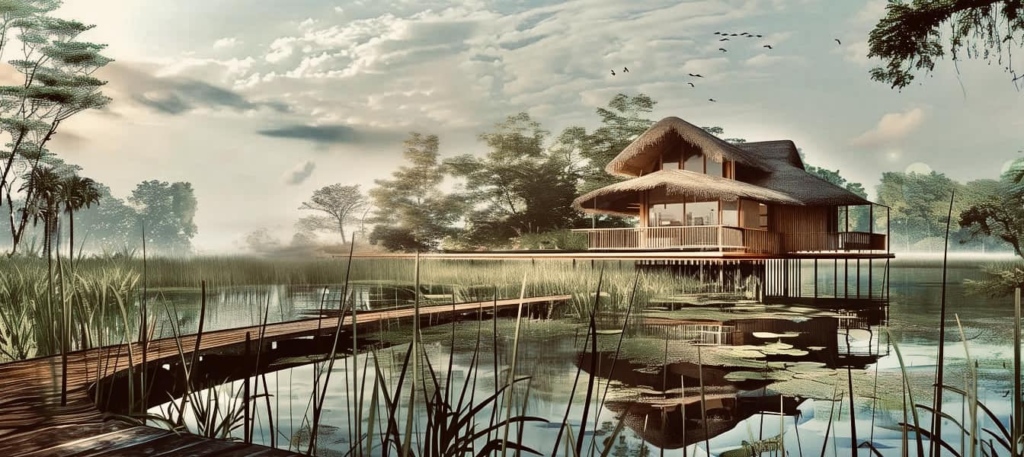
Supported by AI
Maison des Marais embodies the ethereal dance between the tangible and the intangible. The structure, elevated on stilts, mirrors itself in the serene waters, creating a dialogue with the reflections that blur the boundary between reality and illusion. The thatched roof and wooden textures harmonize with the surrounding marshland, evoking a sense of timelessness and serenity. This architectural poetry captures the essence of nature’s abstraction, where each element, seen and unseen, contributes to a symphony of spatial resonance, reflecting the invisible threads that weave through the fabric of existence.
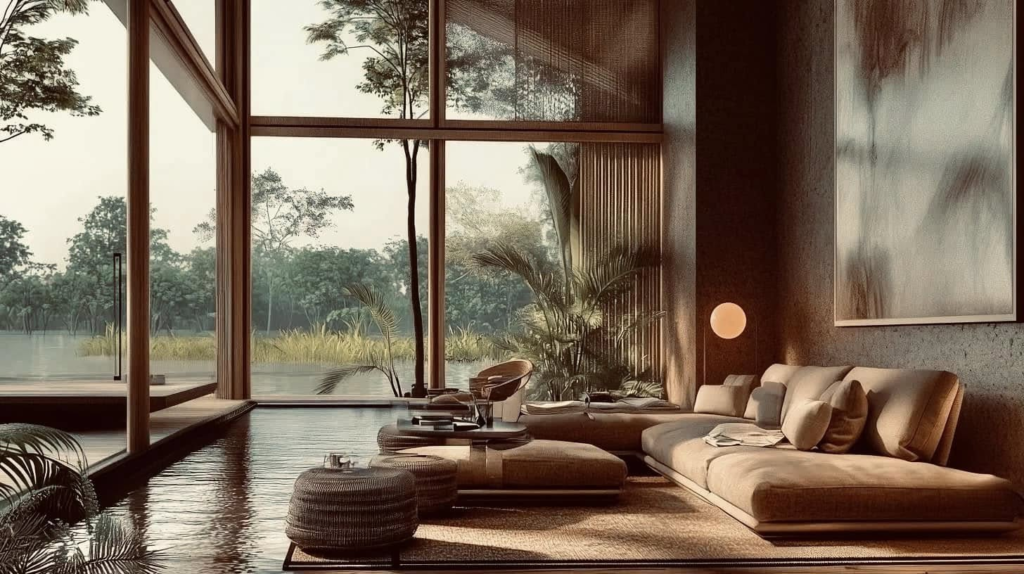
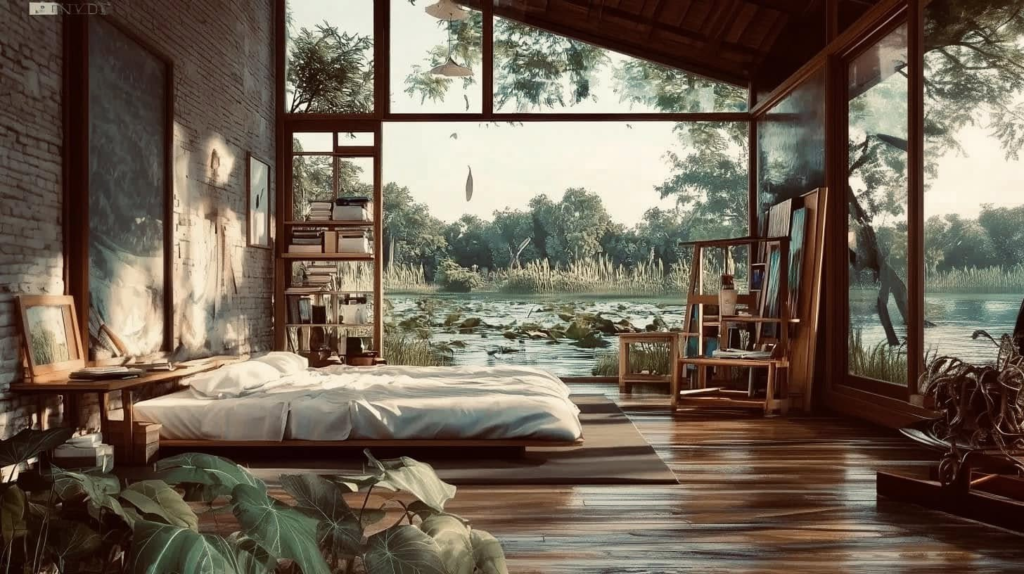
Supported by AI
Next project | Manifesto 2026
Tuyên ngôn năm 2026 – “HVV Architect & Partners tin rằng kiến trúc không bắt đầu từ hình khối, mà bắt đầu từ bầu không khí.”
Một không gian chỉ thực sự có giá trị khi nó chạm đến ký ức, văn hoá và chiều sâu nội tâm của con người.”
Chúng tôi theo đuổi một con đường rõ ràng: chạm đến tính bản địa và cá nhân hoá cho từng chi tiết thiết kế để tạo nên sự hoà quyện giữa truyền thống và đương đại.
1. Kiến trúc là sự lắng nghe vùng đất
Mỗi công trình khởi đi từ địa tầng ký ức: khí hậu, ánh sáng, vật liệu, tập quán, nghề thủ công, nhịp sống.
Chúng tôi không sao chép truyền thống. Chúng tôi giải mã tinh thần của nó. Bản địa không phải là hình thức lặp lại, mà là sự tiếp nối của năng lượng nơi chốn trong một hình thái mới.
2. Cá nhân hoá là đạo đức thiết kế
Mỗi khách hàng là một thế giới riêng. Chúng tôi không tạo ra “mẫu nhà đẹp” lặp lại, mà kiến tạo những không gian phản chiếu cá tính, lối sống và khát vọng sống. Cá nhân hoá không dừng ở mặt bằng hay công năng, mà đi vào chi tiết vật liệu, ánh sáng, tỷ lệ, nhịp điệu không gian. Kiến trúc, vì thế, trở thành một chân dung sống.
3. Truyền thống và đương đại không đối lập
Chúng tôi không nhìn truyền thống như quá khứ, cũng không xem đương đại là sự đoạn tuyệt với quá khứ. Truyền thống là chiều sâu. Đương đại là nhịp thở. Khi hai dòng chảy ấy gặp nhau,một bầu không khí mới được sinh ra vừa quen thuộc, vừa khai mở.
4. Kiến trúc – Hội hoạ – Điêu khắc – Thi ca
HVV Architect & Partners vận hành trên bốn không gian:
- Không gian ở: Kiến trúc
- Không gian nhìn: Hội hoạ
- Không gian chạm: Điêu khắc
- Không gian trong tâm thức: Thi ca
Chúng tôi tin rằng một công trình chỉ hoàn chỉnh khi nó đồng thời chạm vào thân thể và tâm hồn.
5. Bản chất trước hiệu ứng
Chúng tôi không chạy theo hình ảnh gây ấn tượng tức thời. Chúng tôi đi tìm bản chất. Cái cơ bản nếu được thực hiện đến tận cùng sẽ tạo nên sự bền vững và sang trọng thực sự. Sự giản lược, khi đúng chỗ, chính là biểu hiện cao nhất của tinh tế.
6. Kiến trúc như một hành vi hiện sinh
Mỗi công trình là một tuyên ngôn sống. Mỗi dự án là một cuộc đối thoại giữa con người và thời đại.
Trong một thế giới ồn ào và đồng dạng, chúng tôi chọn con đường lặng lẽ nhưng sâu sắc: Kiến tạo những không gian có linh hồn.
HVV Architect & Partners theo đuổi tinh thần Kiến trúc thi ca (Poetry of Architecture): Chạm đến bản địa; Tôn vinh cá tính; Kiến tạo bầu không khí sống.
Next project | The Unveiling of Trịnh Công Sơn’s Sculpture
At 4:30 p.m. on February 28, the Trịnh Công Sơn Park in Gia Hội Ward, Huế City, will host a significant event—the unveiling of a bronze statue of Trịnh Công Sơn, sculpted by the late artist Trương Đình Quế (1939–2016). This bronze statue, weighing 500 kg, stands 170 cm tall, with a width of 230 cm and a depth of 160 cm. Its design exudes a sense of intimacy and familiarity.
The project is the culmination of years of dedication by Mr. Lê Hùng Mạnh from Gia Hòa Company in Ho Chi Minh City. The journey to place a statue in a public space was far from simple, but his passion for commemorating artists didn’t stop there—he dreams of creating similar tributes for other cultural icons, such as the poet Bùi Giáng.
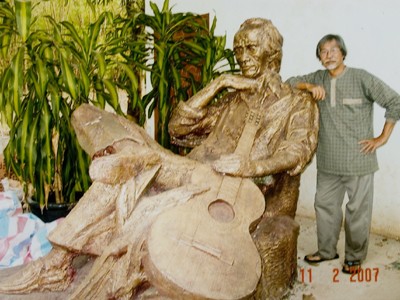
The choice of Trương Đình Quế as the sculptor was deliberate. He was one of Vietnam’s most renowned visual artists, celebrated with numerous national and international accolades. Born in 1939, the same year as Trịnh Công Sơn, Quế graduated from the Gia Định College of Fine Arts in 1960—the very year Trịnh penned his first song, Ướt Mi. This synchronicity in their lives laid the foundation for a deep friendship rooted in a shared passion for art and music, allowing Quế to capture the essence of his lifelong friend with ease.
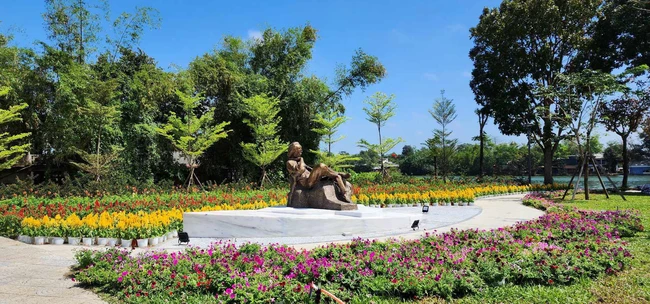
The statue took a year to complete at Giang Điền Waterfall in Đồng Nai. Reflecting on the creative process, Mr. Mạnh shared, “Trương Đình Quế and I agreed on how Trịnh should be depicted—as you now see him, leaning forward, as if gazing into a book, or perhaps into his own soul. Naturally, we couldn’t forget the ‘companion’ who stayed with him from ‘the day my mother bore me into this life of burden’ to ‘the noon field, where we met and vanished into the void’—his guitar.”
“The image of Trịnh bowing is intentional,” Mạnh explained, “and it aligns with his own lyrics: Cúi xuống. Cho tình dấy lên. Cho da thịt mềm. Cho cơn mặn nồng ngất lịm. Cúi xuống. Cho đời lãng quên. Cho mây trời chìm. Cho đêm mở hội âm thầm.
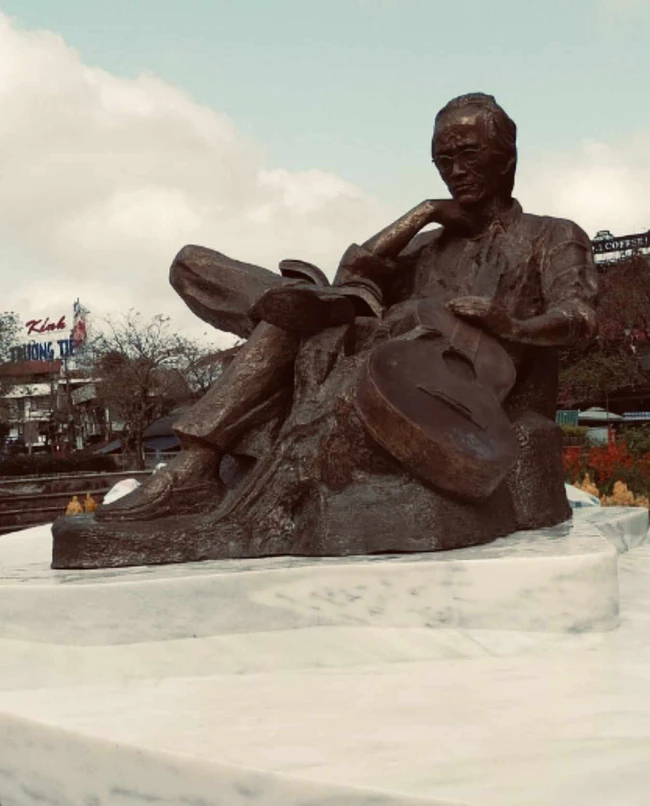
When designing the statue’s base, we collaborated with architect Hồ Viết Vinh, who envisioned it as an eye—650 cm long, 350 cm wide, and 55 cm high. This symbolic choice reflects Trịnh’s longing for human compassion: Những con mắt trần gian, Xin nguôi vết nhục nhằn. Những con mắt muộn phiền, Xin cấy lại niềm tin. Even when inspired by Bùi Giáng’s poetry, Trịnh expressed hope and tenderness: Con mắt còn lại nhẹ nhàng từ tâm. Nhìn em ra đi lòng em xa vắng. Con mắt còn lại là đêm tối tăm. Con mắt còn lại là đêm nồng nàn.
This collaboration between sculptor Trương Đình Quế and architect Hồ Viết Vinh embodies the essence of Trịnh Công Sơn’s music—where visual art and sound converge in a harmonious message of love and humanity.
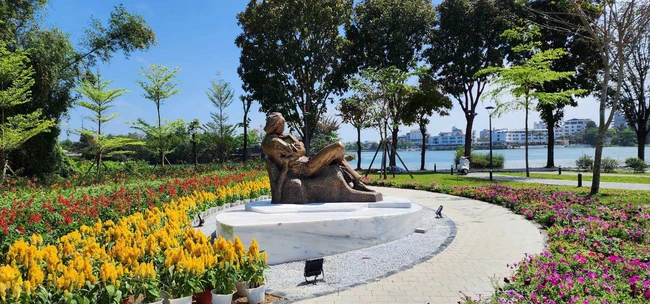
Today, as we gather to unveil this statue on Trịnh Công Sơn’s birthday, it is more than a celebration—it is the realization of a dream. With hearts full of love for his music, Mr. Mạnh and his team gift this statue to the city of Huế as a gesture of gratitude.
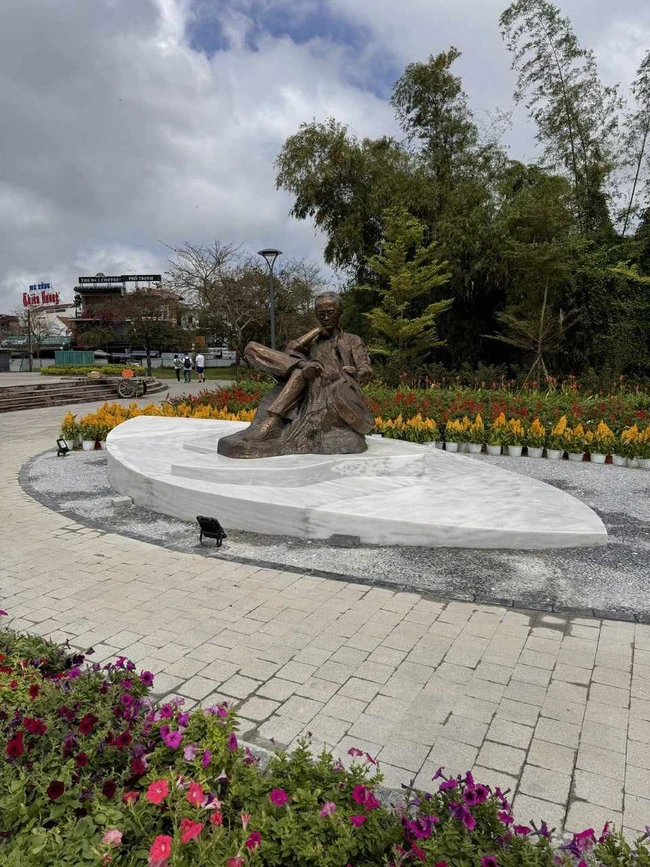
“With this sincere endeavor,” Mr Lê Hùng Mạnh remarked, “we are grateful for the support from the Huế City authorities and the province of Thừa Thiên-Huế, who have made this possible. Today, as the statue of Trịnh Công Sơn stands in the park bearing his name, we believe it brings joy to millions across the country who remember him. And surely, our gifted musician and his dear friend, sculptor Trương Đình Quế, would be pleased. For in life, they shared many moments of artistic communion, exchanging ideas and toasting to the beauty of creation.”
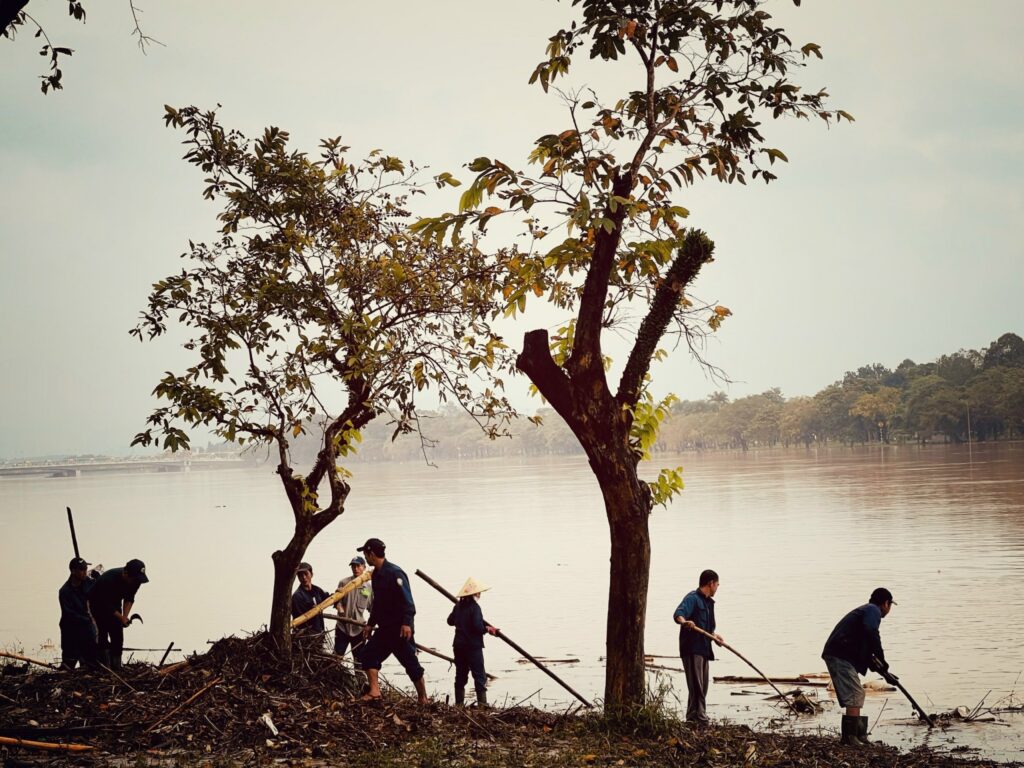
Next project | Phác thảo Chiến lược Quốc gia chung sống an toàn với lũ lụt tại Huế
Phác thảo Chiến lược Quốc gia chung sống an toàn với lũ lụt tại Huế
Triết lý nền tảng: Chuyển từ tư duy “chống lũ” sang “sống chung với lũ một cách thông minh và an toàn”. Coi nước lũ là một phần của hệ sinh thái và văn hóa Huế, cần được quản lý chứ không thể triệt tiêu.
[Kiến trúc sư – Quy hoạch gia Hồ Viết Vinh]
Bốn Trụ Cột Chiến Lược chính:
1. Trụ cột quy hoạch và hạ tầng thông minh
Mục tiêu: Kiến tạo một không gian sống có khả năng “co giãn” cùng với lũ.
- Phân vùng rủi ro lũ chi tiết:
- Lập bản đồ ngập lụt chi tiết đến từng con phố, khu dân cư, dựa trên các kịch bản lũ khác nhau (10 năm, 20 năm, 50 năm, 100 năm).
- Cấm xây dựng các công trình thiết yếu (bệnh viện, trường học, trung tâm cứu hộ) và khu dân cư mật độ cao trong vùng lũ trũng, sâu.
- Quy hoạch các “vùng đệm”, “không gian xanh thấm nước” dọc theo sông Hương và các phụ lưu để nước lũ có chỗ tràn vào mà không gây hại cho đô thị.
- Phát triển hạ tầng “thuận thiên”:
- Xây dựng “Thành phố bọt biển”: Thay thế bê tông hóa bằng các bề mặt thấm nước (vỉa hè thấm nước, công viên có hồ điều tiết). Khuyến khích các mái nhà xanh, hệ thống thu gom nước mưa.
- Thiết kế kiến trúc thích ứng: Quy chuẩn xây dựng mới bắt buộc các công trình trong vùng ngập phải có tầng trệt “nổi” hoặc không gian kiên cố để chứa đồ, nâng cao nền nhà, sử dụng vật liệu chịu nước.
- Hạ tầng giao thông linh hoạt:
- Phát triển hệ thống giao thông thủy nội đô (thuyền, phà) như một phương tiện chính thức trong mùa lũ.
- Thiết kế các tuyến đường tránh lũ và cầu vượt lũ.
2. Trụ cột hệ thống cảnh báo sớm và ứng phó hiệu quả
Mục tiêu: Biến mọi người dân thành một “cảm biến” và một “chiến sĩ” cứu hộ tiềm năng.
- Hiện đại hóa công nghệ dự báo:
- Lắp đặt mạng lưới trạm đo mưa, mực nước tự động theo thời gian thực.
- Ứng dụng Trí tuệ Nhân tạo (AI) để phân tích dữ liệu và đưa ra dự báo chính xác hơn về thời điểm, quy mô và phạm vi ngập lụt.
- Truyền thông cảnh báo đa kênh, dễ hiểu:
- Cảnh báo không chỉ nói “mưa bao nhiêu mm” mà phải mô tả cụ thể: “Đường Nguyễn Huệ sẽ ngập sâu 0.5m trong 3 giờ tới”, “Khu vực Gia Hội cần sơ tán trước 18h”.
- Sử dụng SMS, ứng dụng di động, loa phát thanh, và mạng xã hội.
- Chuẩn bị ứng phó cộng đồng:
- Thành lập và huấn luyện Đội phản ứng nhanh cấp phường/xã. Mỗi khu phố đều có lực lượng tại chỗ.
- Xây dựng “Bản đồ an toàn cộng đồng”: Đánh dấu các điểm sơ tán an toàn, điểm có đất cao, lộ trình di chuyển an toàn trong mùa lũ.
- Trang bị kỹ năng sống sót: Tổ chức các khóa huấn luyện cho người dân về cách di chuyển trong nước lũ, sơ cấp cứu, và sử dụng áo phao.
3. Trụ cột phát triển kinh tế – xã hội bền vững
Mục tiêu: Giảm thiểu thiệt hại kinh tế và đảm bảo an sinh xã hội trong mùa lũ.
- Bảo hiểm rủi ro thiên tai:
- Nhà nước và các doanh nghiệp cùng phát triển các gói bảo hiểm lũ lụt phổ cập và có hỗ trợ cho nhà cửa, phương tiện và tài sản của người dân, đặc biệt là các hộ kinh doanh nhỏ.
- Biến gánh nặng cứu trợ sau lũ thành một cơ chế chia sẻ rủi ro chủ động từ trước.
- Chuyển đổi mô hình sinh kế:
- Khuyến khích các mô hình kinh doanh, nông nghiệp có thể thích ứng hoặc tận dụng mùa lũ (du lịch sinh thái mùa nước nổi, nuôi trồng thủy sản theo mùa vụ).
- Hỗ trợ doanh nghiệp xây dựng kế hoạch kinh doanh mùa lũ: chủ động dự trữ hàng hóa, nâng cao kho bãi, chuyển đổi hình thức kinh doanh trực tuyến tạm thời.
4. Trụ cột nâng cao nhận thức và văn hoá ứng phó
Mục tiêu: Hình thành “GEN sống chung với lũ” trong mỗi người dân và trong cộng đồng.
- Tích hợp giáo dục vào nhà trường:
- Đưa kiến thức về lũ lụt, kỹ năng ứng phó và ý thức “thuận thiên” vào chương trình giảng dạy chính khóa từ cấp tiểu học tại Huế.
- Tổ chức diễn tập phòng chống lũ lụt định kỳ trong trường học.
- Xây dựng văn hóa “Thuận Thiên”:
- Tuyên truyền để người dân hiểu rõ “Sống ở Huế là phải biết bơi, biết dự trữ lương thực, và có kế hoạch di chuyển khi có lũ”.
- Vận động người dân không xả rác ra sông ngòi để tránh tắc nghẽn dòng chảy.
Cơ chế thực thi và giám sát
- Thành lập Ban Chỉ đạo Quốc gia về Thích ứng với Lũ lụt tại Miền Trung, do một Phó Thủ tướng đứng đầu, với sự tham gia của các Bộ, ngành và chính quyền Thành phố Huế.
- Ưu tiên ngân sách trung hạn và dài hạn cho chiến lược này, kết hợp với kêu gọi vốn ODA và đầu tư tư nhân vào các dự án hạ tầng thích ứng.
- Xây dựng cơ chế giám sát và đánh giá độc lập, công khai minh bạch tiến độ và hiệu quả của các dự án.
Kết luận: Chiến lược này không phải là một giấc mơ viển vông, mà là một lộ trình cần thiết để biến Huế từ một “nạn nhân” của lũ lụt trở thành một hình mẫu về “Thành phố Phục hồi” (Resilient City) – nơi con người và thiên nhiên cùng nhau tồn tại và phát triển bền vững.