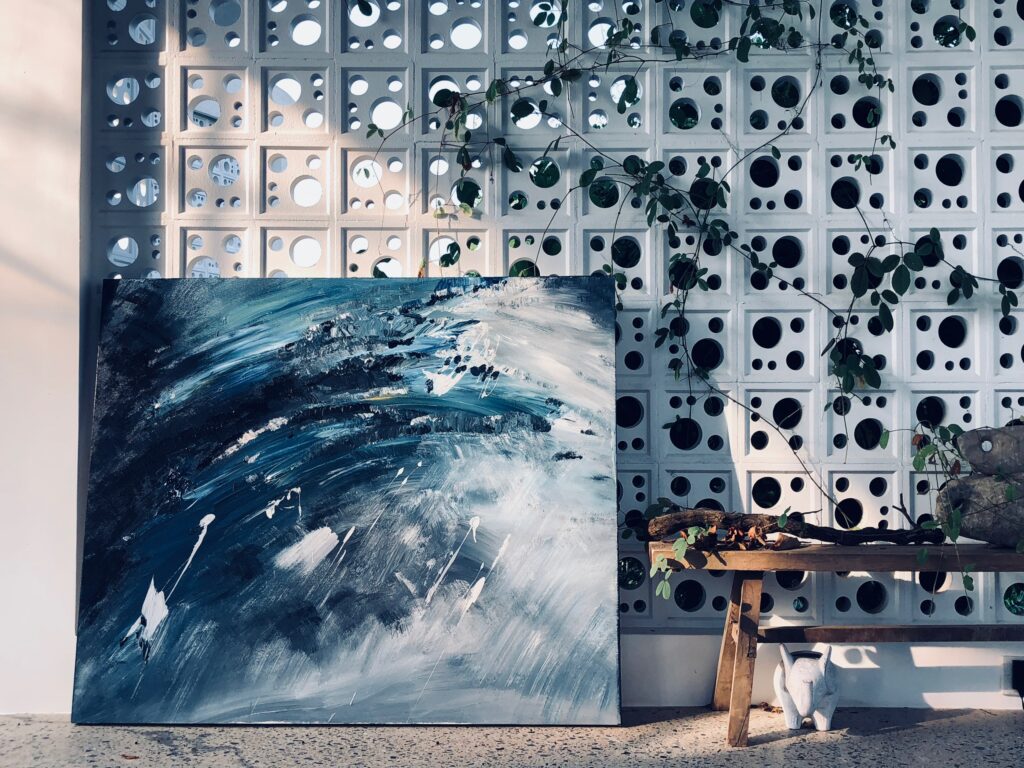
MELALEUCA Forest - Ho Viet Vinh Architect & Partners

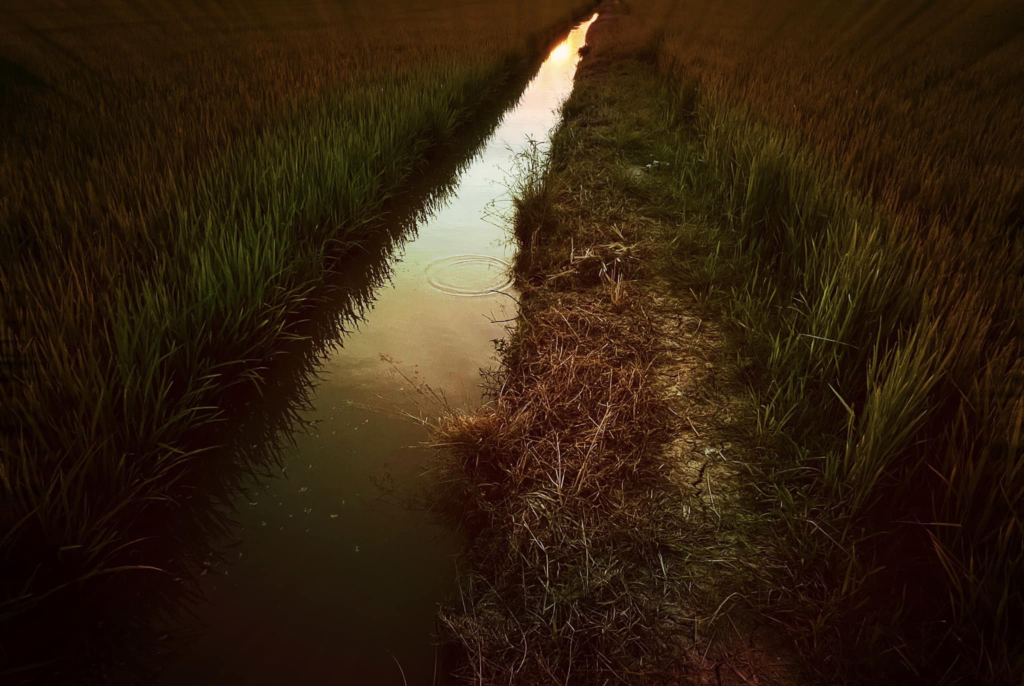
Một lối mòn hun hút dấu mình trong màu xanh thẳm cuối cùng của cánh rừng Tràm.
Chẳng ai có thể biết cuối con đường sẽ dẫn đến đâu,
ấy thế mà vẫn mang trong sự bí ẩn và quyến rũ đến kỳ lạ.
Mong manh luôn là lằn ranh giữa thăng hoa và lụi tàn:
ở đó vẻ đẹp xuất hiện.
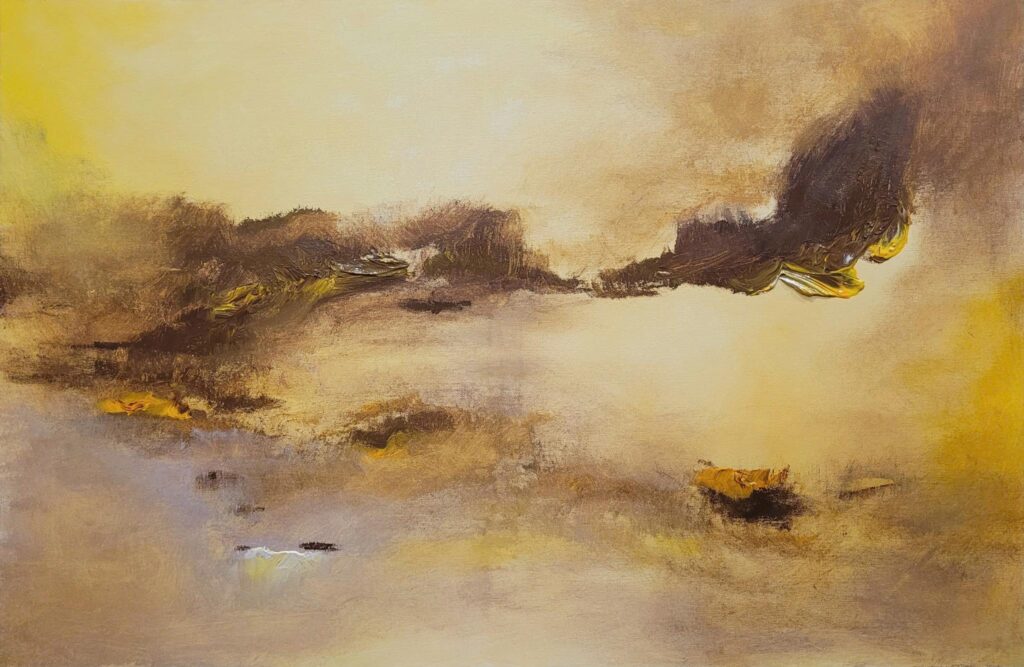
Melaleuca Forest
Vinhho, 120x80cm, Acrylic on canvas, Maison d’Art@2025

A trail, vanishing into the deepest green at the far end of the Melaleuca forest.
None can tell for certain where it might lead, and yet it holds within itself a most singular charm and mystery.
How delicate is the line between flourishing and decay:
it is there that beauty reveals itself.
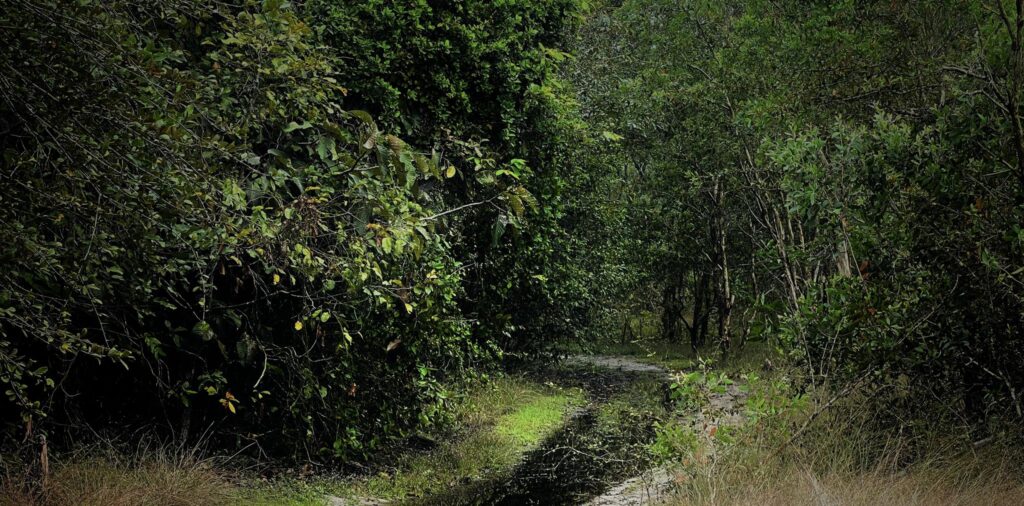
Photo by Vinhho, Maison de Corail, 2025

Next project | DANCE of LIGHT

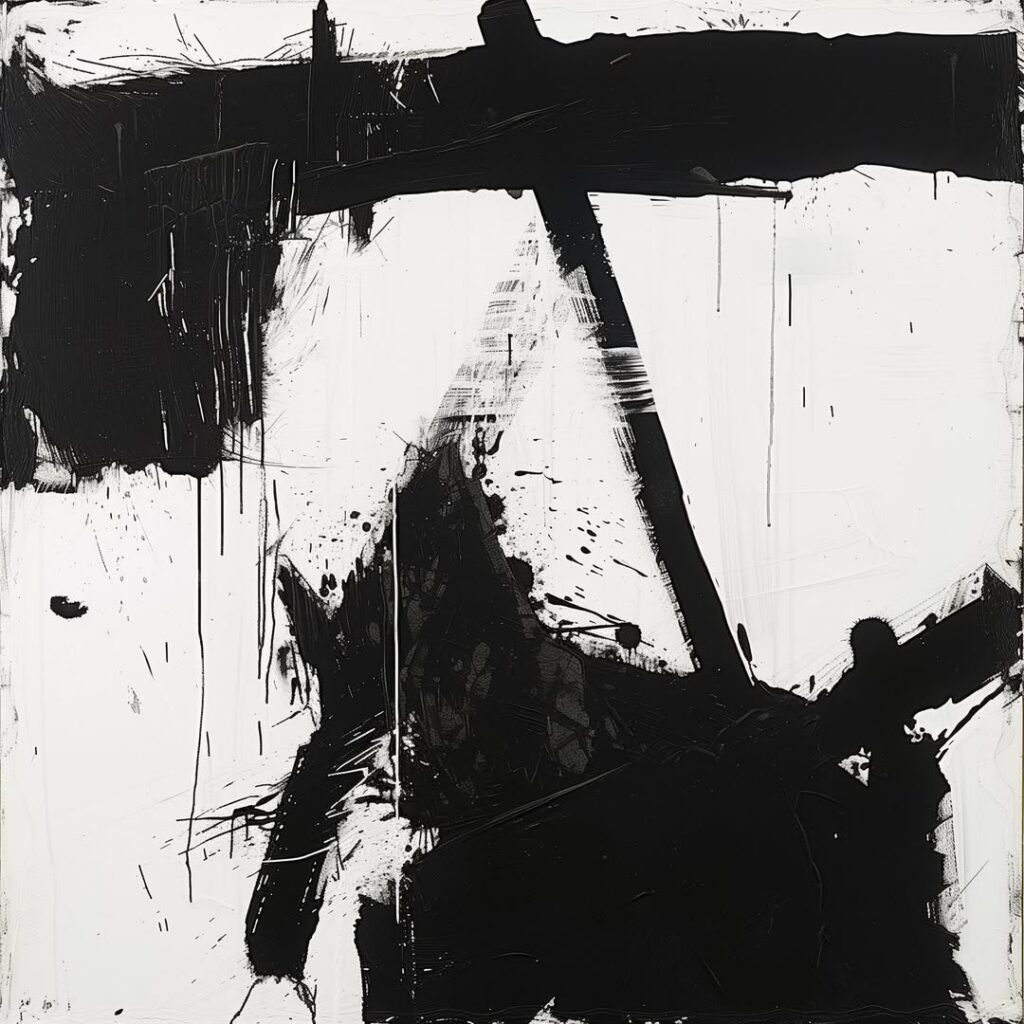
The “Dance of light” stirring a feeling of motion and vitality. This interplay between brilliance and obscurity crafts an enigmatic allure, coaxing the observer to explore the depths of light.

Ho Viet Vinh

(Vinhho, Acrylic on canvas, 130x97cm, Maison de Corail.2024)

Next project | Phuoc Tich Pottery: Reviving the Timeless Craft of Hue’s Ancient Village

Thiên Lý Brigde – Entrance Gate to the village.
Source: HVV Architect and Partners

Phuoc Tich Ancient Village, established in 1470 during the reign of King Le Thanh Tong, lies 40 kilometers north of Hue, embraced by the gentle flow of the O Lau River. Within the village, 26 ancient wooden houses (nhà rường), each over a century old, stand as testaments to traditional craftsmanship. Among these, 12 houses are particularly esteemed for their architectural and artistic value. Additionally, the village is home to 12 water docks, iconic symbols of the rural charm of Hue.
Phuoc Tich pottery, renowned for its meticulous firing process in robust, high-temperature kilns, boasts exceptional durability—resistant to cracking and brittleness—while retaining heat and preserving flavors. The intricate designs etched into Phuoc Tich pottery are distinctive and refined, making them unmistakable among other ceramic products. Historically, Phuoc Tich pottery surpassed many renowned competitors to become the exclusive choice for the imperial court of Hue.
Today, the art of Phuoc Tich pottery is experiencing a revival, driven by passionate young artisans dedicated to preserving the traditional craft passed down through generations. Visitors to the ancient village can immerse themselves in its cultural heritage by participating in pottery-making workshops with local artisans, creating a memorable and hands-on connection to this timeless tradition.

Om Ngự Restaurant. Source: HVV, supported by AI
Hà Trì Tearoom. Source: HVV, supported by AI

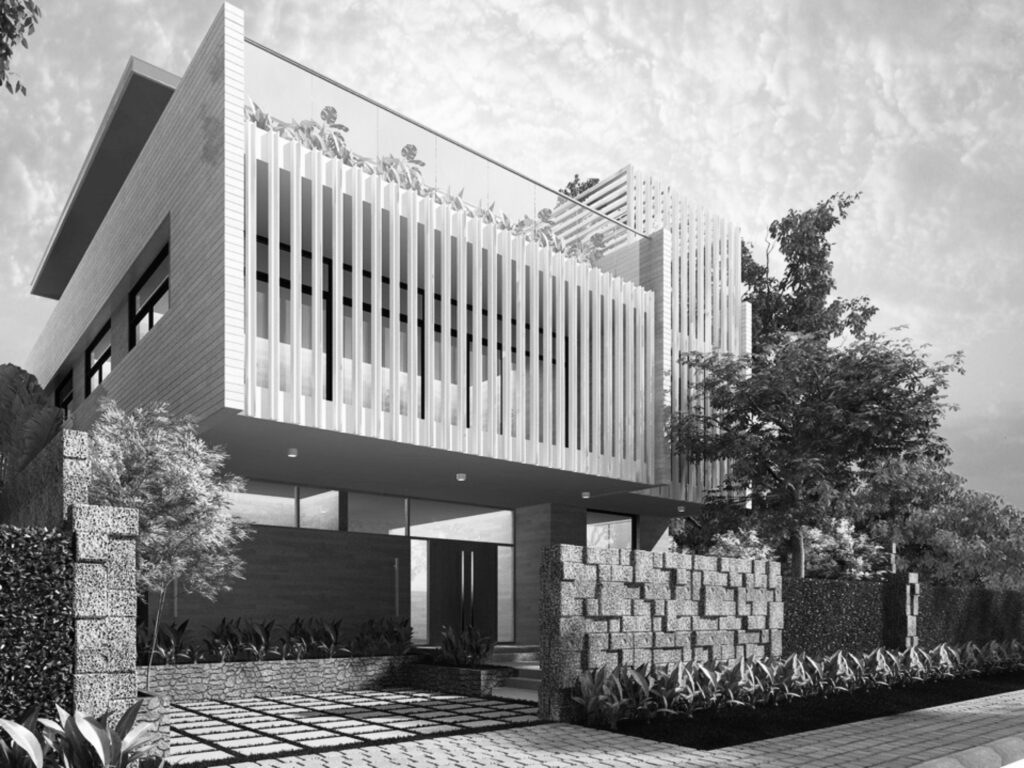
HVV Architect & Partners embodies a vision where architecture resonates deeply with local heritage and the natural environment. All their design and construction projects are rooted in a commitment to authenticity, with a distinctive focus on using Phuoc Tich pottery as a core material.
Phuoc Tich pottery are not merely functional but carry the soul of Hue’s artisanal legacy. Their durability, natural hues, and fine craftsmanship make them a perfect medium for creating spaces that blend tradition with modernity. By incorporating the material, HVV Architect & Partners elevates local materials into architectural expressions that honor the past while embracing contemporary aesthetics.
Each project reflects a philosophy of harmonious living, where the choice of materials and design principles creates spaces that are sustainable, culturally enriched, and emotionally resonant. Visitors and occupants alike experience an intimate connection to Hue’s cultural identity through the timeless beauty of Phuoc Tich pottery, seamlessly integrated into innovative and inspiring architectural designs.
Through these efforts, HVV Architect & Partners not only showcases the versatility of traditional materials but also contributes to the preservation and celebration of Hue’s rich artistic heritage. This approach ensures that every building tells a story of place, people, and enduring craftsmanship.

Next project | Desire

“A silent ode to the beauty of existence, portraying the sublime interplay of light and shadow that dances within the human soul. It is an invitation to wander through the corridors of one’s own soul, amidst the rain of introspection and the elusive sunsets of desires.”

Ho Viet Vinh
Desire
Acrylic on canvas, 97x130cm, Maison de Corail, 2024

Next project | Floating

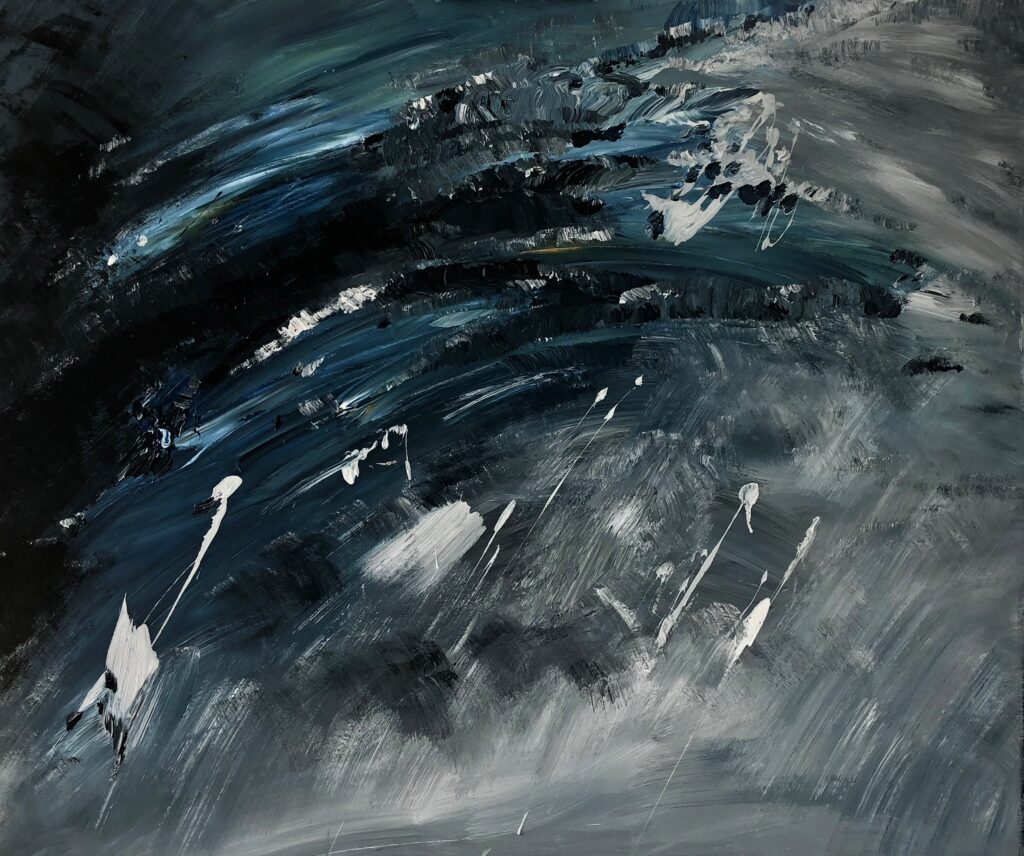
Floating
Vinhho, Acrylic on canvas, 1.0×1.0m, Maison de Corail reserved, 2025

“Hồ Tràm mùa nước ngập tràn lên ngang lồng ngực, một màn sương xám ô-liu phủ xuống chậm rãi như hơi thở ẩm mặn của rừng: vừa lạnh vừa dịu. Bỗng có một vệt vàng-lục bừng lên như tiếng gọi của mặt trời lạc giữa nước, ánh sáng không rực mà thấm, như hy vọng len qua bùn, như vết thương còn ướt: khiến vừa muốn chạm vào vừa sợ làm vỡ sự im lặng, để cuối cùng cảnh không còn là cảnh mà là một cảm giác kéo dài, mênh mang, lãng mạn và u tịch.”

KTS. Hồ Viết Vinh  251226

Next project | RED KINGDOM – Masterplan of Brickyard village at Mang Thit, Mang Thit District, Vinh Long province

“This is a project to preserve and develop the Mang Thit traditional brick and masonry heritage area, combining production space and water landscape. This area is planned into a contemporary product with different functional layers: preserving ceramic tile craft villages, expanding living space along the river and recreating the unique river landscape of the South. The multi-level dike approach helps maintain riverside living space, supports ceramic production and also develops eco-tourism, turning the area into a cultural and experiential destination for visitors.”

HVV Architect & Partners

Client:
Board of Civil and Industrial Construction Project Management – Vinh Long province People’ s Committee
Location:
Mang Thit dictrist, Vinh Long province, Vietnam
Size:
3.060 hectares
Services:
Masterplan
Status:
Approved on 2024
Team:
HVV Architect & Partners –  Urban Planning Institute

Intro
Mang Thit District, Vinh Long Province, is one of the few remaining localities in Vietnam that preserves a unique and extensive architectural complex alongside a traditional craft. This architectural ensemble comprises nearly 1,000 domed kilns, spanning over 3,060 hectares along the banks of the Thay Cai, Hoa My, Cai Nhum canals, forming a southern arc that extends to the Nhon Phu and Hoa Tinh canals within the district. This is truly a valuable treasure, shaped by over a century of cultural and technological exchange between Khmer, Kinh, and Hoa people, resulting in a distinctive architectural heritage and traditional craft. However, this treasure has not been fully recognized or appreciated.
Over the past decade, more than 1,000 kilns have been demolished, and the remaining kilns are deteriorating and face the imminent threat of complete destruction. Given this alarming situation, it is imperative and urgent to conduct research and develop solutions to preserve and promote this architectural complex and traditional craft.

Learning from the Past and Looking to the Future

Over 100 years of formation and development, the structure of the craft village ecological system have established with 6 main space, including: surface water, brickyard system, yards, storage, fruite garden and house, fields.

The system of canals and land has formed a distinctive, easily recognizable landscape. Rivers and canals flowing from Co Chien River along Thay Cai canal, going deep into agricultural areas, have determined the main landscape axes; Residents live along the canals, inside are fruit and vegetable gardens, and deeper are fields and aquaculture areas. The ecosystem associated with the brick kiln area has created a closed process in the production of Mang Thit red ceramic. This is a characteristic and value that needs to be preserved and promoted.

Adaptive conservation in continued development

Adaptive conservation in continued development – preserving the existence of production space heritage, symbiotic ecological space, and Southern garden development cultural heritage; These valuable materials and spiritual values ​​have been perfected during the development process, providing a contemporary breath and improving the quality of each space, gradually improving the quality of life of local people, so that their politics will gradually transform, reviving the soul of the place.
The heritage of Mang Thit – known as The Red Kingdom will be an interesting destination in Mekong Delta and should not be missed in your lifetime.

Zonning plan

The area is divided into 9 main zones according to 3 layers.

No.1. Mixed-Use Development (Services – Tourism – Rural Residential): Approximately 347.91 hectares, with primary functions including residential development, mixed-use development (tourism services – rural residential), mixed-use development (services – urban residential), public services, public utility green spaces, specialized green spaces, other technical infrastructure, transportation, agricultural areas, and other functions.

No.2. Mixed-Use Development (Services – Urban Residential) along Co Chien River: Approximately 250.05 hectares, with primary functions including residential development, mixed-use development (services – urban residential), public services, public utility green spaces, specialized green spaces, heritage and religious sites, other technical infrastructure, transportation, agricultural areas, and other functions.

No.3.  My An – Hoa My Residential Area: Approximately 415.50 hectares, with primary functions including residential development, mixed-use development (services – urban residential), public services, public utility green spaces, specialized green spaces, heritage and religious sites, other technical infrastructure, transportation, agricultural areas, and other functions.

No.4. Cai Nhum Eco-Residential Area: Approximately 150.31 hectares, with primary functions including residential development, public services, public utility green spaces, other technical infrastructure, transportation, agricultural areas, and other functions.

No.5. My Phuoc Eco-Resort: Approximately 106.43 hectares, with primary functions including residential development, public services, public utility green spaces, tourism development, other technical infrastructure, transportation, agricultural areas, and other functions.

No.6.  My Phuoc Eco-Residential Area: Approximately 253.76 hectares, with primary functions including residential development, public services, public utility green spaces, specialized green spaces, heritage and religious sites, offices, other technical infrastructure, transportation, agricultural areas, and other functions.

No.7. Nhon Phu Eco-Residential Area: Approximately 309.78 hectares, with primary functions including residential development, public services, public utility green spaces, heritage and religious sites, offices, other technical infrastructure, transportation, agricultural areas, and other functions.

No.8. Hoa Tinh Eco-Resort: Approximately 198.23 hectares, with primary functions including residential development, mixed-use development (services – urban residential), public services, public utility green spaces, heritage and religious sites, offices, transportation, agricultural areas, and other functions.

No.9. High-Tech Agriculture Area: Approximately 1,028.03 hectares, with primary functions including residential development, public utility green spaces, tourism development, other technical infrastructure, transportation, agricultural areas, and other functions.

Master plan

The plan identifies 3 main development axes including:

  • Mang Thit brick and ceramic kiln space at the center combined with service corridor along Co Chien river, agricultural experience corridor – traditional garden village along Cai Nhum river, high-end resort tourism corridor in the South;
  • Mixed service axis – contemporary residential area in the Southern region of the West;
  • The Eastern resort tourism axis will create motivation for development of the entire region.

The resort spaces around heritage area (My Phuoc eco resort, My Phuoc Eco-Residential area, Nhon Phu Eco-Residential Area, Hoa Tinh Eco-Resort) offer a variety of ecological, cultural and agricultural production experiences, taking the ceramic brick kiln area as inspiration for creativity.

Oriented masterplan development diagram to 2045

With 5 gateways – 5 landscape architectural spaces typical of the Southern rivers and the ceramic brick kiln area, it will be an unforgettable, impressive identification point when visitors approach the ceramic brick kiln area by both Water transport and road transport.

The landscape of the welcome gate, orchard and ceramic tiles combined with the riverside landscape follows a multi-level soft embankment model, providing many different experience spaces for visitors to explore the traditional Tile and Ceramic Craft Village along the Co Chien River.
The new residential community landscape is associated with the internal canal system. The riverside spaces are shaped by multi-level soft embankments creating different functions and landscape nuances according to the flooding season.
Landscape on both sides of Thay Cai canal, the core conservation area of ​​the ceramic craft village with a system of multi-storey soft embankments and alternating hard stepped embankments combined with a boat wharf and ceramic tile service space organized along the river. Support the transition process, while developing ecotourism, turning this area into a cultural and experiential destination for tourists.

Conclusion

This is a project to preserve and develop the Mang Thit traditional brick and masonry heritage area, combining production space and water landscape. This area is planned into a contemporary product with different functional layers: preserving ceramic tile craft villages, expanding living space along the river and recreating the unique river landscape of the South. The multi-level dike and heritage landscape approach helps maintain riverside living space, supports ceramic production and also develops eco-tourism, turning the area into a cultural and experiential destination for visitors.

Next project | Mine Art Gallery

Mine Art Gallery
Cam Pha coal mine was established by the French in 1886 under the name Société Française des Charbonnages du Tonkin during the reign of King Tu Duc. The mine’s stratigraphic structure descends into deep underground terraces, with coal seams gradually revealed in the light that pierces through the valley.
The jet-black hue of coal, intermingled with the reddish-brown of the earth and the arid dust suspended in the air, creates an abstract palette imbued with depth and intensity.
The project draws inspiration from the overlapping layers of coal seams, reimagined in reverse to symbolize the void left behind. Construction materials, sourced from coal itself, form layered bricks that replicate the natural striations of the seams. Space, materiality, and landscape converge to evoke the emotional and physical experiences of the miners.

Type
Gallery
Year
2016
Location
Cam Pha city
Team
Ho Viet Vinh
Mai Que Vu

Next project | Ru

Ru
Ru đời mấy giấc chiêm bao,
Xôn xao như gió ngã nhào bờ mê,
Ru quê cho tỏ đường về,
Tỉ tê câu chuyện bờ đê mái đình,
Ru mình chỉ mấy lời kinh,
Tâm minh hồn triết thanh hình sắc tao.

Lullaby
Lull life’s dreams in fleeting flight,
Stirred like winds tumbling on enchanted dikes,
Lull the homeland, reveal the path home,
Whisper tales by riverbanks and village halls,
Lull the self with sacred dharmas,
Enlightened soul, wisdom’s grace in form and rhyme.

Ho Viet Vinh 250412

Tác phẩm của ĐKG. Bùi Hải Sơn

Next project | Vietnam Traditional Architecture & Art

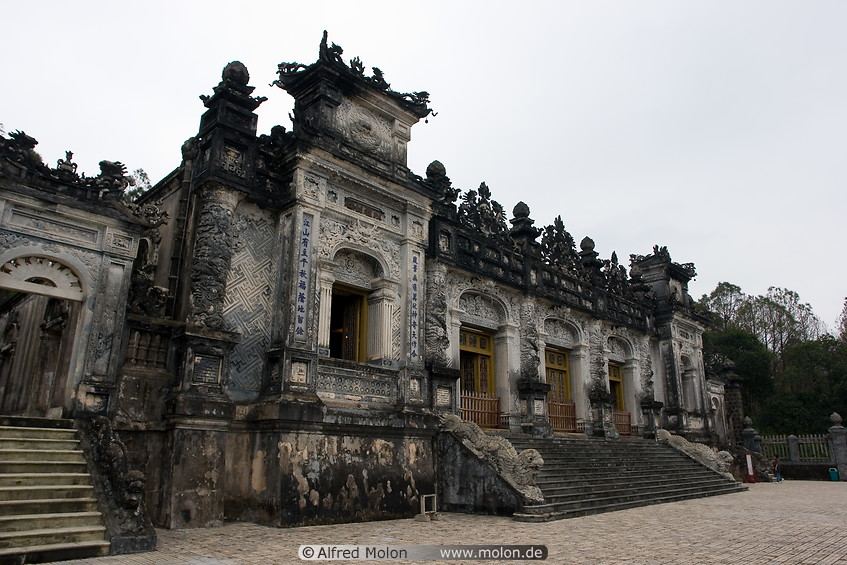
The Vietnam Traditional Architecture and Art Gallery features buildings representing the three regions of Vietnam: Hanoi, Hue, and Saigon. Selected works showcase the quintessential artistic values of Dai Viet culture (Northern region), Champa culture (Central region), and Oc Eo culture (Southern region).
Architectural types include communal houses, temples, pagodas, palaces, tomb houses, and traditional homes, crafted from materials such as wood, stone, and terracotta. In addition to architectural works, the gallery space also exhibits wood carvings, stone sculptures, and intricate decorative details.

Type
Art gallery
Year
2015
Location
University of Architecture of Ho Chi Minh City
Team
Ho Viet Vinh
Mai Que Vu

Next project | Waterscape

Waterscape | Vinhho, Acrylic on Canvas, 92x252cm, Maison d’Art reserved, 2025

Next project | HVV Recruitment

HVV Recruitment:
In 2025, HVV is looking to recruit talented individuals for the following positions:

  • 2 Urban Planners;
  • 2 Landscape Architects;
  • 2 Architects specialized in Architecture and Interior Design.

Requirements:

  • Bachelor’s degree in a relevant field for each position;
  • 2–3 years of work experience;
  • Proficiency in commonly used design software, such as ACAD, SU, Lumion, Rhino, 3Dmax,…;
  • Skilled in one or more of the following areas: 3D and 2D concept visualization, design implementation, design management;
  • A professional attitude, eagerness to learn, creativity, and integrity.

Join us in creating inspiring living spaces that reflect cultural identity!
At HVV, we are not just looking for talented architects but also seeking to collaborate with creative minds who are passionate about innovation and aspire to achieve timeless values. Let your talent bring meaningful projects to life and leave a lasting mark with us.
Contact:
HVV Architect and partners
Architect Ho Viet Vinh
Phone: +84 908 376 727
Email: [email protected]

Join us now to turn unique ideas into reality!