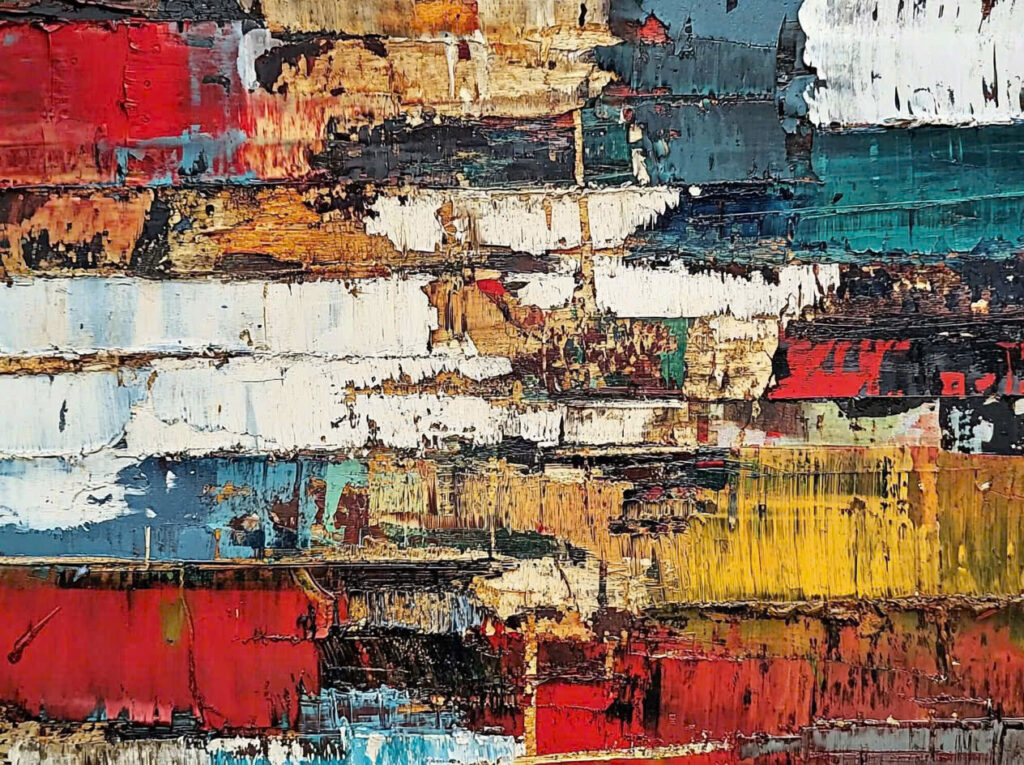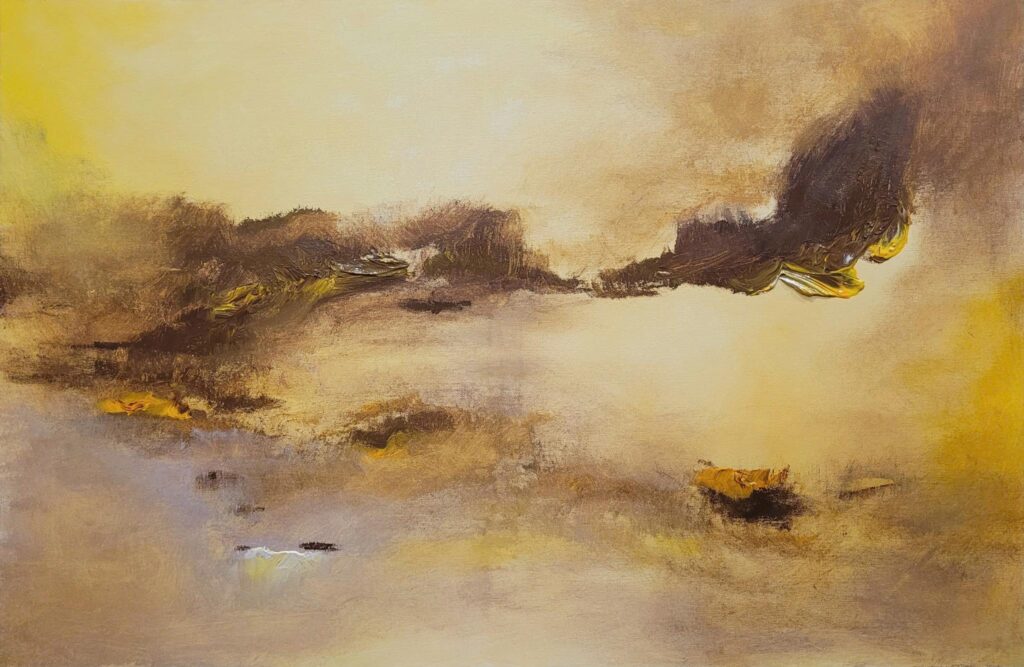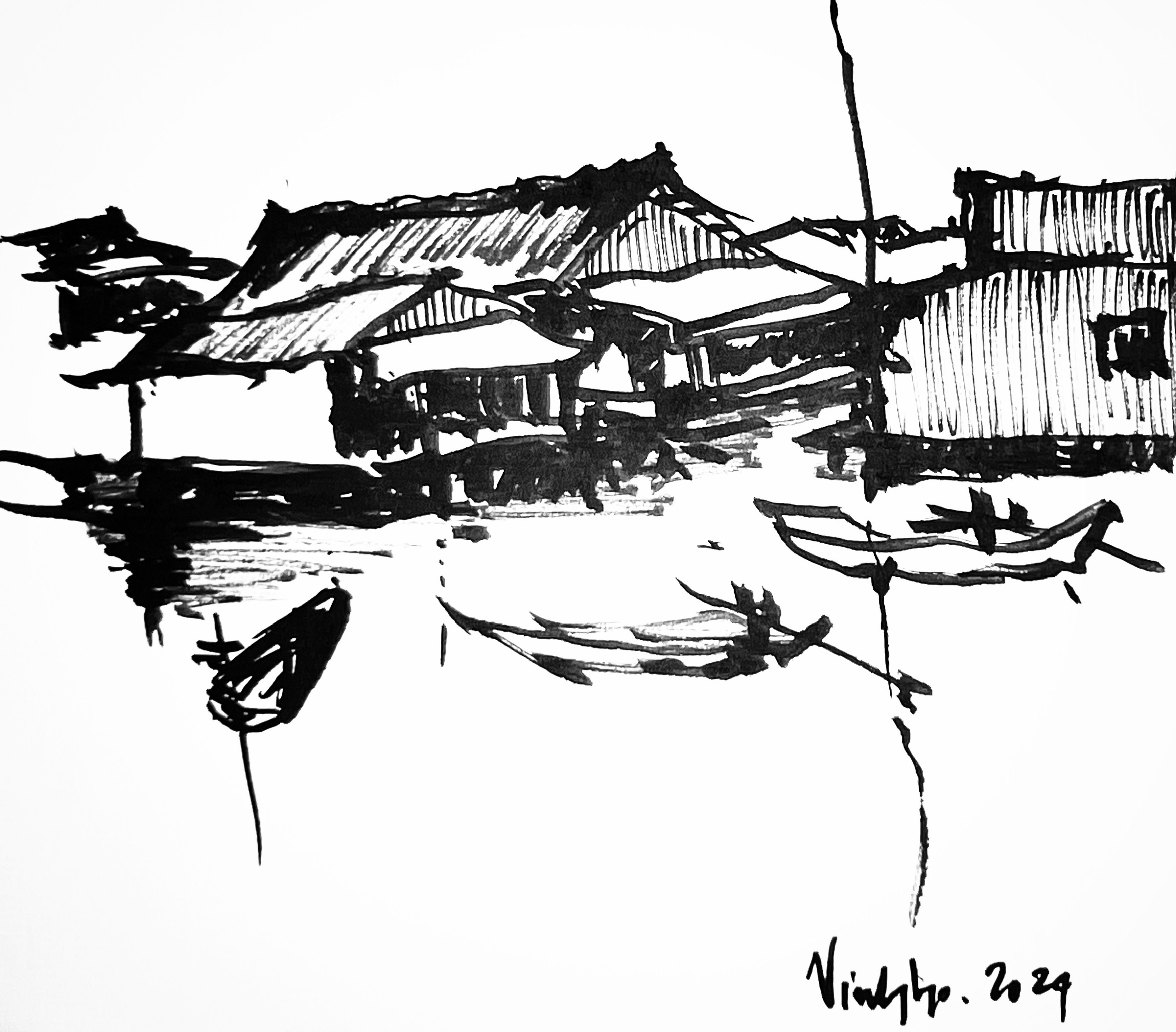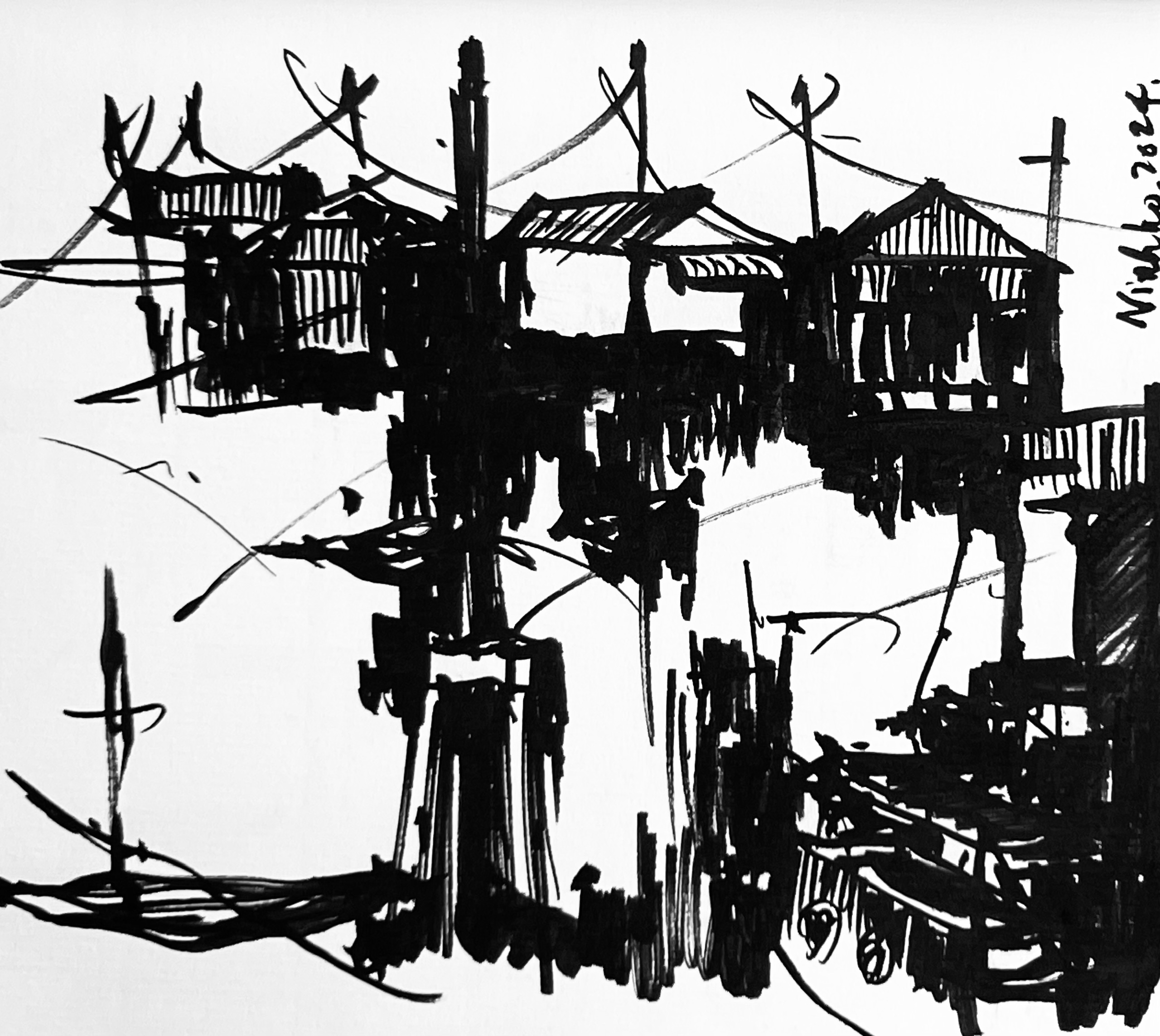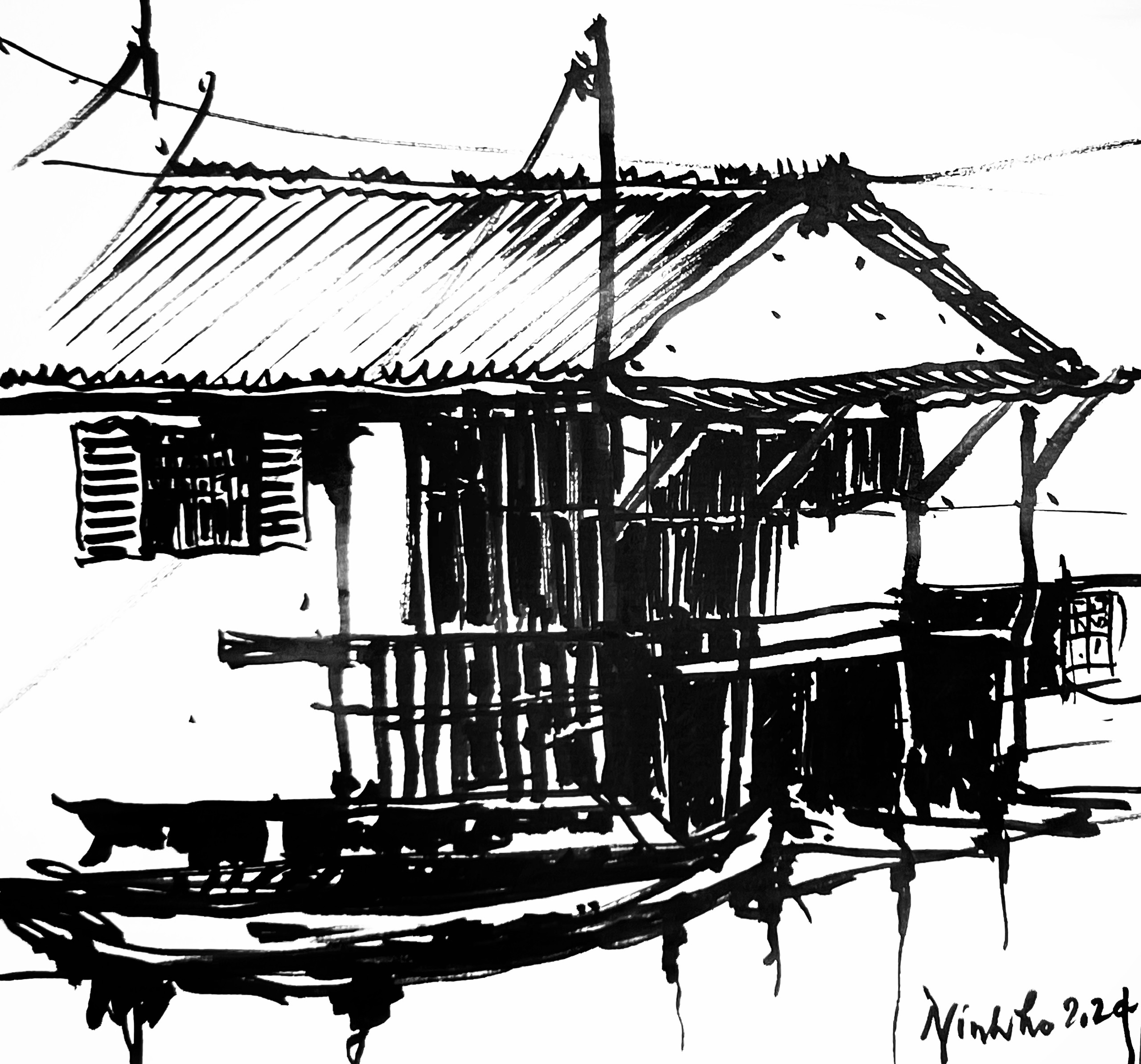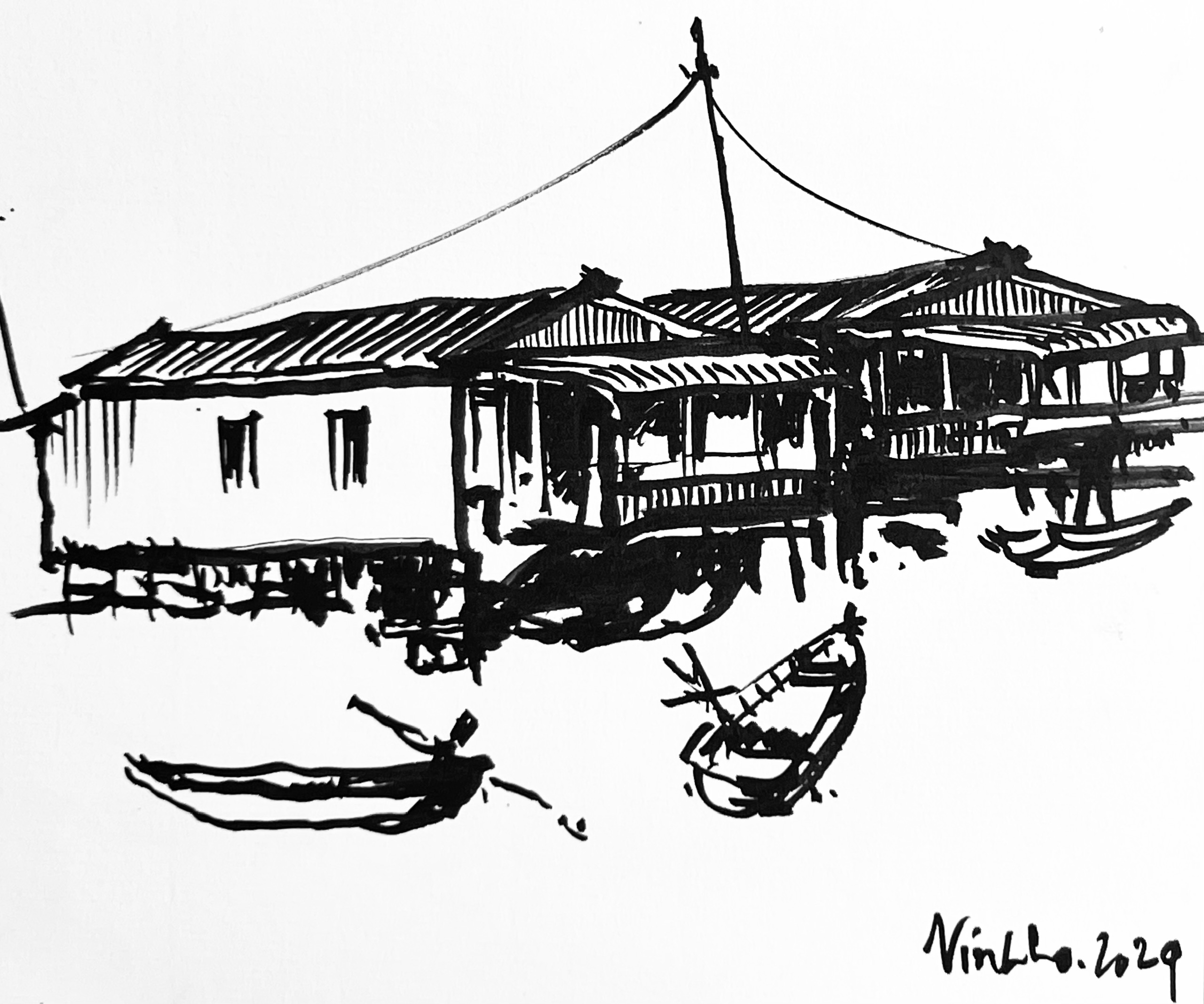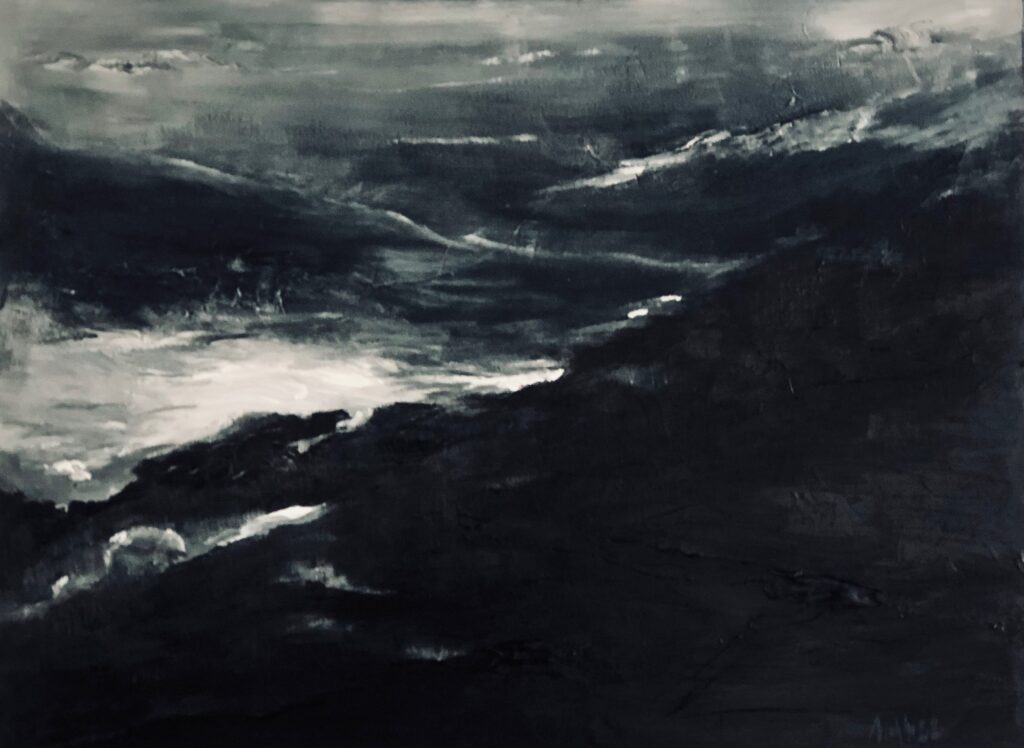
Vinhho, Acrylic on canvas, 97x130cm, Maison d’Art, 2025

Mây khua bóng nước
hoen màu tóc,
Núi đội phong sương
rát lạnh người.

Clouds tarnish water’s mirror.
hair’s hue turns pale,
Mountains wear frost and gale
a piercing chill prevails.

Ho Viet Vinh 251025

Next project | Architecture and Fine Arts during the reign of Khai Dinh, a historical perspective

Architecture of each nation evolves and develops along a historical trajectory. Particularly, royal architecture establishes solid foundations refined over time, becoming the formal language through which art thrives. Each dynasty selects its own stylistic language as a benchmark for evaluation and a marker of its era.
The selective inheritance across dynasties shapes the orthodox architectural tradition. This tradition adheres to strict principles of form-making, setting standards that serve as measures of artistic creativity. However, the end of each dynasty invariably signifies adaptations to external influences. Ultimately, the flow of architecture is once again reshaped and renewed, continuing its progression.

Khai Dinh tomb. Source: @molon.de

Emperor Khai Dinh utilized to infuse a sense of national identity into the architectural and artistic works of the royal court. These projects, executed during the late Nguyen dynasty, reflect a deliberate effort to adapt proactively to the changing circumstances.

Nearly a century later, the art of ceramic mosaic from the Khai Dinh era continues to flourish in temples, pagodas, shrines, and tombs.

To read the full research article below.

Next project | Spiritual Sustainability as the Core Essence

Spiritual Sustainability as the Core Essence

For Architect Hồ Viết Vinh, a sustainable structure must encompass multiple dimensions: structural sustainability, environmental sustainability, aesthetic sustainability, and cultural sustainability. Yet, there is one essential, foundational element that underpins them all: spiritual sustainability. One of his upcoming and most cherished projects currently in development is the Trịnh Công Sơn Park in the ancient capital of Huế.

Guided by a philosophy of holistic sustainability, Hồ Viết Vinh has crafted unique architectural works such as Lebadang Memory Space and more recently, the Coral House in Hồ Tràm.

Could you share more about the milestones that have shaped your 25-year career?
I can summarize my more than 25 years of navigating this profession—full of challenges—into four stages: searching, understanding, contemplation, and practice.
The first stage took me around five years. I was seeking a way to survive in this field, with much effort but little clarity beyond earning a living.
The second stage arrived when I realized that architecture demands not only physical effort but also profound intellectual engagement.
The third stage was contemplation—reflecting on the distinct values that drive creativity. This was perhaps the most challenging period. It required me to relinquish things I had painstakingly gathered over time, clearing my mind to make space for the new.
Finally, the fourth stage is practice—not merely following thought processes, but letting intuition and wisdom guide my actions.

Your design philosophy seems inspired by Buddhist thought, correct?
Yes, indeed! The teacher who profoundly influenced my design philosophy is Thích Nhất Hạnh from Làng Mai (Plum Village), with his wisdom of interbeing (tương tức). According to Thích Nhất Hạnh, interbeing means: “If we understand that humans and nature are inseparable, we will know how to treat nature as we would treat ourselves—with care, gentleness, and love, free from violence. If we don’t want to harm ourselves, we should not harm nature, for harming nature is ultimately harming ourselves, and vice versa.”

How do you incorporate the concept of emptiness in your architectural works?
In essence, space is defined by emptiness. Without emptiness, there is no space. We must distinguish between the concepts of empty/full and open/closed. The former refers to spatial density, while the latter concerns the degree of openness to the external environment.
Emptiness is where dialogues unfold—between humans and nature, between individuals, and between oneself and the spiritual realm. It is a void that leads to infinite transformation and change.

What is your perspective on sustainable architecture? What, in your view, is the primary factor that defines sustainability?
When discussing sustainability, we must ask: sustainable in what sense? Is it structural, environmental, aesthetic, or cultural sustainability? Today, most conversations focus on environmental sustainability, as we face the brink of ecological destruction.
In my perspective, a truly sustainable structure must integrate all four aspects, with an additional core foundation: spiritual sustainability. This form of sustainability is rooted in an intuitive understanding of the fundamental truth of life on Earth—harmony, where all beings support one another to coexist.

“Architecture is a part of nature, and thus, it must harmonize with its surroundings. Light, wind, rain, storms, and even insects are all guests of the space.”

Is there a project that best embodies your design philosophy?
That would be the Lebadang Memory Space in Huế. This space is a harmonious blend of three elements: nature, form, and poetry. Nature includes the creations of the Earth—trees, flowers, rivers, skies, stones, humans, and animals. Form is defined by lines, shapes, colors, and materials that shape the space. Poetry is the soul that breathes life into it, creating a space that resonates with both the physical and the spiritual.

The thread that connects natural elements with the crafted form is poetry—a melody that flows from the primordial, carrying with it layers of cultural sediment, merging with the rhythm of life to shape the memory of time.

An Architect who has influenced you?
That would be Peter Zumthor, the renowned Swiss architect known for his famous quote:
“To design buildings that captivate the senses, architects must transcend the limits of form and structure.”

What experience do you consider most important for an architect like yourself?
Architecture came to me as destiny. Therefore, every experience carries its own value—there is no good or bad experience.
However, one pivotal experience stands out as a turning point in my creative journey. In 2005, I had the opportunity to participate in the 8th International Creative Competition organized by Les Ateliers Internationaux de Maitrise d’Oeuvre Urbaine Cergy Pontoise in France.
The competition brought together nearly 40 architects, urban planners, economists, managers, and environmental specialists from 17 countries. The theme was Ecological Tourism Urbanism in Cần Giờ (Can Gio entre ville ecologique et destination touristique).
Our project, titled “The City of Distinct Emotions” made a powerful impression on the jury and won the Special Award.

What is your perspective on materials in architecture? Are you experimenting with any specific materials?
Materials play a vital role in evoking aesthetic emotions within architectural spaces, alongside form and design language. Under the influence of light, these three elements harmonize to create the texture of space.
In my architectural designs, I place particular emphasis on exploring and incorporating local materials. These materials infuse spaces with the spirit of the place, giving them a unique identity and soul.

Could you share more about an upcoming project you are excited about?
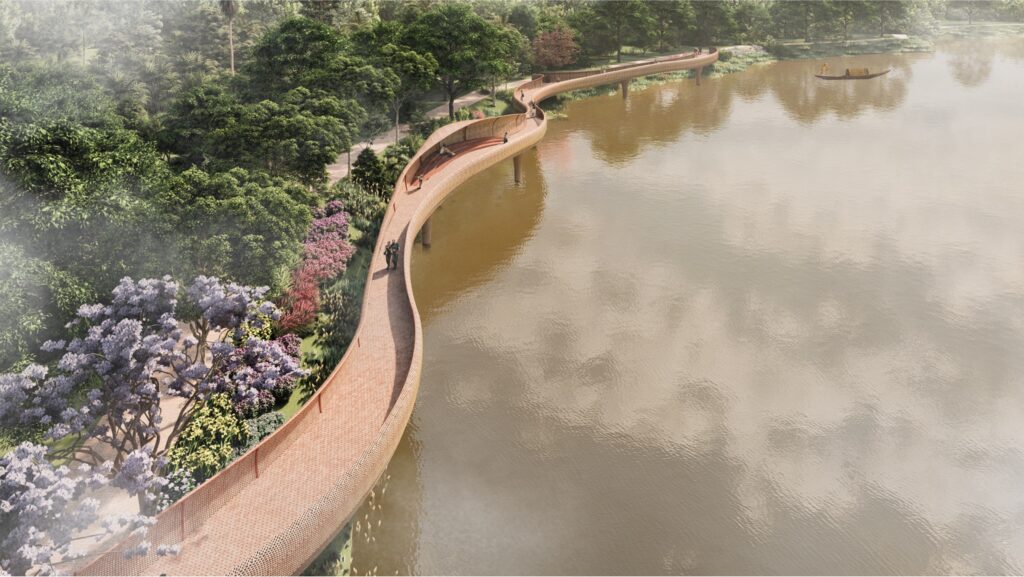
A project I hold dear and that is currently being developed in Huế is the Trịnh Công Sơn Park.
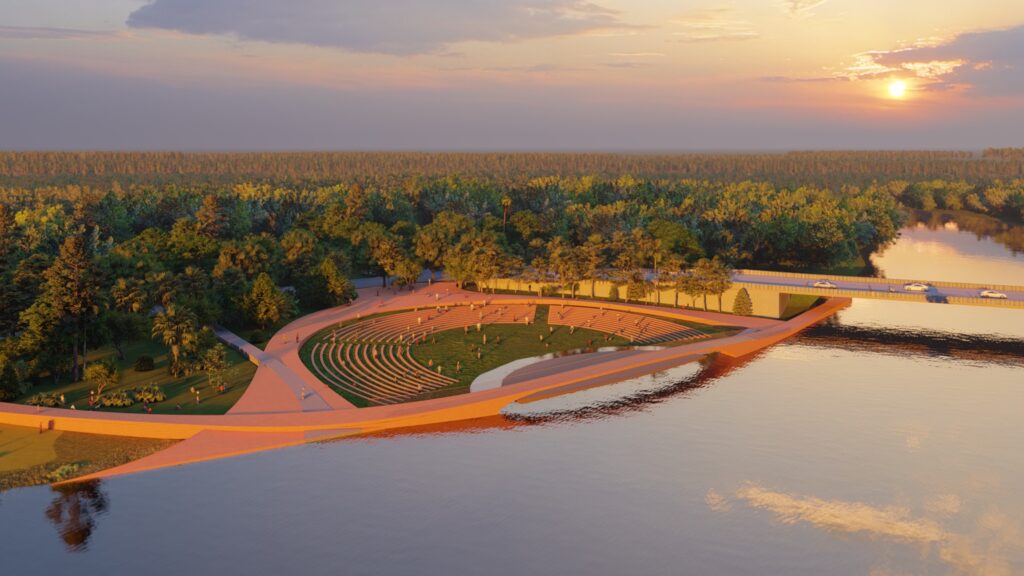
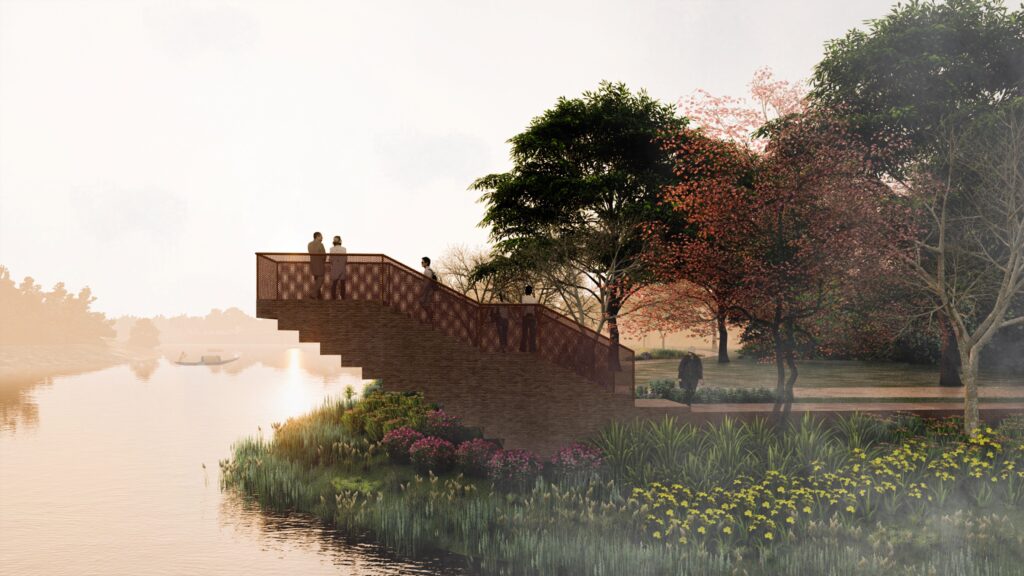
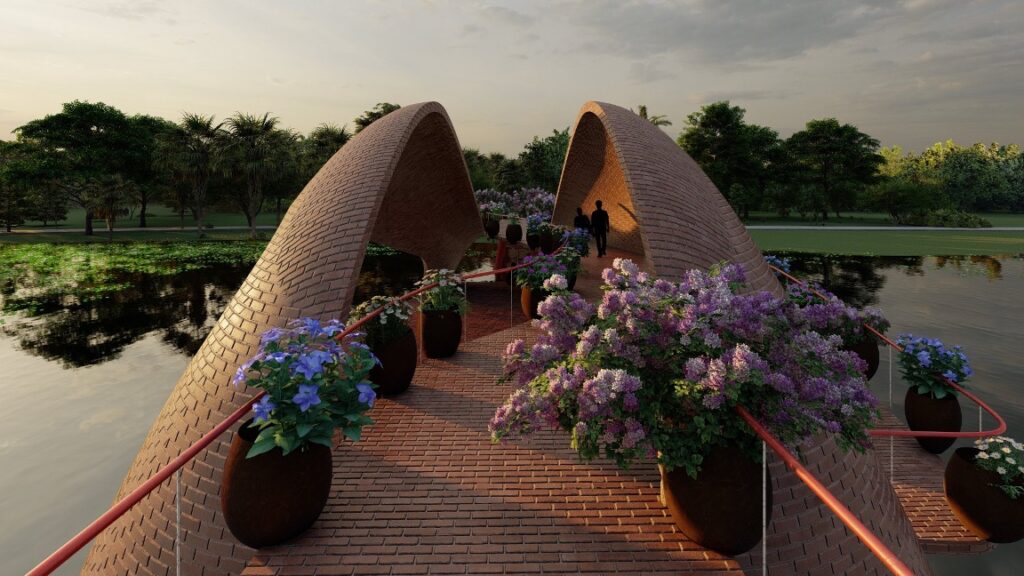
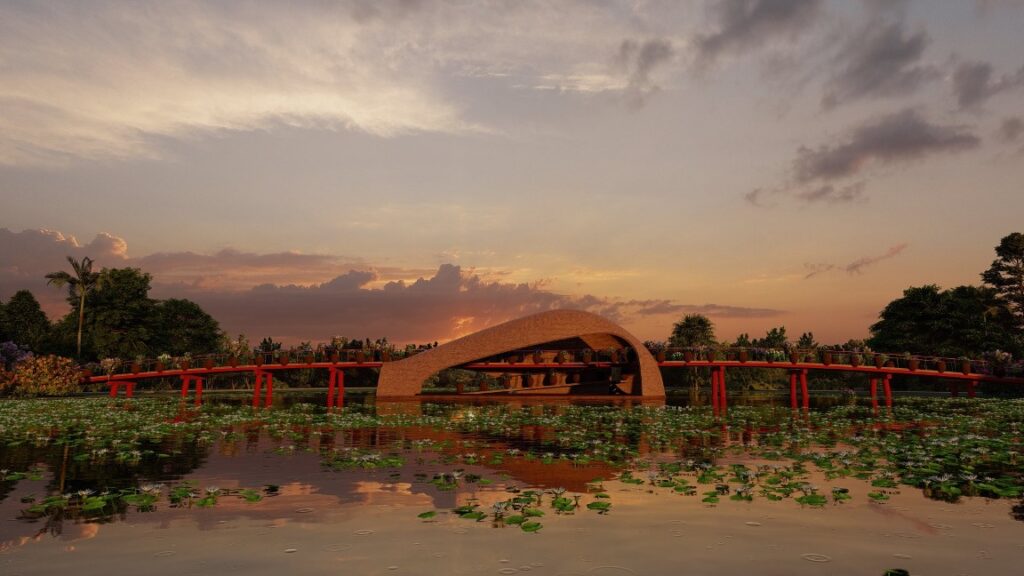
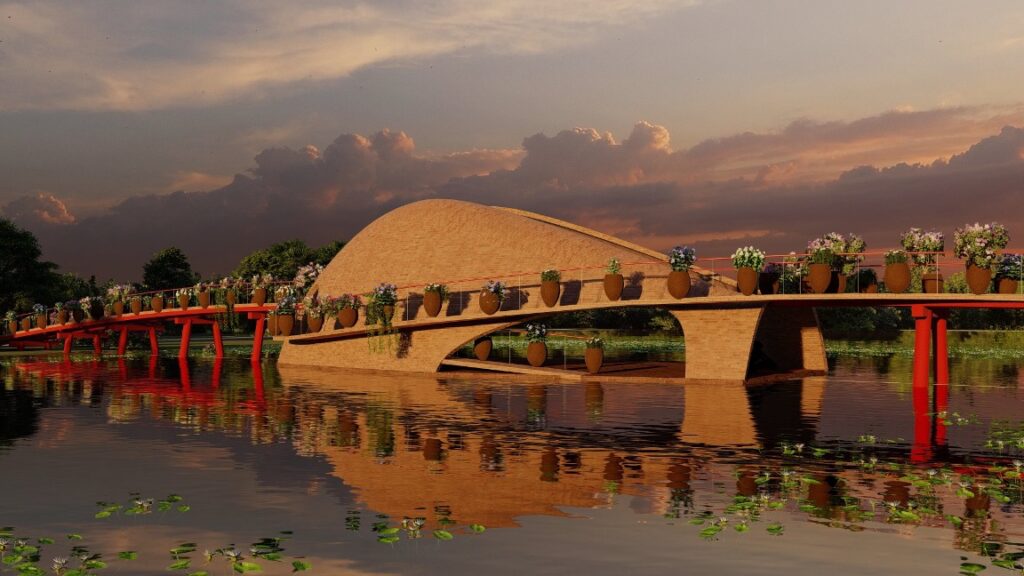
Located at the confluence of three rivers, it rests against the Gia Hội Ancient Quarter, gazes upon the Hương River, and looks towards Ngự Bình Mountain as its front shield, with the Kim Phụng Range stretching across the landscape. This harmonious geographical setting provides the perfect foundation for the park in the heart of the ancient capital.
The park spans approximately 6.2 hectares and stretches nearly 1 kilometer along the lower reaches of Hương River, surrounded by water landscapes. Its structure is divided into two main sections: (1) The Space of “The Great Circle of Unity (20,000 m²); (2) The Musical Garden Space (42,000 m²).
The Great Circle of Unity is designed around the symbol of the Vietnamese Embrace, forming a double-layered circle representing the Fields of Vietnam. This concept draws inspiration from Trịnh Công Sơn’s musical longing for peace.
At its heart stands the statue of Trịnh Công Sơn, with a poised and serene posture, emerging from the landscape like a mountain standing tall. He becomes a symbol of the nation’s desire for unity, love for humanity, and a reflection on the human condition.
Every step into this space echoes with the uplifting and refreshing melodies of his music. It invites us to connect, hand in hand, forming a unified entity called Vietnam.
The Musical Garden Space, on the other hand, captures the lingering melodies of nature. Here, one can sense the gentle whispers of grass, flowers, birds, and the vibrant life that surrounds us—a symphony of nature’s tender serenade.

See the original article at the link.

Next project | Shadowy

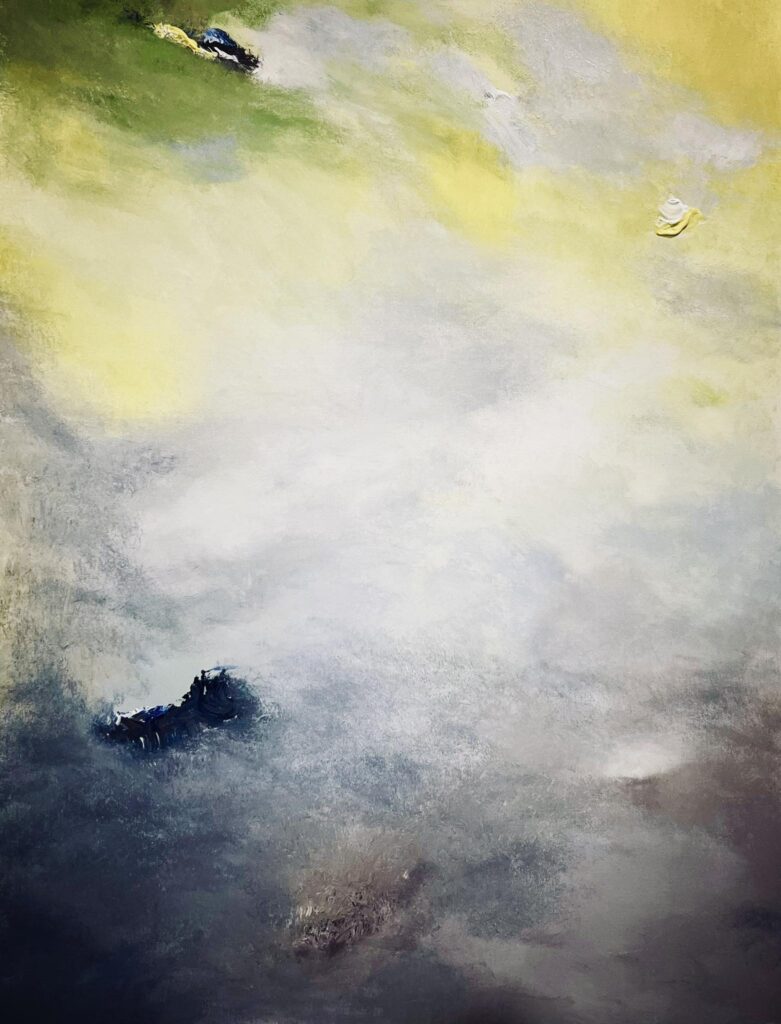
Shadowy
Vinhho, Acrylic on canvas, 130x97cm, Maison de Corail, 2024

“The interplay of dark and light hues conjures a spectral dance of shadows, evoking the elusive nature of the intangible, whispers of the hidden dimensions that lie beneath the surface, suggesting an eternal struggle between presence and absence.”

Ho Viet Vinh

Next project | Mine Art Gallery

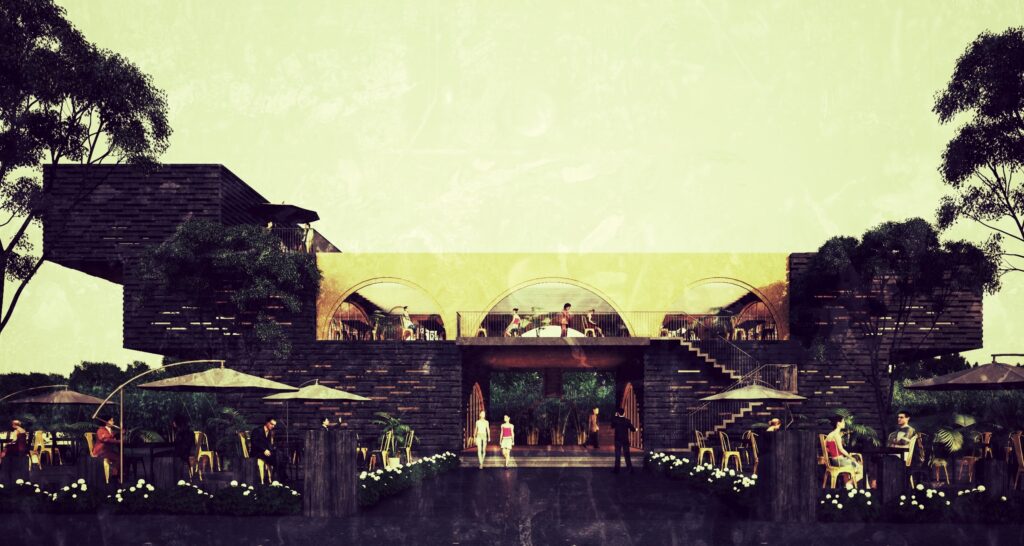
Mine Art Gallery
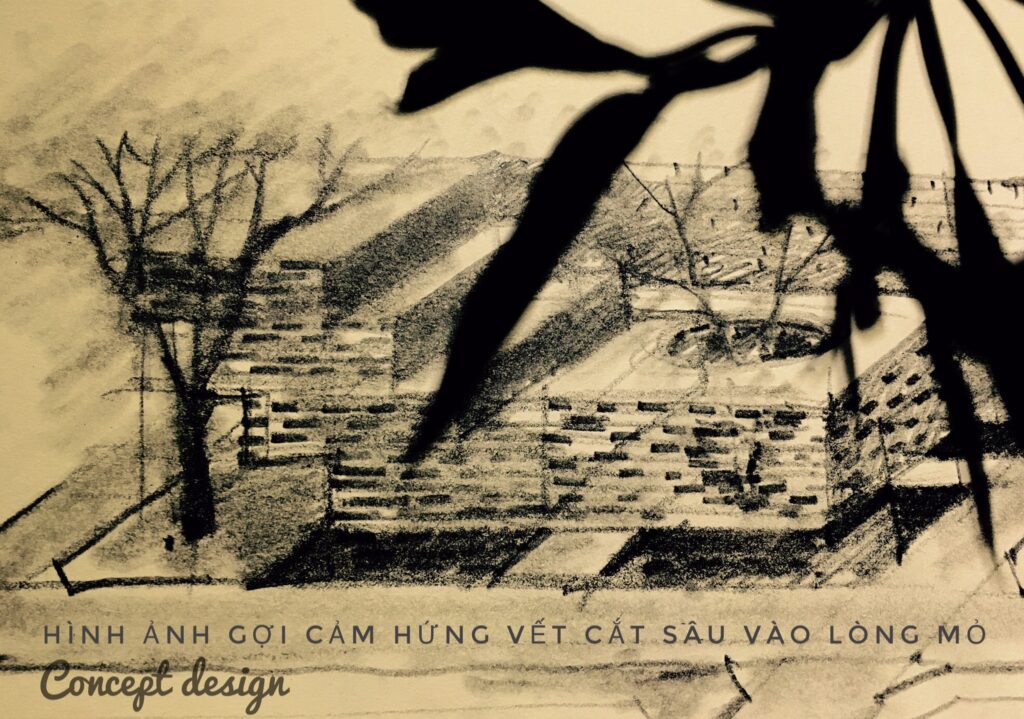
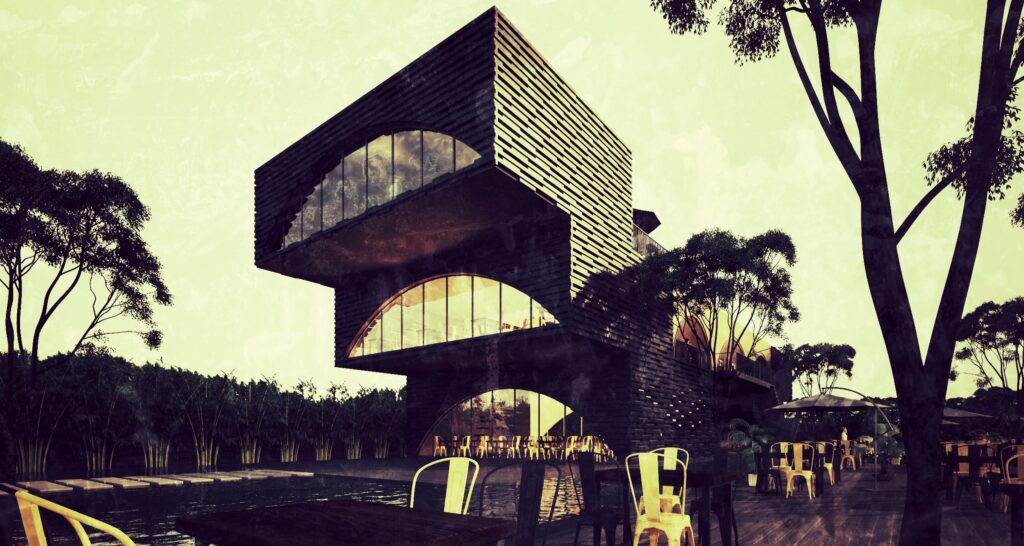
Cam Pha coal mine was established by the French in 1886 under the name Société Française des Charbonnages du Tonkin during the reign of King Tu Duc. The mine’s stratigraphic structure descends into deep underground terraces, with coal seams gradually revealed in the light that pierces through the valley.
The jet-black hue of coal, intermingled with the reddish-brown of the earth and the arid dust suspended in the air, creates an abstract palette imbued with depth and intensity.
The project draws inspiration from the overlapping layers of coal seams, reimagined in reverse to symbolize the void left behind. Construction materials, sourced from coal itself, form layered bricks that replicate the natural striations of the seams. Space, materiality, and landscape converge to evoke the emotional and physical experiences of the miners.
Type
Gallery
Year
2016
Location
Cam Pha city
Team
Ho Viet Vinh
Mai Que Vu

Next project | Forest rain

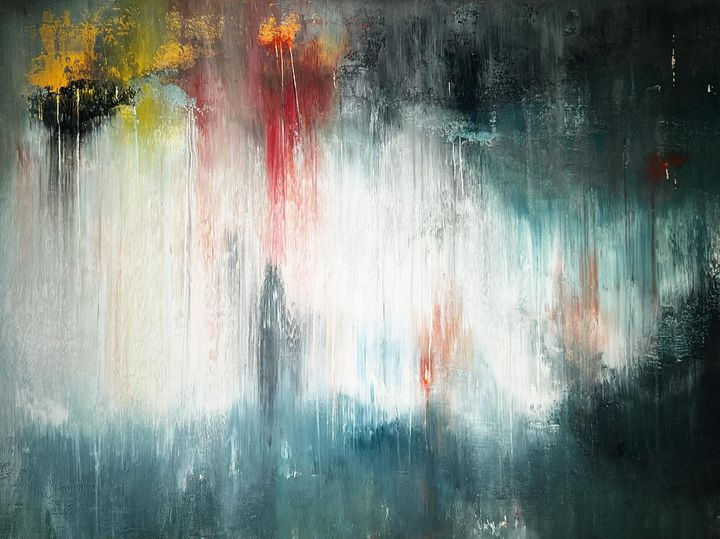
Forest rain.

Streams of water weave across the sky like a loom, tracing delicate horizontal lines. Thick fog veils the forest in the dark of night.
Vertical and horizontal water jets carve an intricate painting into the air.

Ho Viet Vinh 2020


Description
Exucuted in April 2020
Style
Lyrical Abstract
Technique
Acrylic on Canvas
Dimension
97W x 130H x 4D cm


The authenticity of this work has been confirmed by HVV Architect &Partners. A certificate of authenticity maybe delivered by the Company upon request to the buyer.

Vinhho Biography
Ho Viet Vinh is a Vietnamese architect who graduated with a Bachelor of Architecture degree in 1995 from the University of Architecture Ho Chi Minh City, Vietnam, where he received an award for creative design in his final year. He is a Registered Architect in Vietnam, a Registered Urban Planner in Ho Chi Minh City, and a member of the Association of Architects and Urban Planners of Vietnam.
Vinh’s career began in 1995 with participation in several design competitions in Ho Chi Minh City. That same year, he became a lecturer in the Urban Planning Department at the University of Architecture.
In 1998, he won second prize in the international competition organized by the Summer Workshop of Cergy-Pontoise, France, with the theme “Ho Chi Minh City and the Saigon River.”
In 2005, he was awarded a special prize in another international competition by the Summer Workshop of Cergy-Pontoise, France, for his project “Can Gio Emotional City.”
In 2010, he participated in the U.S. International Visitor Leadership Program (IVLP) focusing on Sustainable Urban Planning.
In 2015, Vinh was selected by the Lebadang Creative Foundation to design the Lebadang Memory Space Museum in Hue. During this time, he also became the Director of the Fund.

Next project | Artist Ca Le Thang and the exhibition “Dong Chim Day Nuoc”

Artist Ca Le Thang

The exhibition “Dong Chim Day Nuoc”, taking place at Wiking Salon from December 14, 2024 to January 19, 2025, is an event marking the more than three-decade artistic journey of the famous painter Ca Le Thang. With more than 20 emotional works, the exhibition not only reflects childhood memories of the flood season in the West, but also tells the story of inner rebirth through abstract art. Curated by Le Thien Bao, this event promises to bring an in-depth look at the journey of searching for and affirming the unique artistic language of one of the pioneers of Vietnamese fine arts.

Artist Ca Le Thang’s studio
Beneath Deep Rivers, Field Submerged #3
2024, oil, acrylic and mixed media on canvas, 170 x 100 cm
Architect Ho Viet Vinh met Artist Kao Dung at the event.

“With childhood memories of the flood season in the Mekong Delta, Ca Le Thang breathed life into his paintings with intense, expressive brushstrokes. He created a natural abstraction, both dreamlike and realistic: where memories and emotions intersect.”

Architect Ho Viet Vinh

Next project | Phu Doan Plaza

Phu Doan Plaza, located at the Thua Thien Hue Provincial People’s Committee (also known as City Hall), is a vibrant and modern interpretation of Hue’s identity as an ancient capital. Today, the plaza serves as an inclusive outdoor hub of Hue’s cultural and social life, but this was not always the case.
Before its renovation, the plaza was an uninviting and inaccessible space, characterized by uneven terraces, hidden passageways, and neglected trees. The transformation elevated the park—both literally and symbolically—to match its prominent location at the foot of Hue City Hall.
The plaza now offers universal accessibility by leveling the entire site to meet the street, encouraging activity throughout the day. It features a spacious lawn, an interactive fountain, a café, and ample seating amid green groves of native plants such as Bombax ceiba (cây gạo), Borassus flabellifer (cây thốt nốt), Laurus nobilis (cây nguyệt quế), Cinnamomum camphora (cây long não). Built atop Hue City Center’s multi-modal transit hub, it acts as a gateway connecting all neighborhoods.
Covering 8,190 square meters, the plaza provides a welcoming, all-season destination for relaxation and public recreation.

Phu Doan Plaza in existing condition
Performing art in front of Hue City Hall
Art Light Performing at night
Outdoor Ampitheatre in front of Perfume River

Type
Landscape design
Year
2020
Location
Hue city, Vietnam
Team
Ho Viet Vinh
Ngo Hai Tan
Duong Thi Thanh Thanh
Nguyen Dinh Nhat Thu

Next project | FRAGILITY

FRAGILITY

“A sea of swirling blue, evokes the tempestuous depths of the soul, adrift in a world of fleeting beauty and despair. The stark white, a beacon of hope, struggles against the relentless tide of azure, a poignant reminder of the fragility of human existence.”

Ho Viet Vinh

Next project | Kiến trúc và phẩm giá

HVV – Supported by AI

Kiến trúc sư Hồ Viết Vinh (Đêm giao thừa đón Xuân Ất Tỵ 2025 tại Cố đô Huế)
Trong bối cảnh hiện nay khi thế giới đang đối mặt với những thách thức lớn về môi trường, biến đổi khí hậu và sự phát triển bền vững, giá trị phổ quát của kiến trúc chính là nâng cao phẩm giá của con người trong mối tương quan với thiên nhiên. Phẩm giá này được tạo dựng dựa trên các nền tảng sau:

  1. Kiến trúc là cầu nối giữa con người và thiên nhiên: Kiến trúc không chỉ là việc tạo ra những công trình để che chở con người mà còn là cách để con người kết nối với thiên nhiên một cách hài hòa. Thiết kế kiến trúc tốt phải tôn trọng và phản ánh mối quan hệ tự nhiên giữa con người và môi trường, thay vì tách biệt hoặc đối đầu với thiên nhiên.
  2. Nâng cao phẩm giá con người: Kiến trúc có khả năng nâng cao chất lượng cuộc sống và phẩm giá con người thông qua việc tạo ra những không gian đẹp, tiện nghi và ý nghĩa. Một công trình kiến trúc tốt không chỉ đáp ứng nhu cầu vật chất mà còn nuôi dưỡng tinh thần, cảm xúc và nhận thức của con người.
  3. Thiên nhiên là nguồn cảm hứng vô tận: Thiên nhiên không chỉ là yếu tố cần được bảo vệ mà còn là nguồn cảm hứng vô tận cho kiến trúc. Các nguyên tắc tự nhiên như sự cân bằng, đa dạng và thích ứng có thể được áp dụng vào thiết kế. Kiến trúc tương lai cần học hỏi từ thiên nhiên để tạo ra các giải pháp bền vững và hiệu quả.
  4. Kiến trúc bền vững là trách nhiệm đạo đức: Trong bối cảnh biến đổi khí hậu và suy thoái môi trường, kiến trúc có trách nhiệm đạo đức trong việc bảo vệ thiên nhiên và giảm thiểu tác động tiêu cực. Kiến trúc bền vững không chỉ là xu hướng mà còn là sự cần thiết để đảm bảo tương lai cho các thế hệ sau.
  5. Kiến trúc tương lai chính là tạo dựng sự hài hòa giữa con người, thiên nhiên và công nghệ: Kiến trúc tương lai cần kết hợp hài hòa giữa nhu cầu của con người, sự tôn trọng thiên nhiên và ứng dụng công nghệ tiên tiến. Công nghệ không nên là yếu tố thống trị mà là công cụ để hỗ trợ con người sống hòa hợp với thiên nhiên.

Kiến trúc tương lai cần đặt con người và thiên nhiên vào trung tâm, từ đó tạo ra những không gian không chỉ đẹp và tiện nghi mà còn bền vững, nhân văn và giàu ý nghĩa. Đây không chỉ là mục tiêu của kiến trúc mà còn là trách nhiệm của toàn xã hội trong việc xây dựng một tương lai tốt đẹp hơn.

Next project | lại

Forest
Watercolor, 2020, by Vinhho

Lại
Lại rằng có nghĩa là không,
Thì không không có có không cớ gì,
Lại vì không chẳng vô vi,
Đang đi có biết chưa đi nghĩ gì,
Lại thì chẳng có chi chi,
Một khi tâm vắng đường đi ấy là.

Again
Again means naught and all,
For naught is not without reason’s call,
Again for nothing, not idly free,
In stride, yet pondering what thoughts might be,
Again, there’s nothing at all,
When the mind is still, the path stands tall.